The Illusion of Being Informed
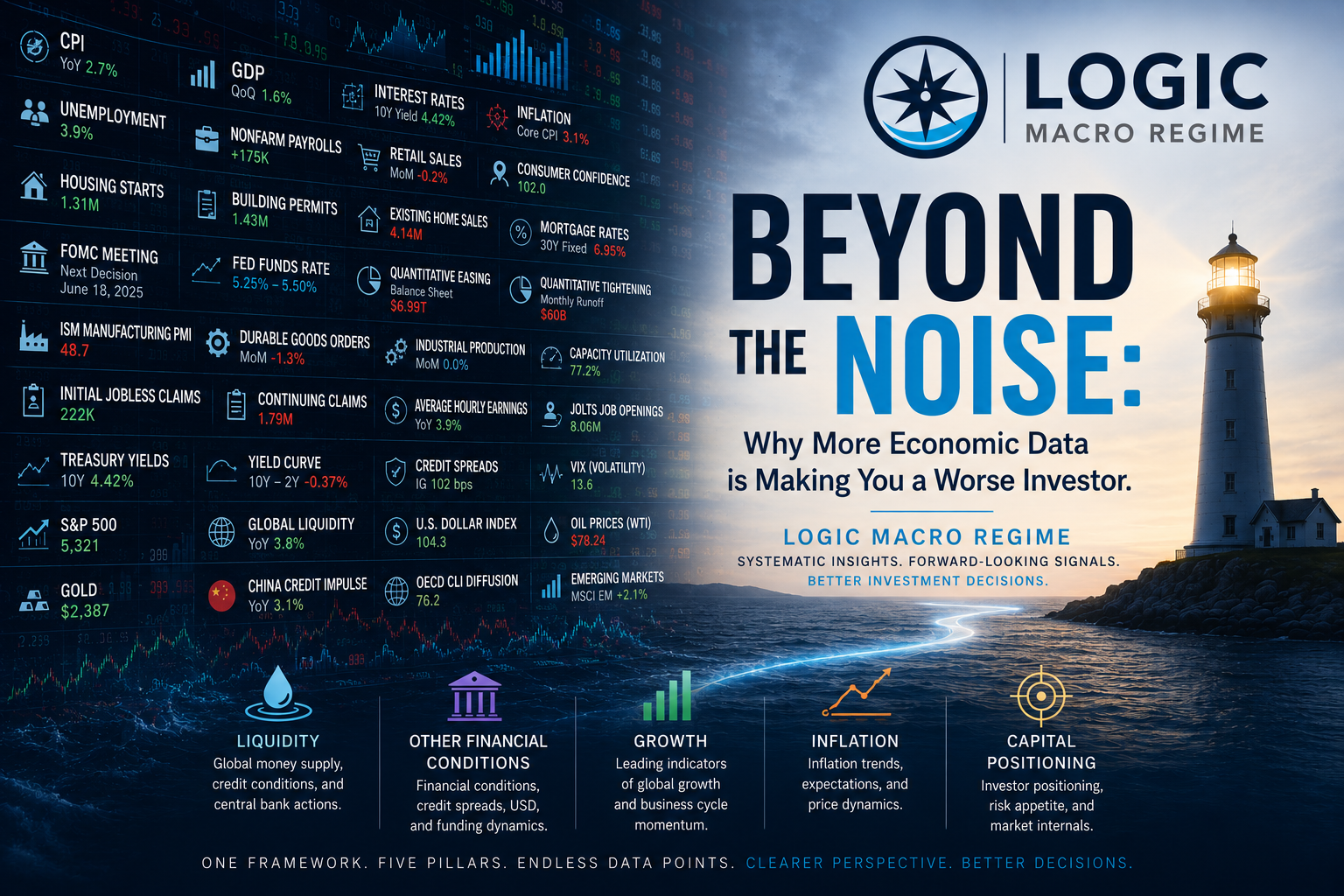
The modern investor operates in an environment of unprecedented data saturation. Every hour delivers a fresh deluge of central bank transcripts, geopolitical flashpoints, and high-frequency price alerts. Yet, for all this connectivity, most market participants remain perpetually reactive. They mistake motion for progress - interpreting the news, adjusting positions, and repeating the cycle, all while chasing the tail of the previous month's winners.
This "short on structure” approach is the primary catalyst for chronic underperformance. It leads to overtrading and a lack of consistent positioning that erodes capital over time. The problem is not a lack of information; it is the absence of a framework to filter it. To generate true alpha, one must stop looking for the next "story” and start identifying the underlying macro environment. In the institutional world, we know that success is rarely about finding a needle in a haystack; it is about knowing which way the wind is blowing before the storm hits.
Your Stock Picks Don't Matter as Much as Your Map
There is a pervasive vanity in the retail investment world that alpha is the fruit of superior security selection, the "perfect” stock pick. Decades of institutional portfolio analysis suggest otherwise. This is not a theoretical observation; it is a hard-earned market reality that most investors ignore at their peril.
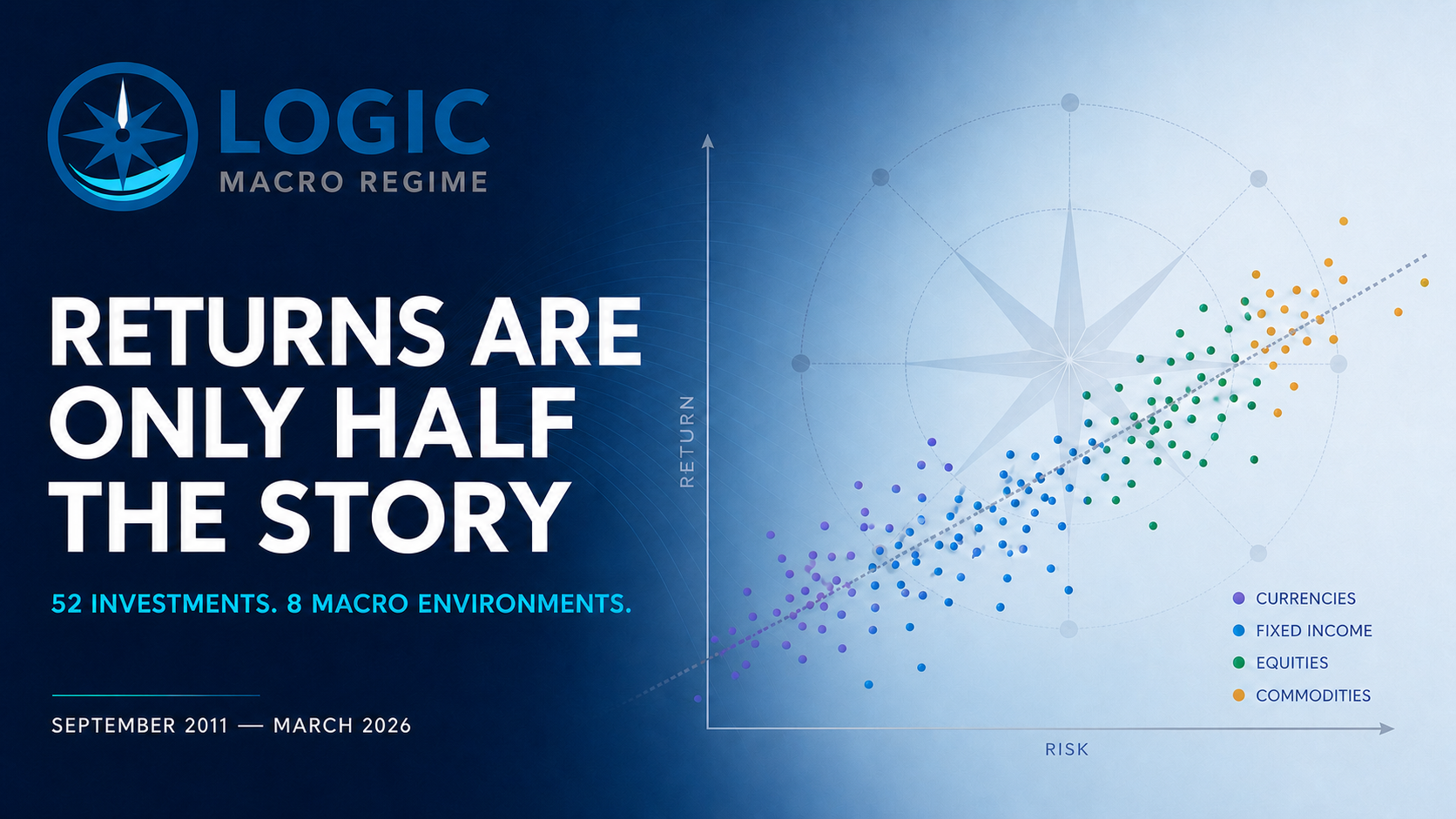
The data is clear: the vast majority of performance variation is driven by asset allocation, not the selection of individual securities. Your primary objective is not to find a winner, but to align your total capital with the prevailing macro regime.
"The majority of performance variation is driven by asset allocation - not security selection... what matters most isn't necessarily what you own, but how your portfolio is positioned relative to the environment you're in."
Decisions regarding equity exposure, duration, and credit are not isolated tactical bets; they are expressions of your stance on the macro backdrop. When you ignore the map, even the most "undervalued” stock can be crushed by an adverse regime shift.
Markets are Regimes, Not Random Events
Investors lose the thread when they treat market movements as a series of disconnected, random occurrences. In reality, markets are regime-dependent, moving through recurring phases driven by the interplay of growth and inflation.
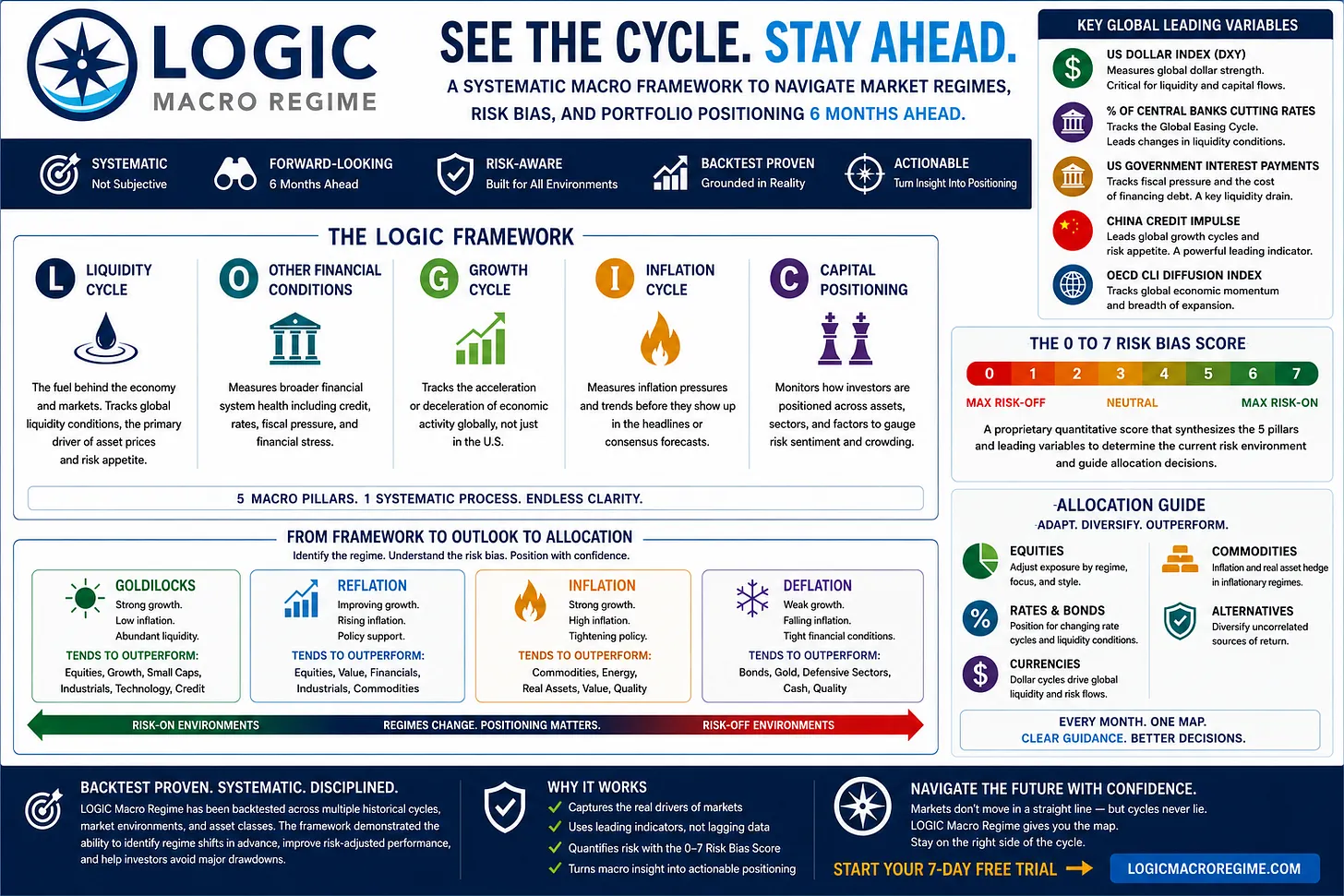
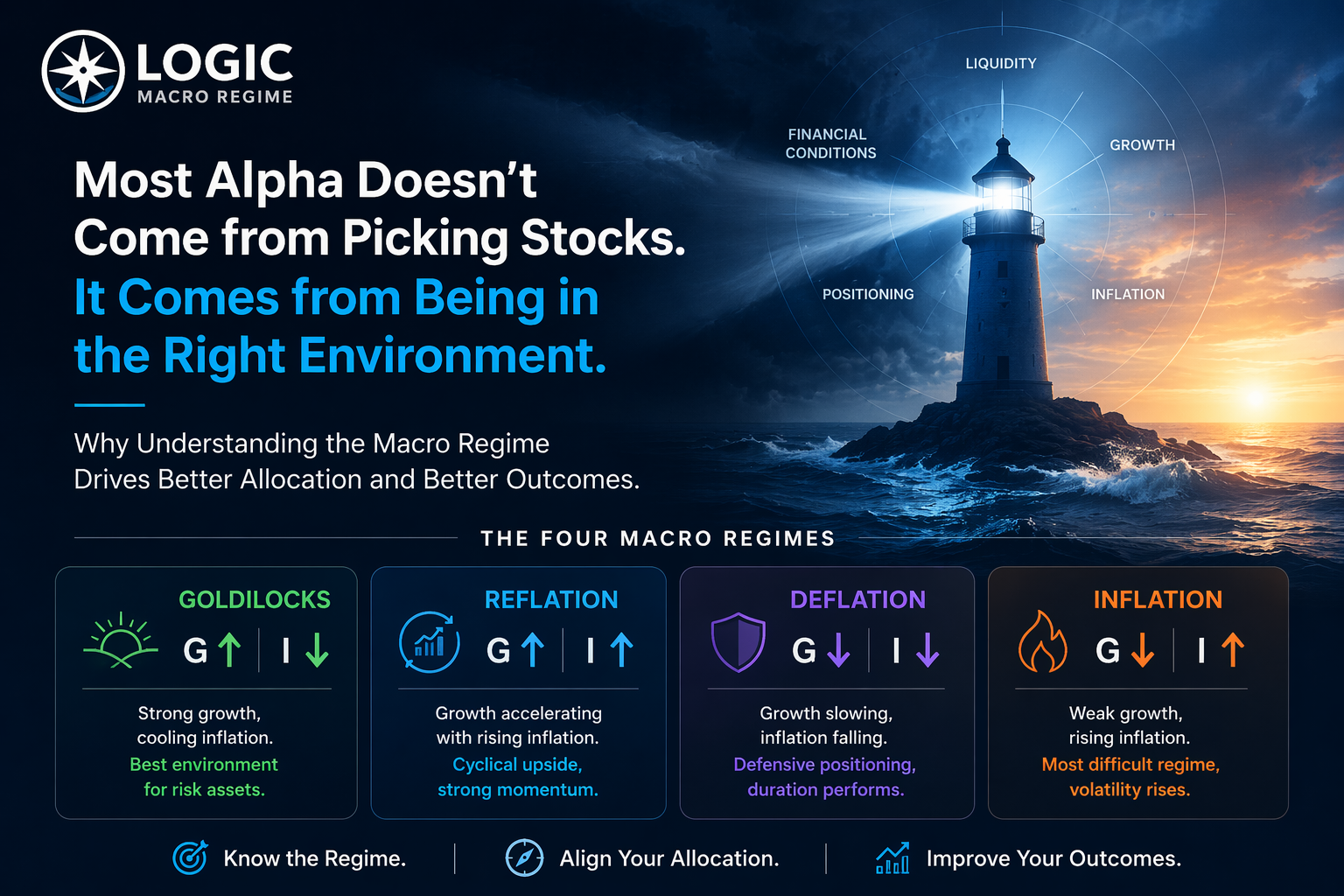
To navigate these, we categorize the environment into four distinct quadrants:
| Macro Regime | Growth (G) | Inflation (I) | What It Means |
|---|---|---|---|
| Goldilocks | ⬆️ | ⬇️ | Strong growth, cooling inflation → best environment for risk assets |
| Reflation | ⬆️ | ⬆️ | Growth accelerating with rising inflation → cyclical upside, strong momentum |
| Inflation | ⬇️ | ⬆️ | Weak growth, rising inflation → most difficult regime, volatility rises |
| Deflation | ⬇️ | ⬇️ | Growth slowing, inflation falling → defensive positioning, duration performs |
A sophisticated strategist understands that these regimes are not created equal. While Goldilocks supports risk across the board, the Inflation regime is uniquely treacherous. When inflation becomes the dominant force, traditional diversification models fail. The negative correlation between stocks and bonds - the bedrock of the 60/40 portfolio - breaks down, leaving the unhedged investor with nowhere to hide. Recognizing the regime shift is the difference between preserving capital and watching your "diversified” portfolio move in a synchronized downward spiral.
The LOGIC Framework: A Systematic Lens
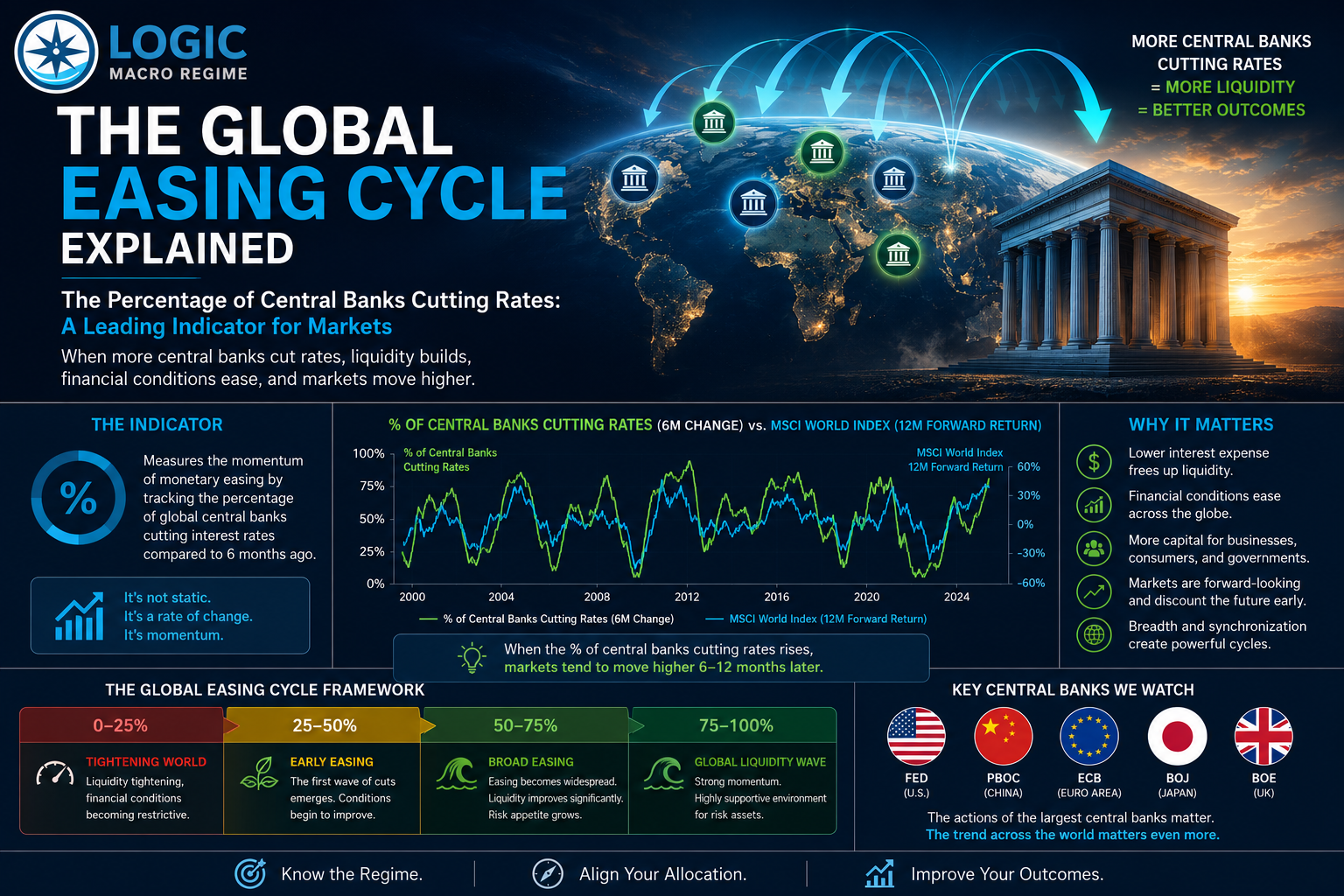
To strip away emotional bias and the noise of the 24-hour news cycle, we utilize the LOGIC framework. The LOGIC Macro Regime framework remains the definitive tool for objective environmental analysis. It distills the complex global economy into five core drivers:
Liquidity Cycle: The availability of capital within the system.
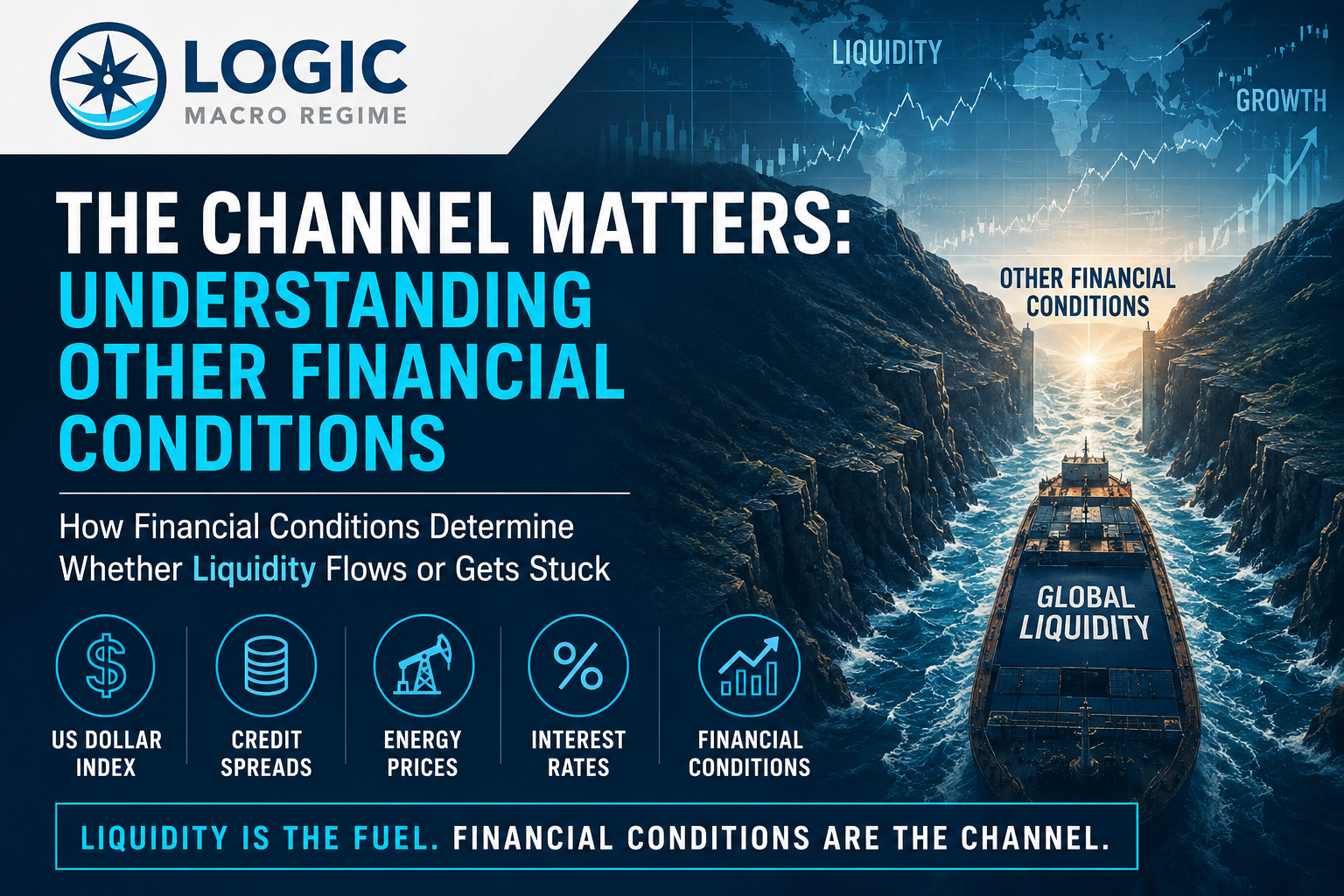
Other Financial Conditions: The broader ease or tightness of financial markets.
Growth Cycle: The trajectory of economic expansion.
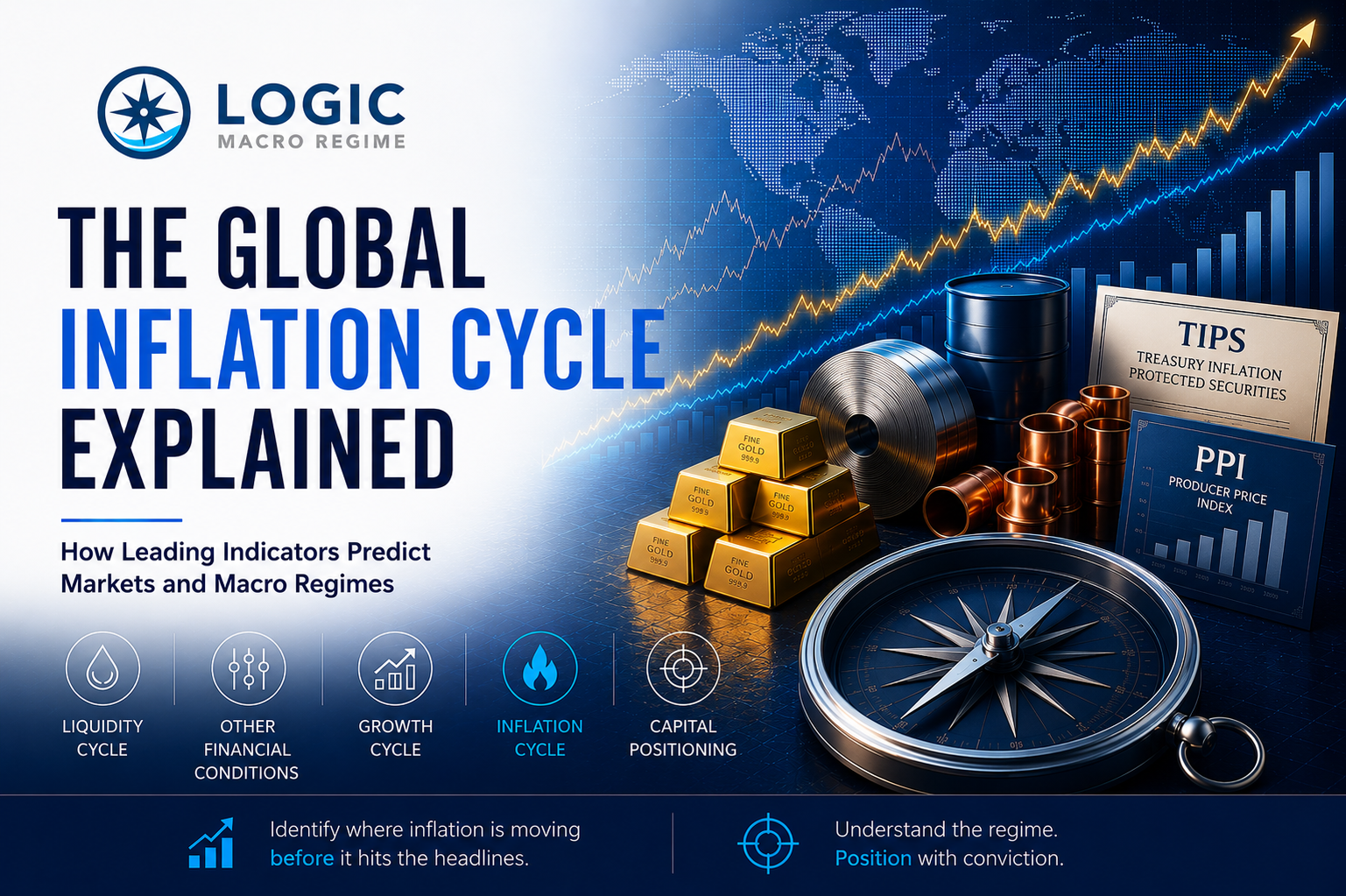
Inflation Cycle: The dominant force shaping correlations and purchasing power.
Capital Positioning: How the "herd” is currently allocated.
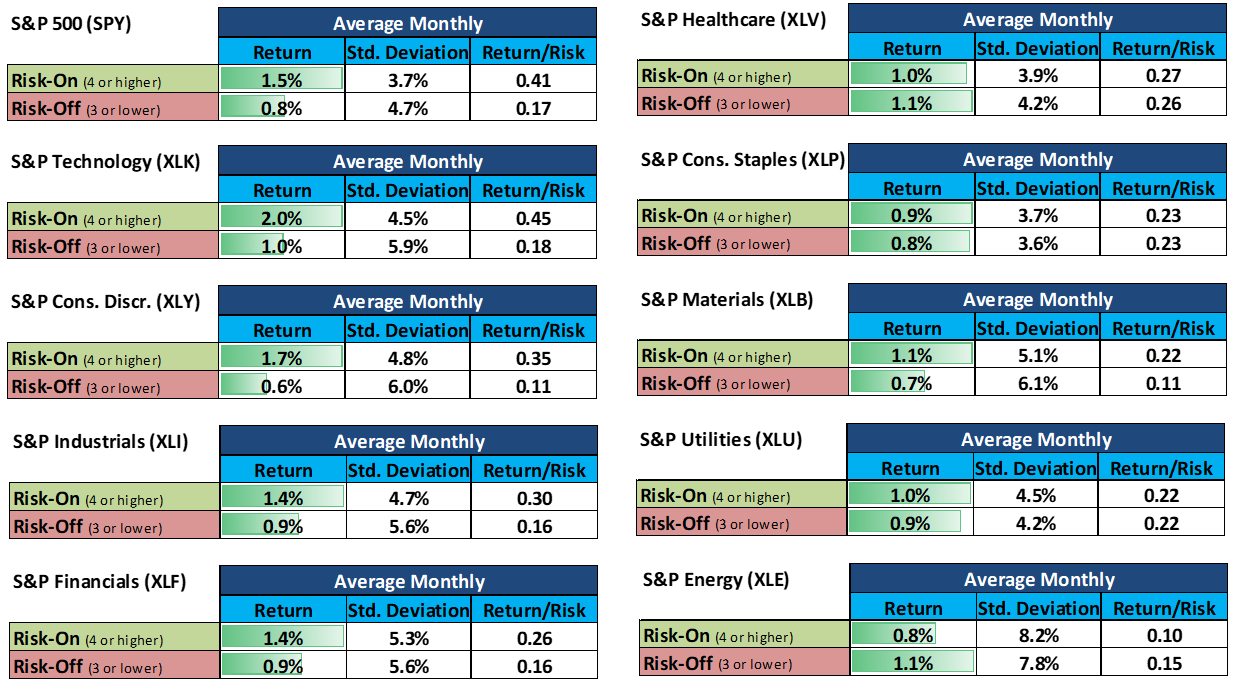
This systematic approach produces two critical determinations. First is the Risk Bias Score (0-7). This is a binary trigger: a "0” represents a definitive environment to exit risk, while a "7” signals maximum conviction for risk-on positioning. This score answers the question: Should I be in the market?
Second is the Macro Regime, which dictates the composition of that risk. It tells you which sectors, style factors, and asset classes will thrive in the current quadrant. By separating the "how much” (Risk Bias) from the "what” (Regime), you remove the guesswork that plagues discretionary traders.
The Advantage of Being Early
Market shifts are rarely instantaneous; they build gradually, then all at once. The reactive investor waits for price action to confirm a trend, but by then, the move is largely priced in. The institutional advantage lies in the Monthly Macro Map.
Because this map is published before the month begins and is paired with a 6 month forward-looking view, it allows for pre-emptive positioning. The goal is to identify building shifts in liquidity or growth before they hit the headlines. While the rest of the market is reacting to lagging indicators, a systematic framework allows you to recognize the shift in the environment while the opportunity for alpha is still wide.
Positioning is the New Prediction
The most profound shift a strategist can make is moving from prediction to positioning. Prediction asks, "What will happen next?"- a question that invites ego and error. Positioning asks, "Where are we now, and what does that imply?"
When you understand the current environment, your allocation decisions lose their ambiguity. You are no longer looking for a lucky break; you are seeking environmental alignment.
The Bottom Line: Alpha is not the product of picking better securities. It is the result of being aligned with the right environment, allocating capital accordingly, and crucially avoiding being structurally out of position when the regime shifts.
Conclusion: The Environment is the Signal
You do not need to predict every minor fluctuation or respond to every geopolitical headline. You simply need to understand the environment you are operating in. When you get the environment right, the appropriate asset allocation follows. And when the allocation is correct, repeatable outcomes are the natural result.
As you look at your holdings today, ask yourself: Is your portfolio built to bet on the success of a specific company, or is it architected to thrive in the specific macro regime we are entering? One is a gamble; the other is a strategy.