Why You're Looking at the Wrong Data
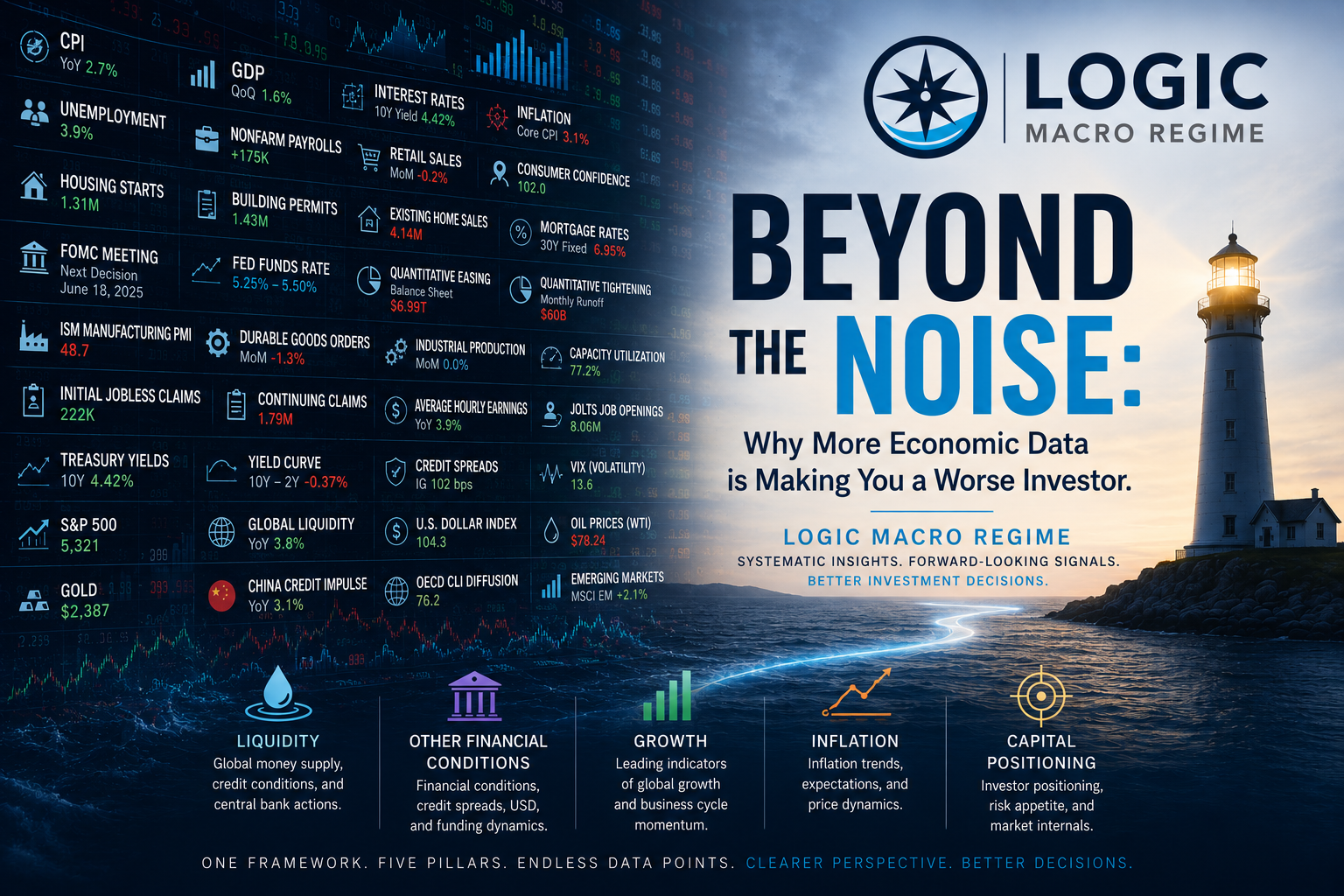
Most investors spend their lives tethered to the 24-hour news cycle, obsessing over geopolitical theater and waiting with bated breath for the latest inflation print. They pore over earnings transcripts as if they were holy writ, searching for a signal in the noise.
But here is the rub:
While the retail crowd stays glued to the ticker, the true masters of the game are watching the monetary plumbing.
If you want to understand why markets actually move, you have to look beneath the headlines at the invisible force that governs asset prices: Global Liquidity. It is the "lifeblood” of the financial system - the global reservoir that dictates whether the markets will sink or swim. While the news provides the narrative, liquidity provides the fuel. Without it, even the most compelling "story” stock will eventually run dry.
Not All Money is Created Equal (Base vs. Broad)
To navigate the global macro landscape, one must first recognize that "money” is not a monolithic concept. There is a fundamental distinction between the raw material produced by central banks and the actual purchasing power circulating in the economy. This is the divide between Base Money and Broad Money, and misunderstanding the relationship between the two is where most analysts go wrong.
Base money represents central bank reserves - the foundational layer of the monetary base. While central banks can expand this base at will, this money does not simply teleport into the S&P 500.
Base money requires an intermediary. It is the commercial banking system that takes these reserves and, through the act of lending, transforms them into Broad Money - the deposits held by businesses and individuals. Liquidity is not merely a printing press; it is a multi-stage transmission process that requires bank participation to reach the real economy and, ultimately, your portfolio.
The "Transmission Belt” of Asset Prices
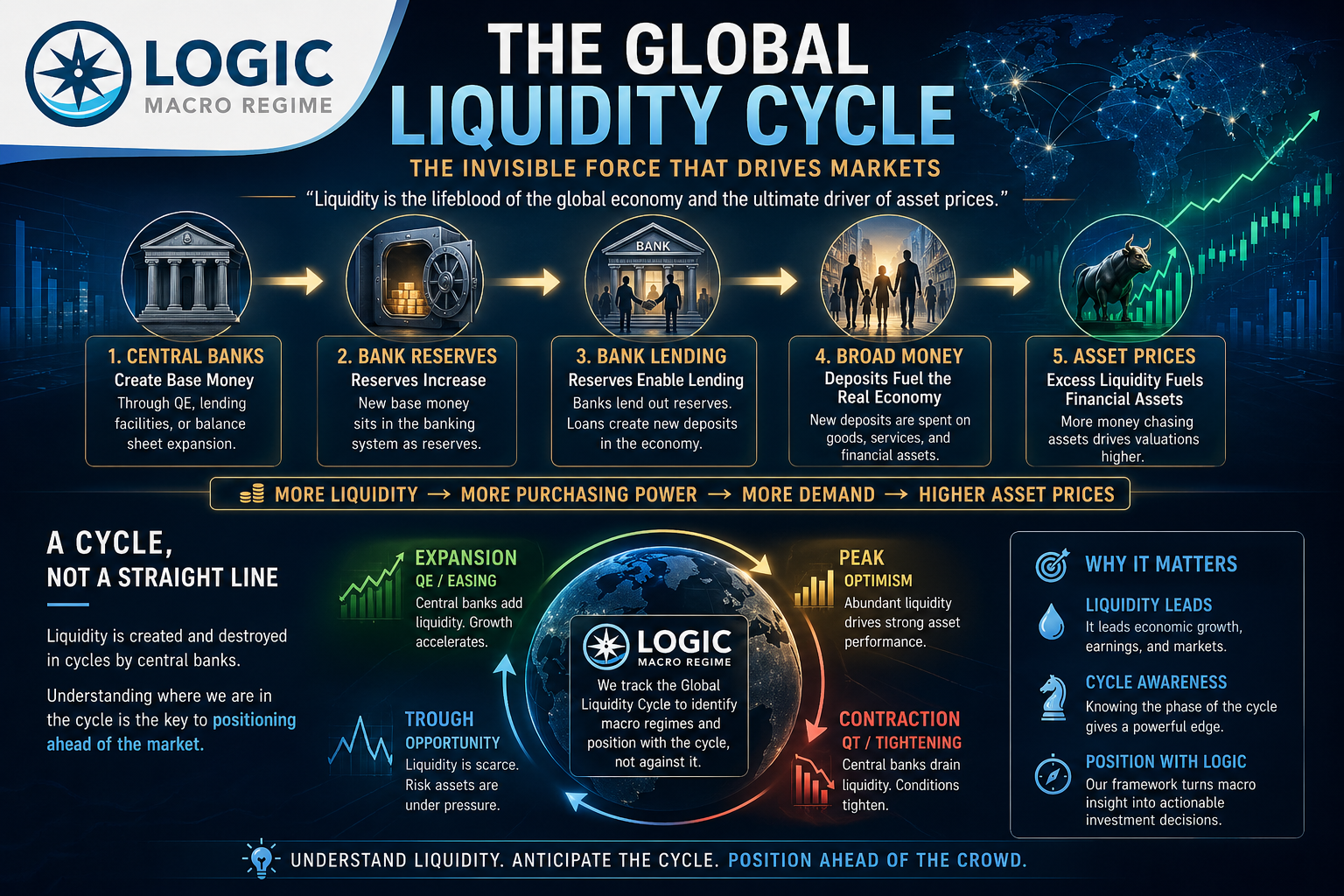
Understanding the path of liquidity allows you to see market moves long before they materialize in the headlines. This "transmission belt” follows a specific, logical chain:
Central Bank → Bank Reserves → Lending → Deposits → Spending → Asset Prices.
"Loans create deposits."
This is the fundamental mechanic of modern finance. Deposits represent pure purchasing power. When the transmission belt is moving efficiently, that purchasing power flows into goods, services, and financial assets. This is driven by a powerful rebalancing effect: when bank deposits are high and interest rates on those deposits are low, investors are forced further out the risk curve to find returns. This shift in the global monetary base is the primary force that pushes asset prices higher; it is the "why” behind the momentum.
Financialization and the "Excess” Factor
In the modern era, the sensitivity of equities and real estate to these shifts has reached an all-time high due to "financialization.” The critical metric for the strategist is not just total liquidity, but excess liquidity - the money that is not required for the immediate consumption of goods and services in the real economy.
When lending outpaces the needs of the real economy, the "spillover” acts as the primary fuel for parabolic moves in financial assets. This leakage is what drives bull markets to heights that fundamental analysts often find "irrational.” Conversely, when liquidity is withdrawn, it creates a tightening effect that places immense pressure on valuations. In this environment, asset prices are less a reflection of corporate health and more a reflection of the expansion or contraction of the global monetary base.
The Cycle is a Reactive Loop, Not a Straight Line
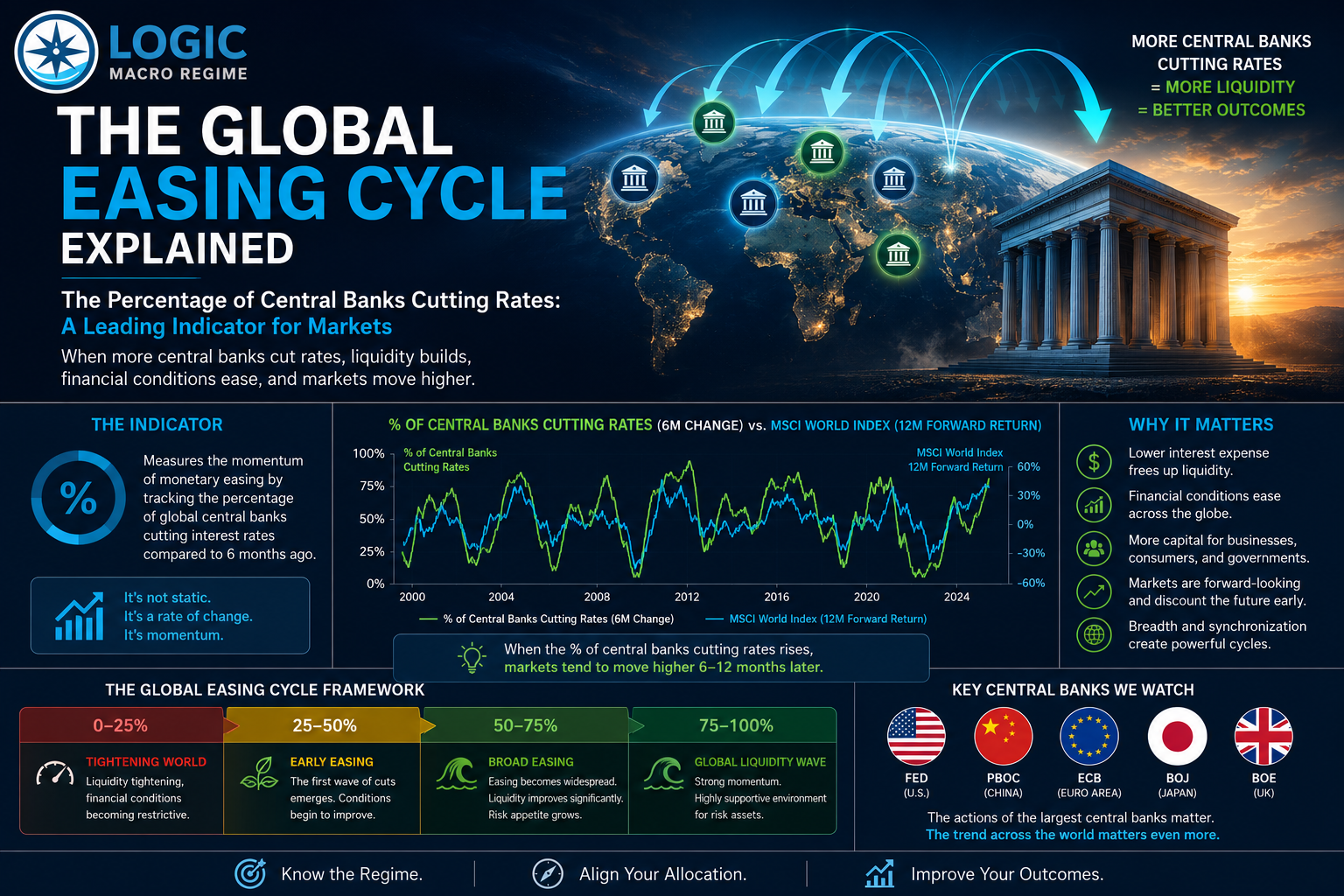
Liquidity does not move in a linear fashion; it moves in a reflexive cycle of Expansion, Peak, Contraction, and Trough. This cycle is governed by the tools of the central bank - Quantitative Easing (QE), Quantitative Tightening (QT), and interest rate adjustments, but the key is understanding the feedback loop.
"Liquidity is cyclical because policy is reactive."
Central banks do not act in a vacuum; they react to the conditions created by their previous policy choices. This reflexivity means that investors often miss the turn. They expect a tightening trend to last forever, forgetting that the "Trough” of the cycle is often the point of maximum pessimism when the news is at its absolute worst, but the liquidity contraction has already begun to bottom out in anticipation of a policy pivot.
Liquidity Leads, Narratives Follow
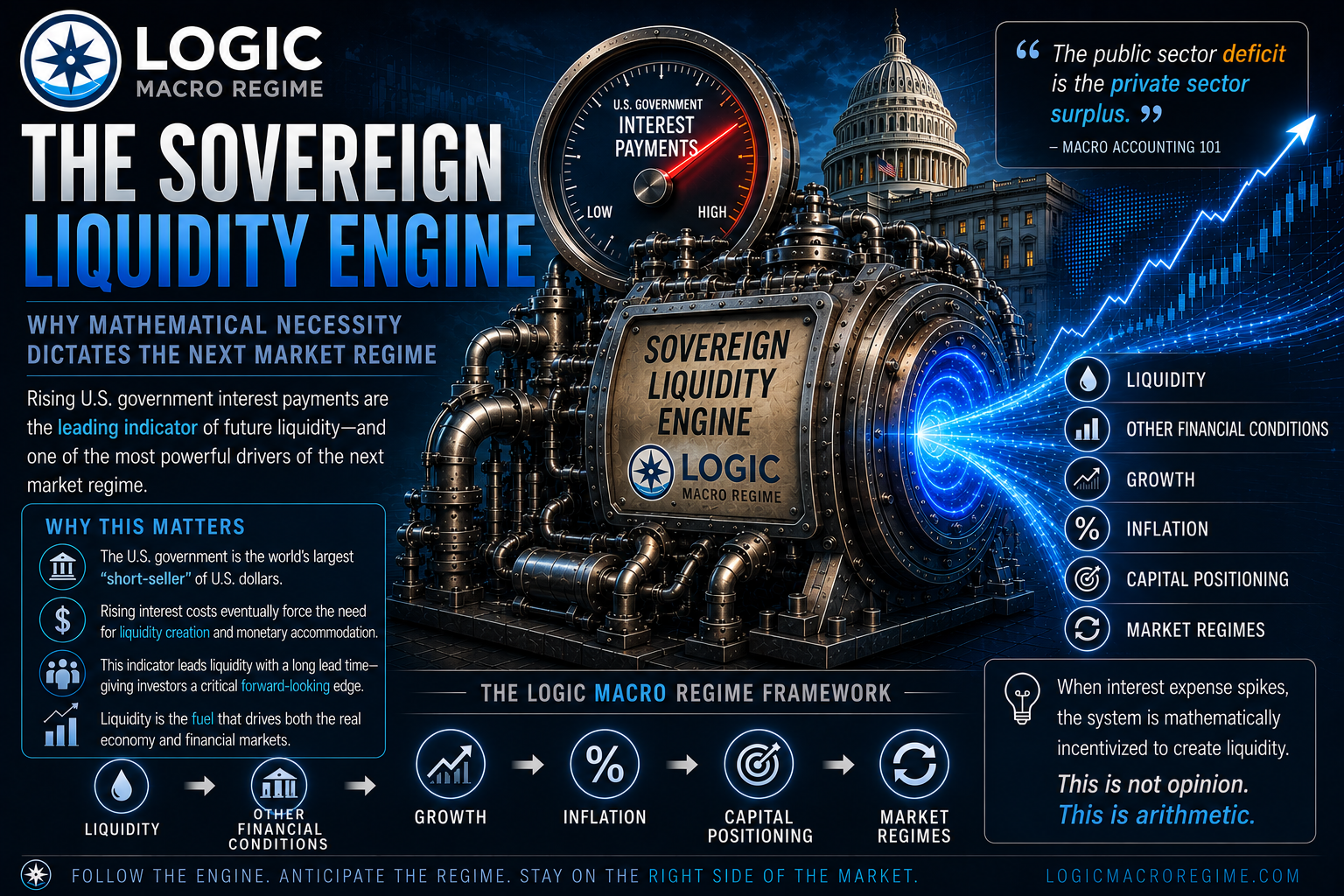
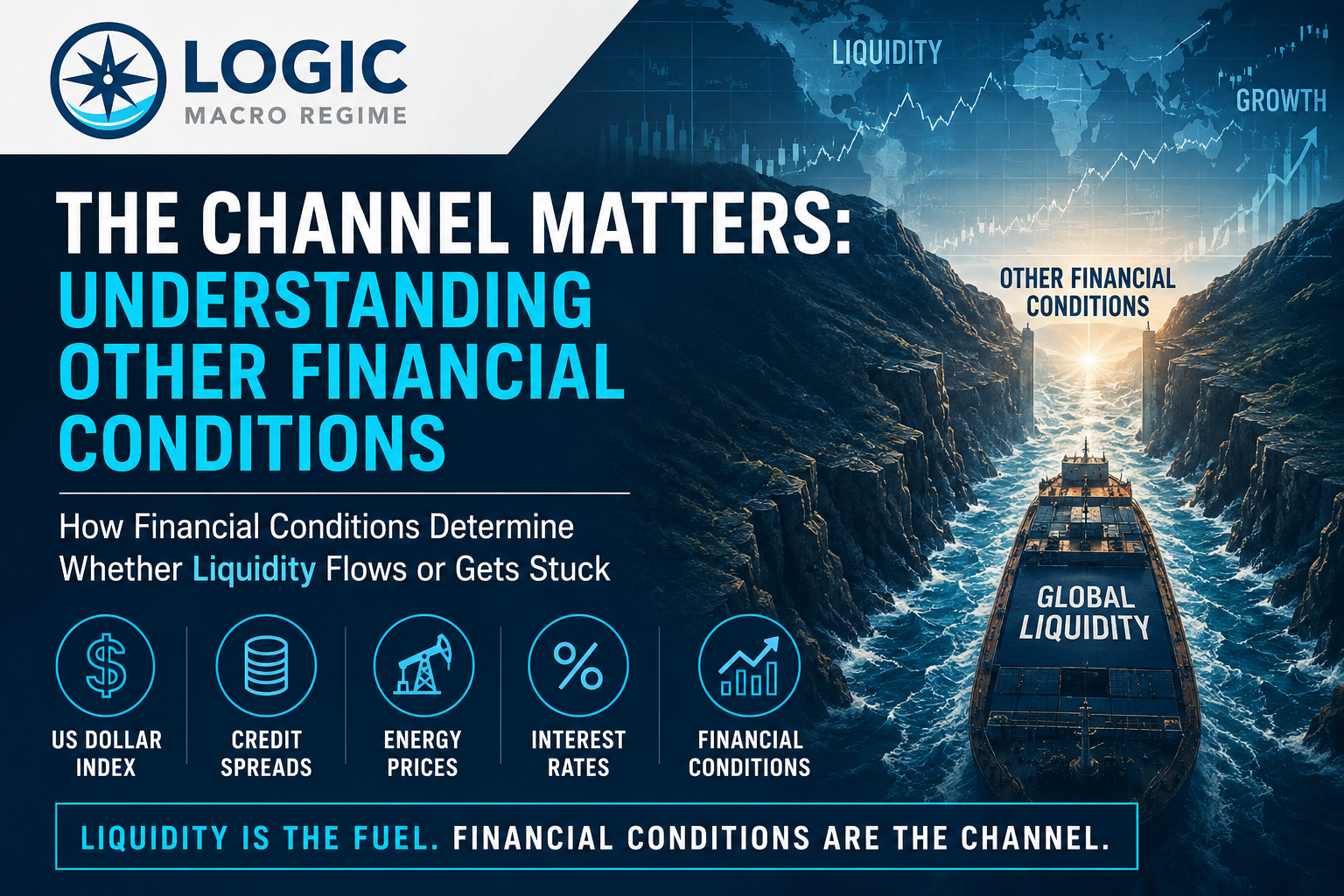
The most expensive mistake a strategist can make is reacting to market "stories” rather than the underlying liquidity trend. To avoid this, I utilize the LOGIC framework. Within this system, L (Liquidity) leads G (Growth). Furthermore, O (Other Financial Conditions) are what ultimately influence market positioning.
By the time the narrative changes - by the time the "Growth” is visible in the data - the liquidity shift has already occurred. Liquidity is the lead indicator; the narrative is merely the lagging confirmation used to explain the move after the fact. By focusing on the "L” and understanding how other financial conditions (O) dictate positioning, an investor can anticipate regime shifts rather than reacting to them emotionally.
Conclusion: Positioning Ahead of the Curve
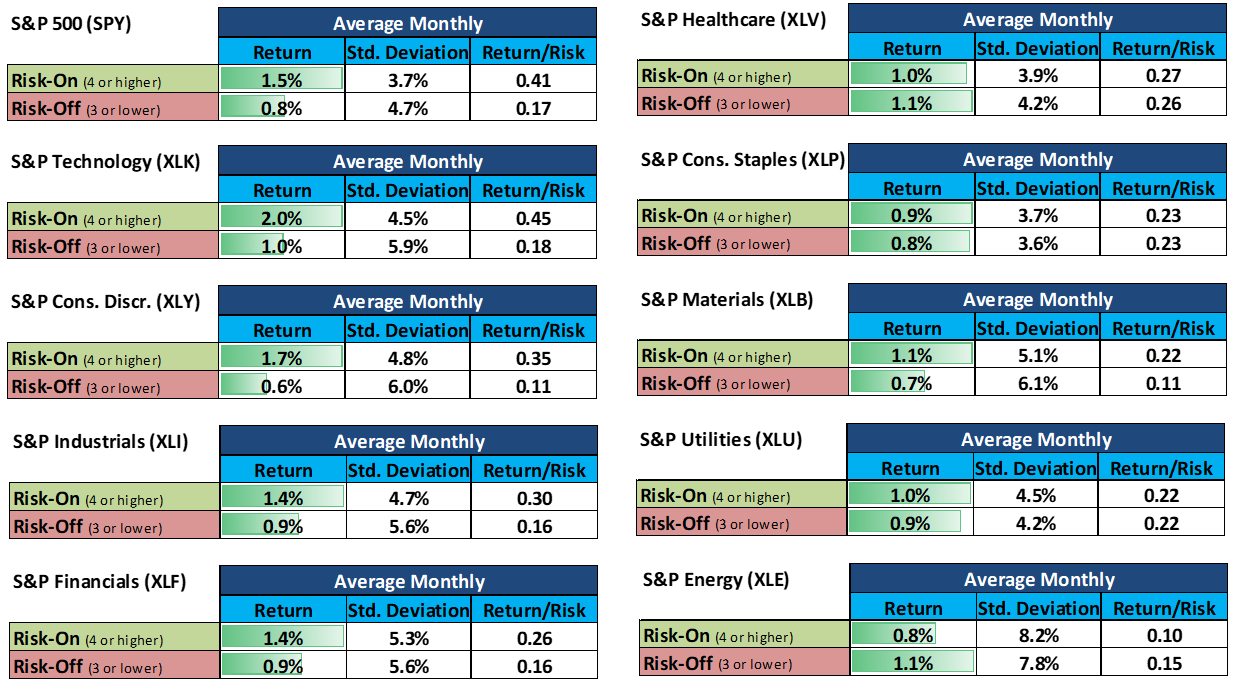
Global liquidity is the foundation upon which all market cycles are built. It is the ultimate arbiter of "risk-on” versus "risk-off” environments. While headlines may capture the public's attention, it is the expansion and contraction of the liquidity tide that determines the ultimate success or failure of your investment strategy.
If you understand liquidity, you're no longer reacting to markets - you're positioning ahead of them.
The Final Question: Are you holding a portfolio aligned with the major macro tides - "global liquidity"?