Introduction: The Myth of Linear Progress
The mainstream view of the global economy often assumes a trajectory of steady, linear progress. We are taught to look for consistent year-over-year growth as the "normal” state of affairs. However, seasoned institutional investors know that the global economy does not move in a straight line; it breathes in recognizable waves of acceleration and deceleration.
This is the Architecture of Momentum. Economic growth is inherently cyclical, moving in pulses that dictate the rise and fall of asset prices, corporate health, and investor sentiment. Within the LOGIC Macro Regime framework, the Growth Cycle (G) stands as one of the five core pillars. It is a fundamental current that moves beneath the surface of the financial markets, long before the ripple effects are felt by the average observer.
The market is not a reflection of where the economy is today, but a forecast of where it will be tomorrow. Understanding these cyclical waves is the primary key to anticipating shifts in market leadership and future earnings growth.
The Forward-Looking Edge: Leading Indicators vs. Lagging Headlines
The most common mistake investors make is relying on official economic data, such as GDP, to make forward-looking decisions. By the time a GDP report is published, the activity it describes has already occurred, been digested, and largely priced in by the market. In the world of macro investing, GDP is a rearview mirror.
Markets are discounting mechanisms. They are designed to price in future growth before it ever appears in a government press release or a news headline. To gain an edge, institutional-grade research focuses on leading economic indicators (LEIs). These are variables that shift before the broader economy changes direction.
The LOGIC framework utilizes a proprietary composite of forward-looking indicators, including, but not exhaustive of:
- Manufacturing new orders: The "tip of the spear” for the inventory cycle, revealing future production requirements before factories ramp up.
- Business surveys: Real-time sentiment and capital expenditure intentions from the executives who direct the flow of capital.
- Consumer expectations: A high-fidelity gauge of future spending intent and household balance sheet confidence.
- Housing and work started for dwellings: A critical early-stage indicator of credit expansion and the Multiplier Effect in construction activity.
- The slope of the yield curve: More than just a famous recession indicator, the yield curve represents the spread between the cost of capital (short-term rates) and the return on capital (long-term growth and inflation expectations).
Waiting for official economic data often means reacting too late. By focusing on these macroeconomic indicators, investors can stay ahead of the curve rather than chasing the tail end of a trend.
The Engine of the Developed World: Consumer Behavior as a Signal
In the developed world, consumer spending is the primary engine of the business cycle. Because the consumer drives the vast majority of economic activity, their behavior provides a high-fidelity signal for the broader global growth cycle.
One of the most effective tactical signals is the relative performance between Consumer Discretionary and Consumer Staples. Discretionary spending represents "wants,” while staples represent "needs.” When markets begin to favor discretionary stocks over staples, it is a sign that investors anticipate a surge in economic momentum and a loosening of the household purse strings.
Markets often anticipate shifts in discretionary spending months before they are reflected in retail sales data.
"The consumer's wallet is the ultimate lead indicator; where they choose to spend today tells you where the economy will go tomorrow."
The Feedback Loop: How Spending Becomes Income
The economy is a complex web of interconnected relationships where one person's spending becomes another person's income. This simple truth creates a powerful reinforcing feedback loop that defines the Architecture of Momentum.
When the economic growth cycle accelerates, the transmission mechanism is clear: increased spending drives higher corporate revenues. This leads to margin expansion, as fixed costs are spread over greater sales volume. As companies become more profitable, they tap into the virtuous cycle of credit, increasing hiring and wages. This, in turn, boosts consumer confidence and leads to more spending, which feeds back into corporate revenues.
The banking system and the velocity of money act as the grease for this engine. When capital is deployed productively, it allows economic activity to compound throughout the entire system. This is the heart of economic expansion.
Furthermore, trade and commerce should be viewed through the lens of voluntary exchange. Every time a person exchanges money for a good or service, they are trading something they value less for something they value more. This mutually beneficial activity is what ultimately drives rising living standards and long-term prosperity.
Mapping the Journey: The Phases of the Growth Cycle
The global growth cycle is not a random walk; it follows a distinct sequence of phases. These phases are deeply connected to liquidity, other financial conditions, growth and inflation, and capital positioning.
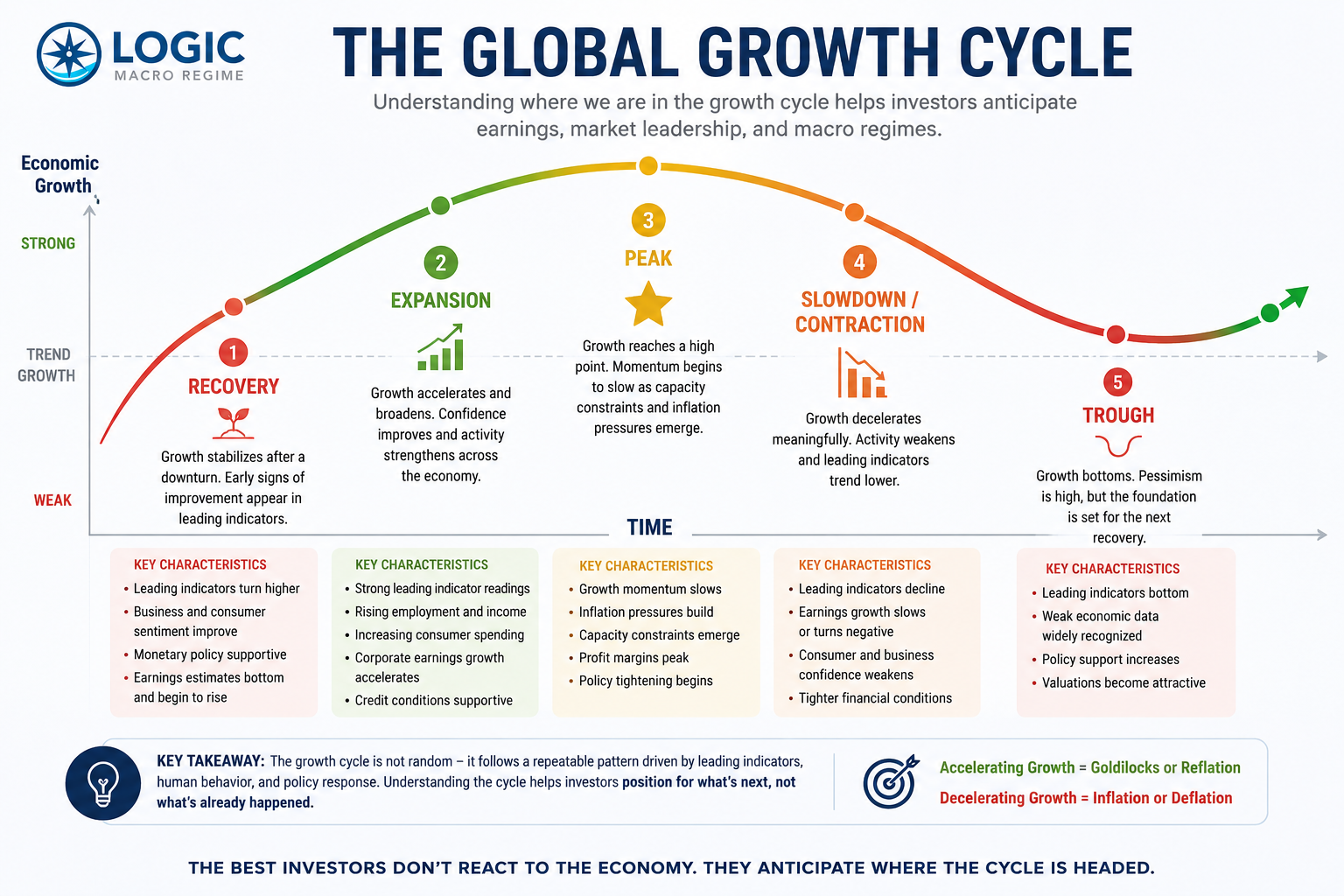
- Recovery: The initial turn where growth begins to bottom out and move higher; liquidity often begins to flood the system.
- Expansion: The "meat” of the cycle where growth is positive and accelerating, supported by healthy credit conditions.
- Peak: The point of maximum growth where momentum begins to stall and inflationary pressures often begin to mount.
- Slowdown/Contraction: A period of decelerating activity, where tightening financial conditions lead to an economic slowdown.
- Trough: The low point of the cycle where the contraction ceases and the excesses of the previous cycle are cleared.
- Recovery: The cycle begins anew.
Understanding these market cycles allows investors to position themselves correctly for the environment they are entering, rather than the one they are leaving.
"In macro, the destination matters less than the direction of travel."
Growth and the Macro Regime Framework
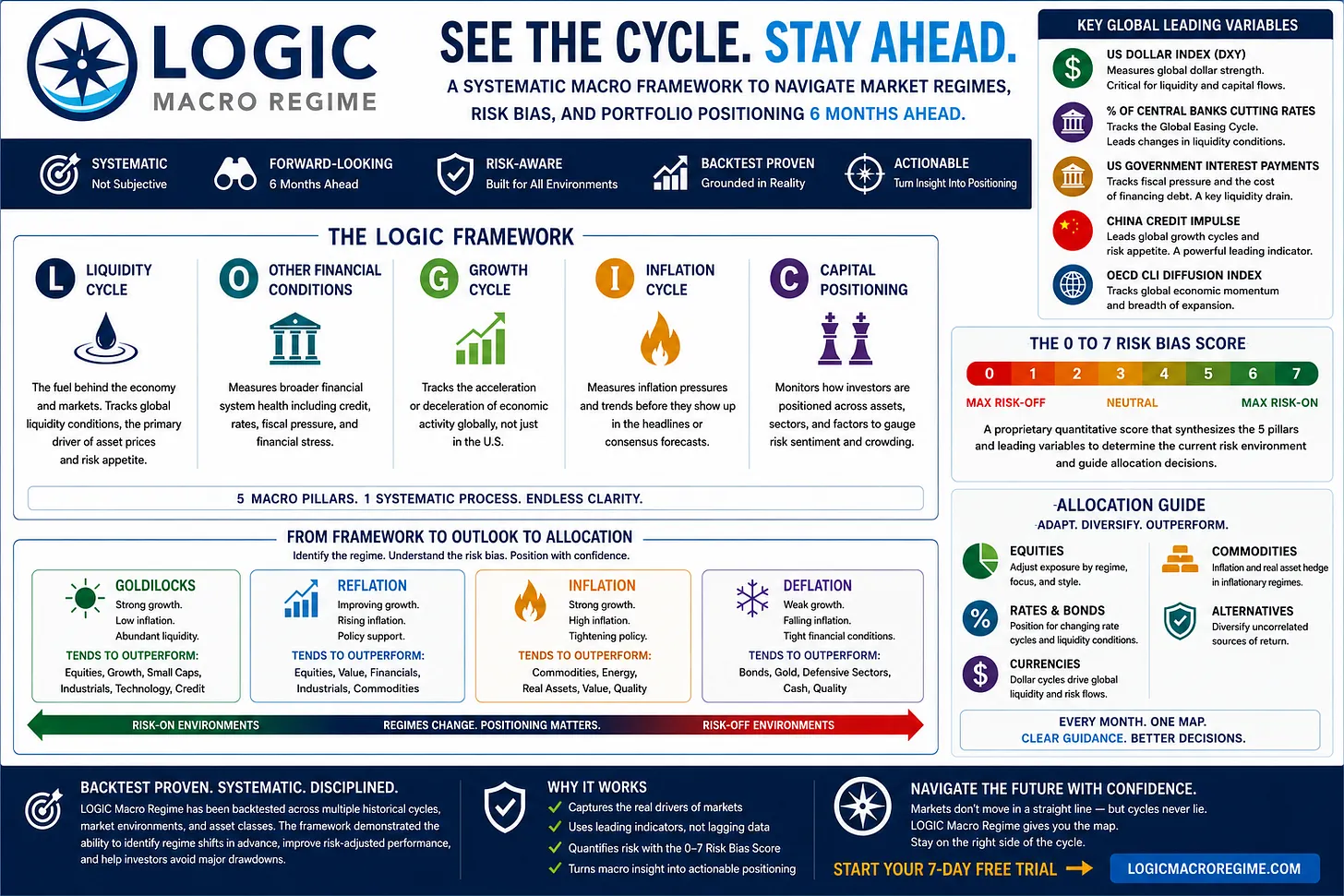
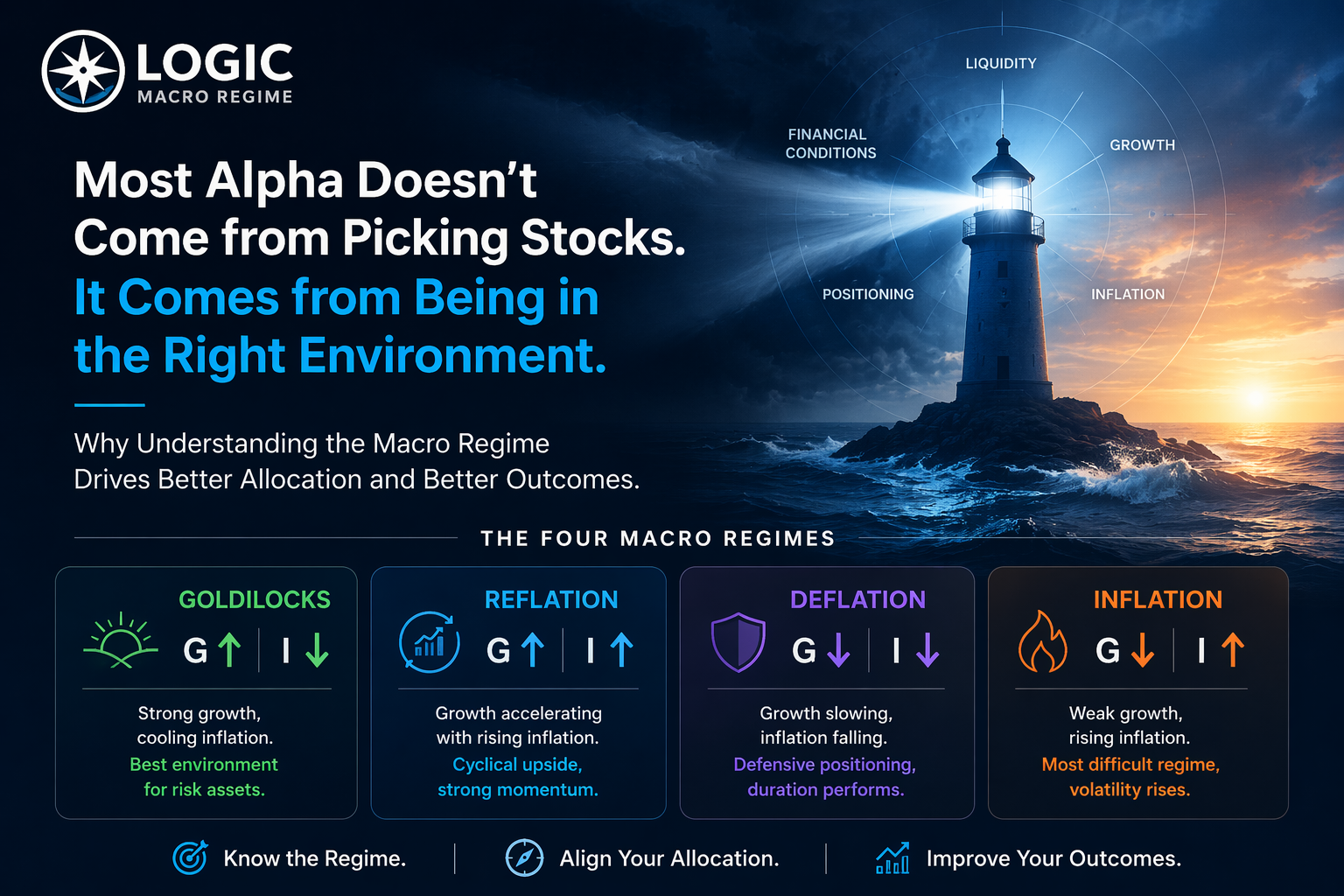
The "G” pillar does not exist in a vacuum. It is the primary input that helps define broader market regimes. By tracking whether growth is accelerating or decelerating, the LOGIC framework categorizes the environment into specific regimes:
- Accelerating Growth: This momentum typically aligns with Goldilocks or Reflation regimes. In these environments, the "wind is at the back” of risk assets and cyclical sectors.
- Decelerating Growth: A loss of momentum typically aligns with Inflation or Deflation regimes.
The first signal of a regime shift is rarely a headline; it is the deceleration of LEIs. When leading indicators peak and begin to roll over, it is an early warning that the regime is shifting from Reflation toward a more defensive environment.
By connecting the economic growth cycle to these regimes, investors can move away from emotional, reactive decision-making. Instead of wondering "what if,” a systematic framework provides a clear roadmap based on where growth and inflation are actually heading.
Conclusion: The Ultimate Investor Advantage
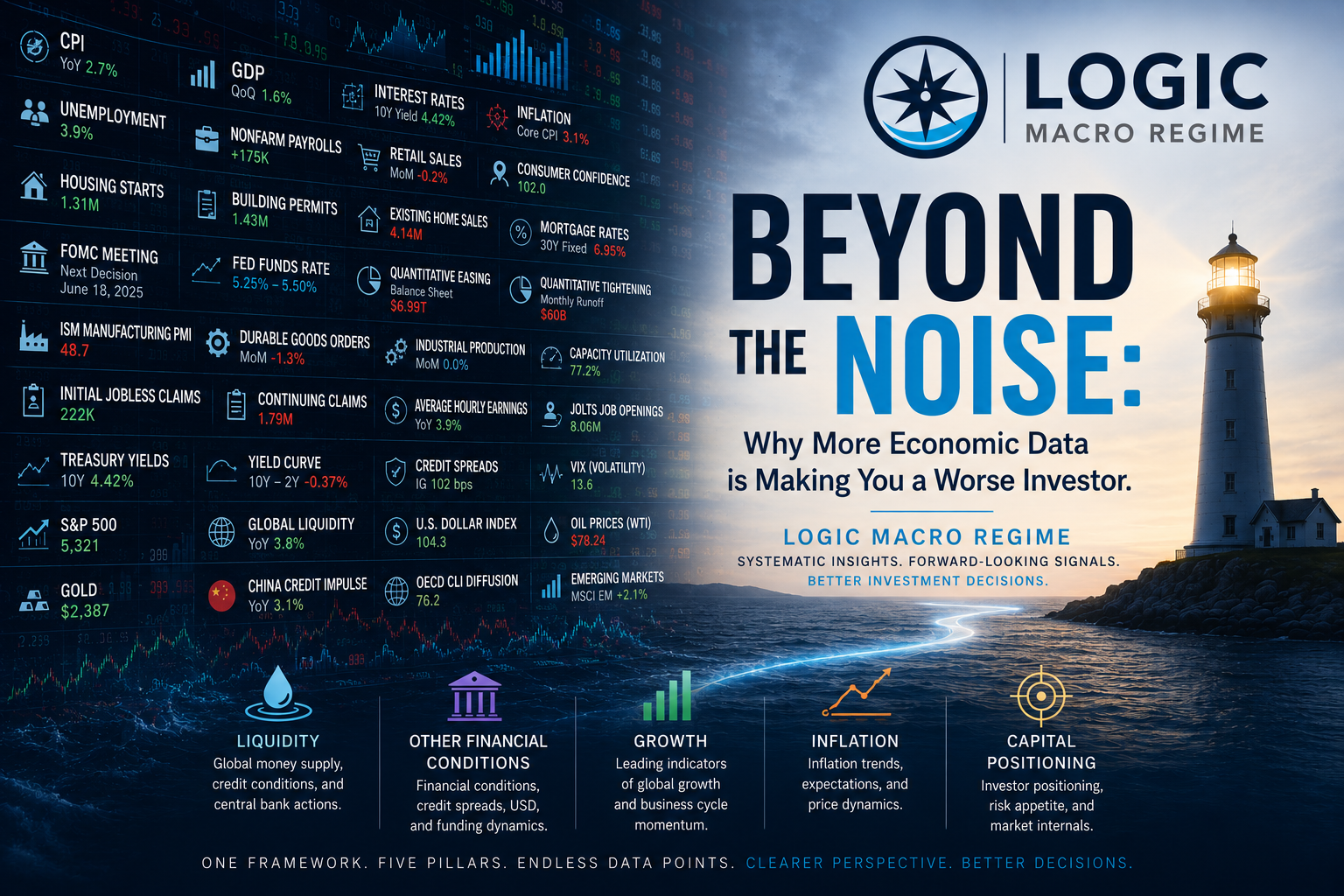
In a world of constant noise and volatile stock market trends, the ability to distinguish between lagging headlines and forward-looking indicators is a superpower. The stock market and economy are linked, but they do not move in lockstep; the market is always trying to solve for the future.
By mastering the Growth Cycle and the "G” pillar of the LOGIC framework, you gain an institutional-level advantage. You move from being a participant who reacts to the news to a strategist who anticipates the shift.
"Systematic macro thinking is the bridge between market chaos and investment clarity."
Understanding the global growth cycle is the most important tool for navigating the complexities of the modern financial landscape. By focusing on the underlying waves of growth, you can remain positioned for success, regardless of the macro regime.
Stay Systematic.