Beyond the FOMC Headlines
Most investors spend their careers fixated on the next Federal Open Market Committee (FOMC) meeting, obsessively dissecting every syllable of a central bank press release to guess what might happen today. This narrow focus is a fundamental error. While the actions of a single central bank are significant, they often act as noise that obscures the much larger, more powerful signal.
At LOGIC Macro Regime, we've learned that the smarter question isn't what one bank is doing this afternoon, but where global momentum is heading. Identifying major macro currents before they become obvious is the foundation of our framework.
To find the real edge, you have to look past the "Fed-watching" theater and toward the broader global signal.
The Momentum Trap: Why the Rate of Change is Your North Star
In macro investing, the rate of change is far more significant than any single interest rate decision. A static measure - looking at an interest rate in isolation - tells you where things are, but it tells you nothing about where they are going.
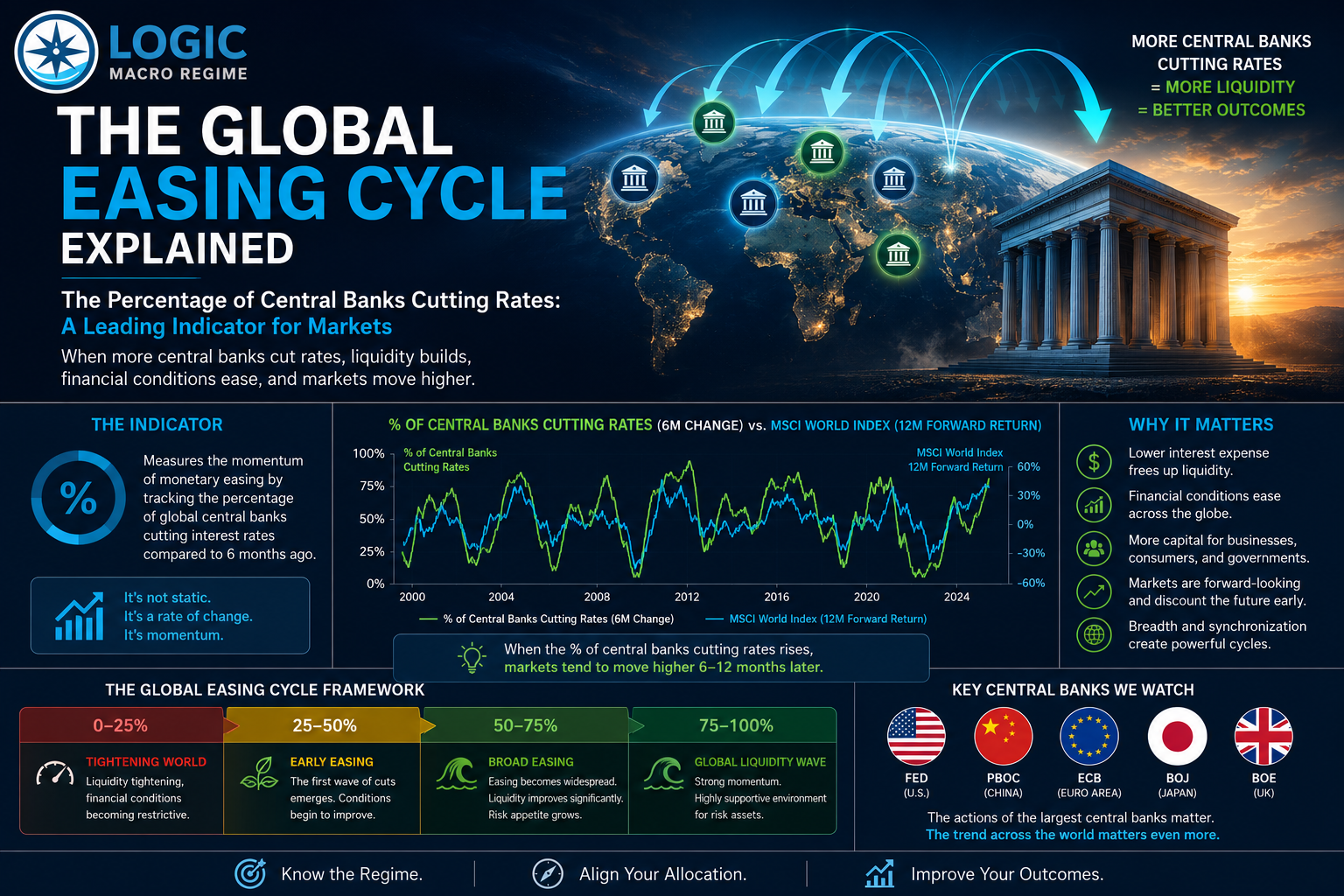
We track a specific metric that the "Fed-watchers" almost always miss: the percentage of global central banks cutting interest rates compared to six months earlier. We use a six-month lookback for a specific reason: it filters out the "one-off" noise of a single rogue policy tweak and confirms a genuine regime shift. When this indicator moves, it isn't just a policy change; it's an acceleration.
"Most investors focus on what central banks are doing today. The smarter question is whether more and more central banks around the world are beginning to move in the same direction."
The Power of Diffusion: When the Season Changes
To understand the significance of global shifts, we look at a "diffusion index." This tracks participation rates - essentially measuring how many players are joining the move. The distinction between a local event and a global regime is found in the breadth of participation.
- A local event: One central bank cutting rates.
- A trend: Five central banks cutting rates.
- A global monetary cycle: Twenty or more central banks cutting simultaneously.
Think of it like a weather system. A single dark cloud over one city is a local event. But when those clouds begin to gather across the entire horizon, you aren't looking at a localized shower; you are looking at a change in the season. Participation rates provide a much clearer signal than individual observations because they reveal the true strength of the underlying global trend.
Transmission: How the Signal Hits the Real Economy
Synchronized easing doesn't stay confined to central bank ledgers; it moves through the financial system via the yield curve. When a growing percentage of central banks cut policy rates, the signal spreads through the term structure.
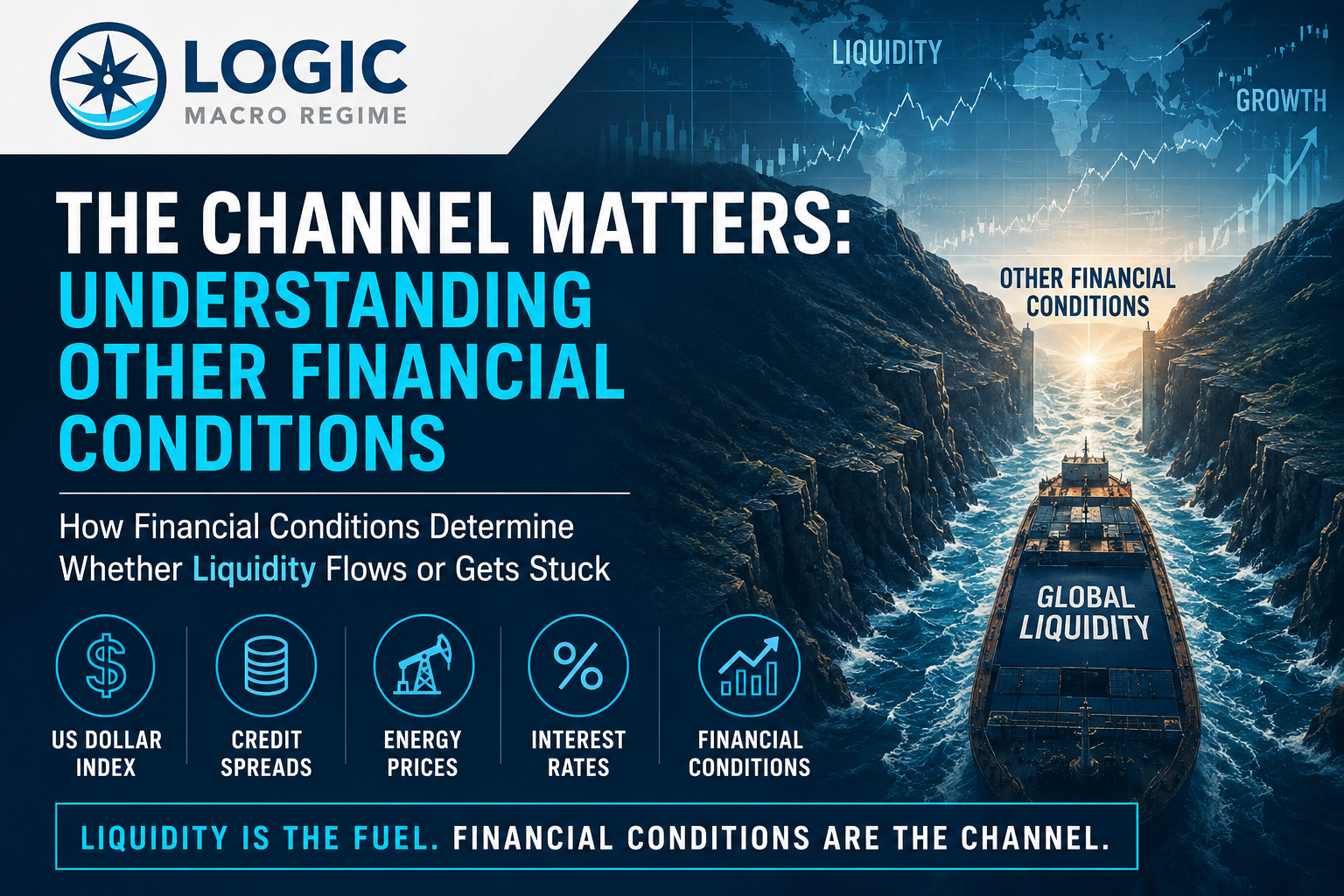
Crucially, this often leads to a steepening of the curve. If the short end drops faster than the long end, banks - the primary providers of liquidity, have a much greater incentive to lend. This "easing of financial conditions" is the primary engine for improved global liquidity.
The specific economic reliefs include:
- Cheaper Business Refinancing: Corporations restructure debt at lower costs, shifting capital from interest payments to expansion and R&D.
- Lower Consumer Borrowing Costs: As the yield curve shifts, mortgage and credit rates drop, effectively handing household discretionary income back to the consumer.
- Reduced Government Debt Servicing: Lower rates reduce the cost of carrying public debt, altering the fiscal landscape and reducing the "crowding out" of private capital.
The Market as a Time Machine
Financial markets do not wait for the "all-clear" signal from lagging economic reports. They are forward-looking mechanisms that discount easing momentum long before the benefits appear in GDP or employment data.
As easing momentum builds, risk appetite and asset allocation shift in anticipation of future liquidity. This is why identifying these macro currents early is vital. By the time the official data reflects the improvement, the market move is often already priced in.
"LOGIC Macro Regime is not about forecasting headlines. It is about identifying major macro currents before they become obvious."
Regime Synthesis: The Precursor to Growth
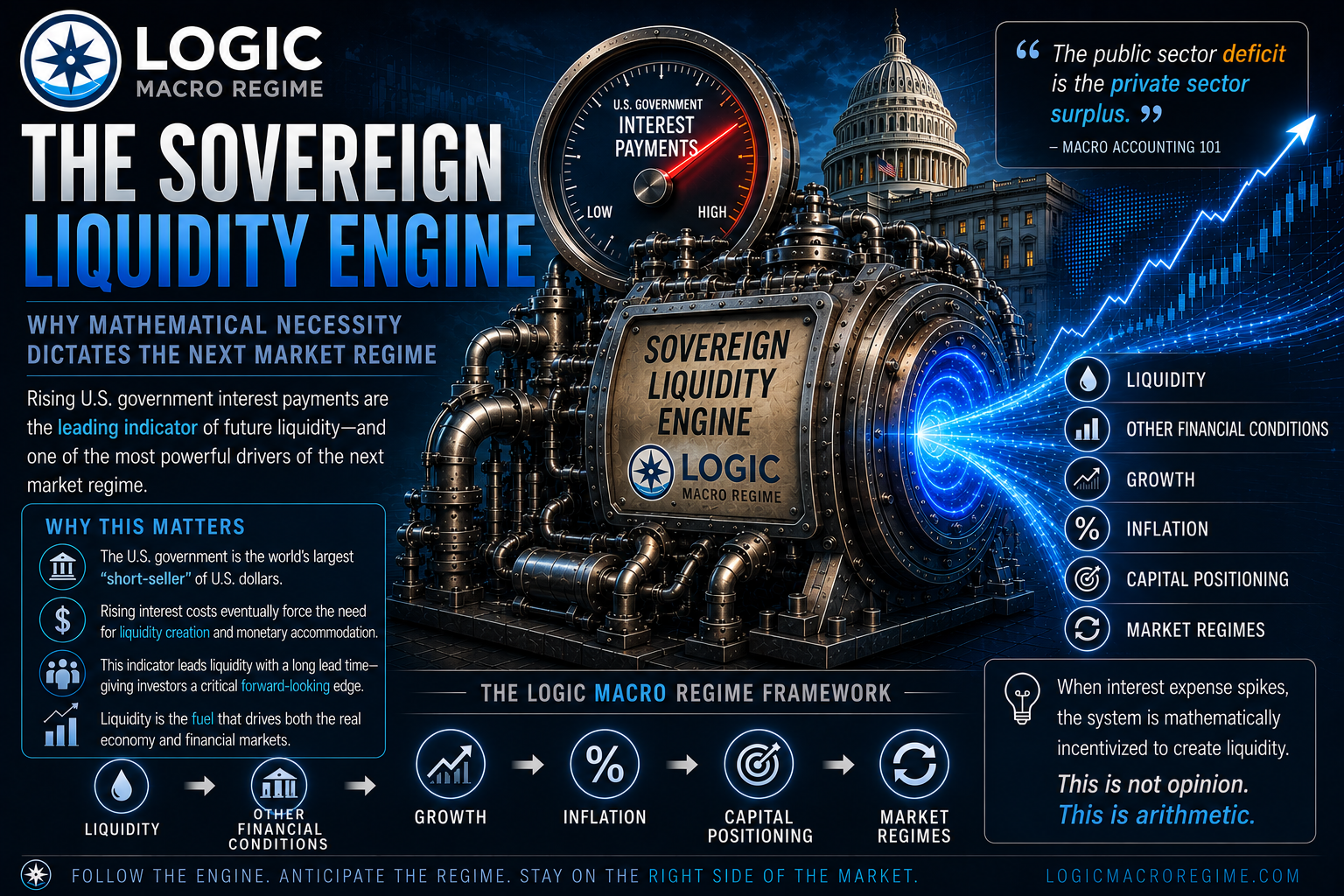
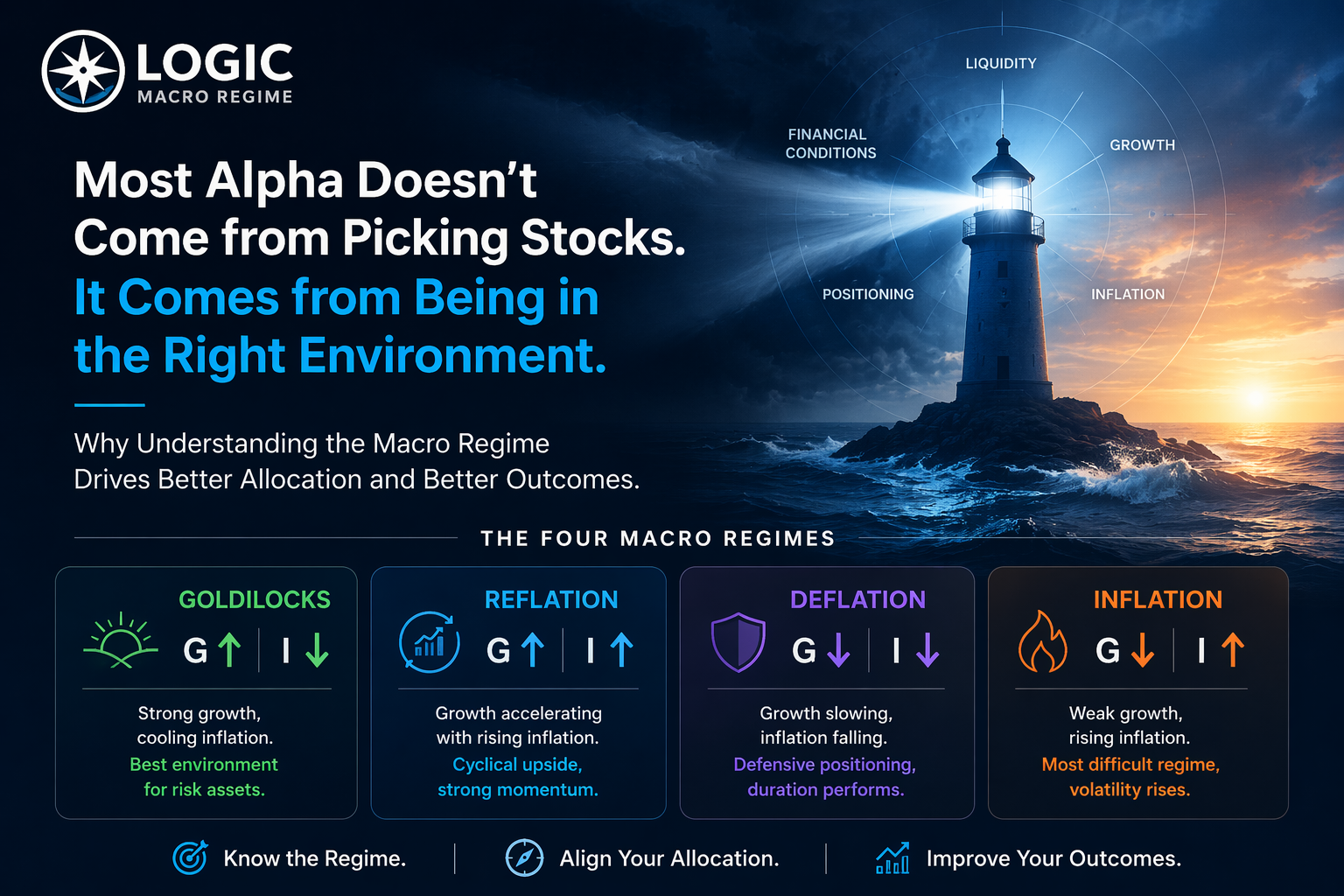
At LOGIC Macro Regime, we don't view the Easing Cycle in a vacuum. It is the lead domino in our broader framework of the Liquidity, Growth, and Inflation cycles. The Global Easing Cycle serves as a leading indicator for the Global Growth Cycle.
When we see the percentage of banks cutting rates rise, we are seeing the fuel being poured into the engine. This easing is the precursor to the growth acceleration we've described in previous papers like The Global Growth Cycle Explained. By tracking this momentum, we gain a window into the future of risk appetite and capital flow before the broader market recognizes the shift in regime.
The Engines and the Exhaust: Why Breadth Validates Centrality
The "Big Five" - the Federal Reserve, the ECB, the PBOC, the BoJ, and the BoE - are undeniably the engines of the global economy. Their moves create the initial torque. However, the other 40+ central banks act as the "exhaust" or the "confirmation."
When the Big Five move, it's a headline. But when the "Global Tide" of smaller banks joins in, it's a confirmed regime. This breadth is what sustains the "bid" for risk assets. When the tide goes out globally, it provides a powerful tailwind for liquidity-sensitive assets, including Equities, Credit, and Real Estate.
If you only watch the Fed, you see the engine; if you watch the global diffusion, you see the entire ship moving.
The Edge in Anticipation
The core philosophy of LOGIC Macro Regime is that markets are driven by large-scale macro forces, and those who identify these forces early gain the ultimate edge. By the time the Fed is the talk of the town, the Global Easing Cycle has usually already done the heavy lifting for the portfolio.
The percentage of central banks cutting rates is one of the cleanest windows we have into the future path of global liquidity.
It moves the focus away from noisy, isolated headlines and toward the underlying momentum of the global financial system.
When evaluating your portfolio and the road ahead, remember: The most important question is not whether one central bank is cutting rates. The most important question is whether the world is.
Stay Systematic.