The Ghost in the Machine
Inflation doesn't suddenly arrive with a government press release; it haunts the market as a "ghost in the machine" long before it manifests in the physical world of consumer prices. For the institutional investor, inflation is not a static number but a spectral presence that shifts across the landscape, altering the very terrain of the global economy. As a macro strategist, the core tenet of my craft is simple:
Inflation itself is not what matters; the inflation cycle matters.
Markets typically sense these shifts long before economists do. By the time an inflation spike dominates the news cycle, the most significant capital reallocations have already occurred. To navigate this, one must look "under the hood" of the economy to identify the transition points between regimes. Within our predictive macro framework, the inflation cycle serves as the ultimate regime switch, dictating which asset classes will thrive and which will be starved of the oxygen they need to survive.
Your News Feed is a Rearview Mirror
The primary mistake made by reactive investors is a slavish devotion to the Consumer Price Index (CPI). While the media treats CPI as a real-time pulse, it is fundamentally a rearview mirror. The "ghost" of inflation has usually moved on by the time the official data arrives.
The lag in CPI is structural. Because it relies heavily on survey-based data and slow-moving components like "shelter"- which can take six to twelve months to reflect current market rents - it provides a historical record rather than a forward-looking signal. Relying on this data for asset allocation is like trying to navigate a ship by watching the wake it leaves behind. Proactive investors must focus on the composite of leading indicators that predict where the cycle is heading, not where it was last quarter.
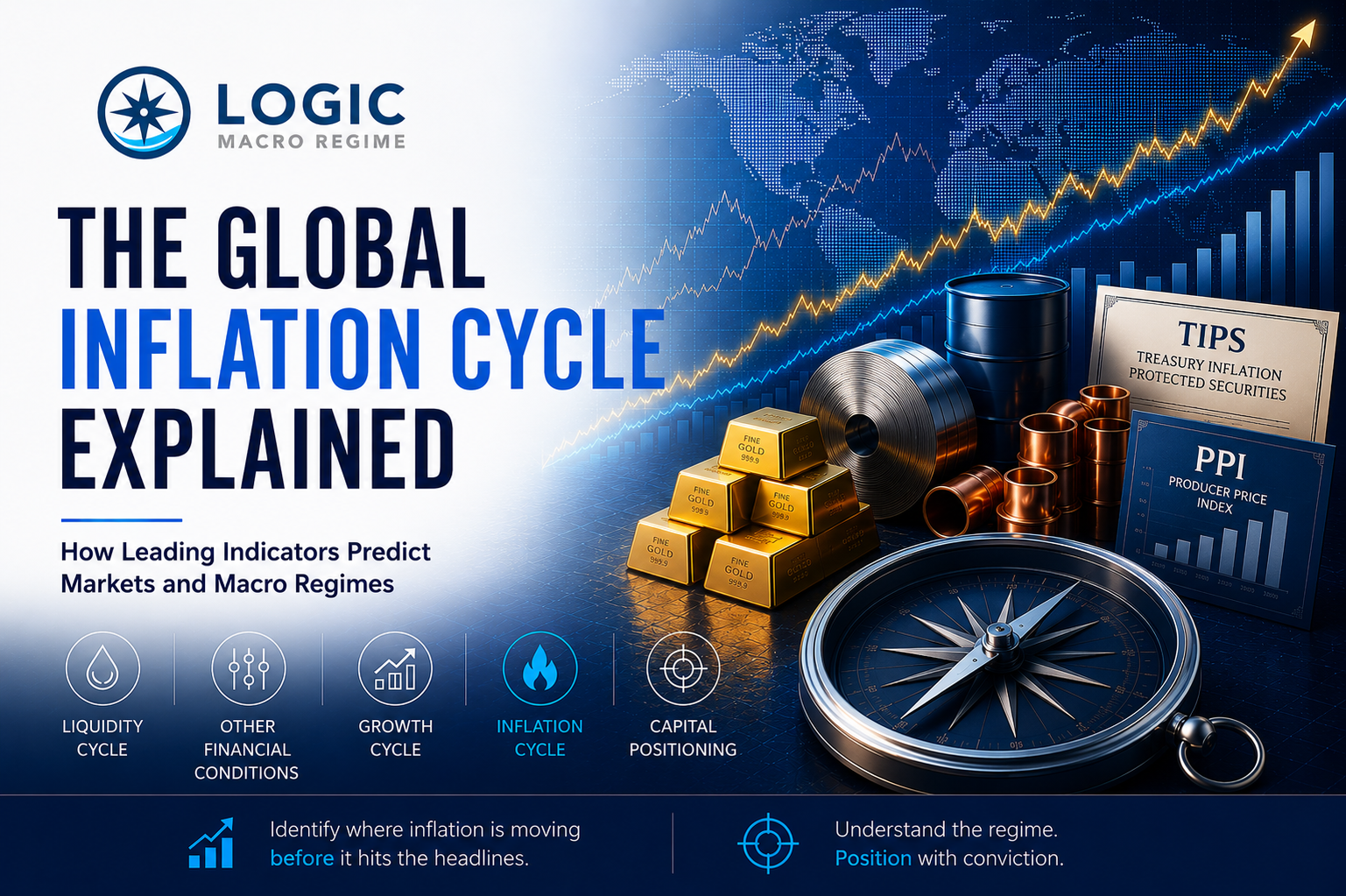
Inflation doesn't suddenly appear. Markets typically sense it long before economists do. By the time inflation hits headlines, markets may already be moving to the next regime.
The Gold-to-Copper Ratio is the Real Pulse
To identify the spectral signs of heat before the fire breaks out, we look to the relationship between industrial commodities and gold. This ratio provides a "real-time" window into the inflation cycle.
In this dynamic, gold serves as a non-yielding monetary anchor. It is a hedge against monetary debasement and often exhibits a sensitive negative correlation with real yields. Conversely, industrial commodities - copper, steel, nickel, and energy are "real-economy demand assets." They are the physical inputs of expansion. When industrial commodities begin to outperform gold, the "ghost" is making itself known. This outperformance signals rising real-world demand pressures and intensifying inflationary forces beneath the surface. It suggests that the "engine" of the economy is heating up, creating price pressures that will eventually filter through the supply chain long before they reach the consumer's wallet.
The "Battle for Liquidity"- Why Your Stocks Might Starve
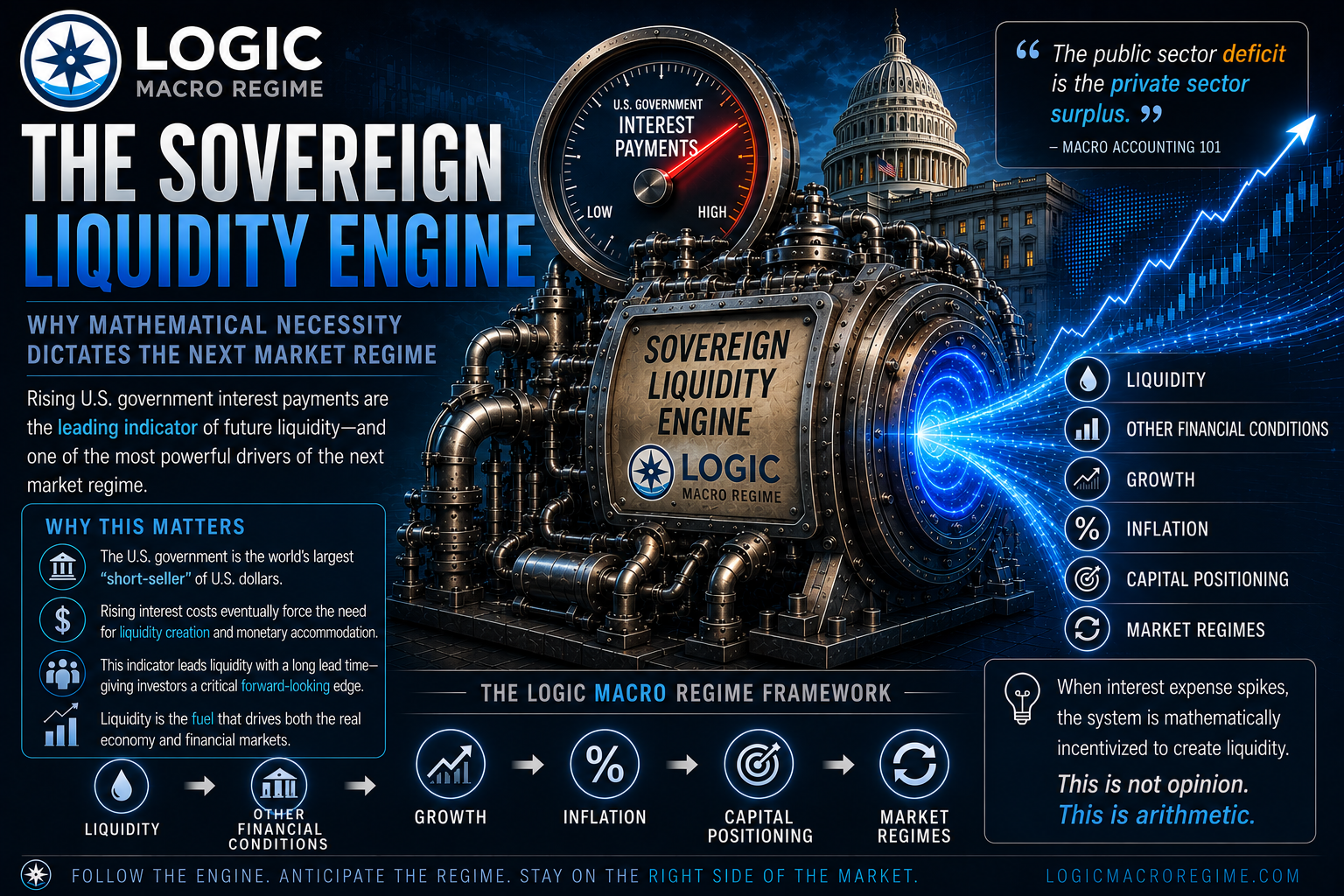
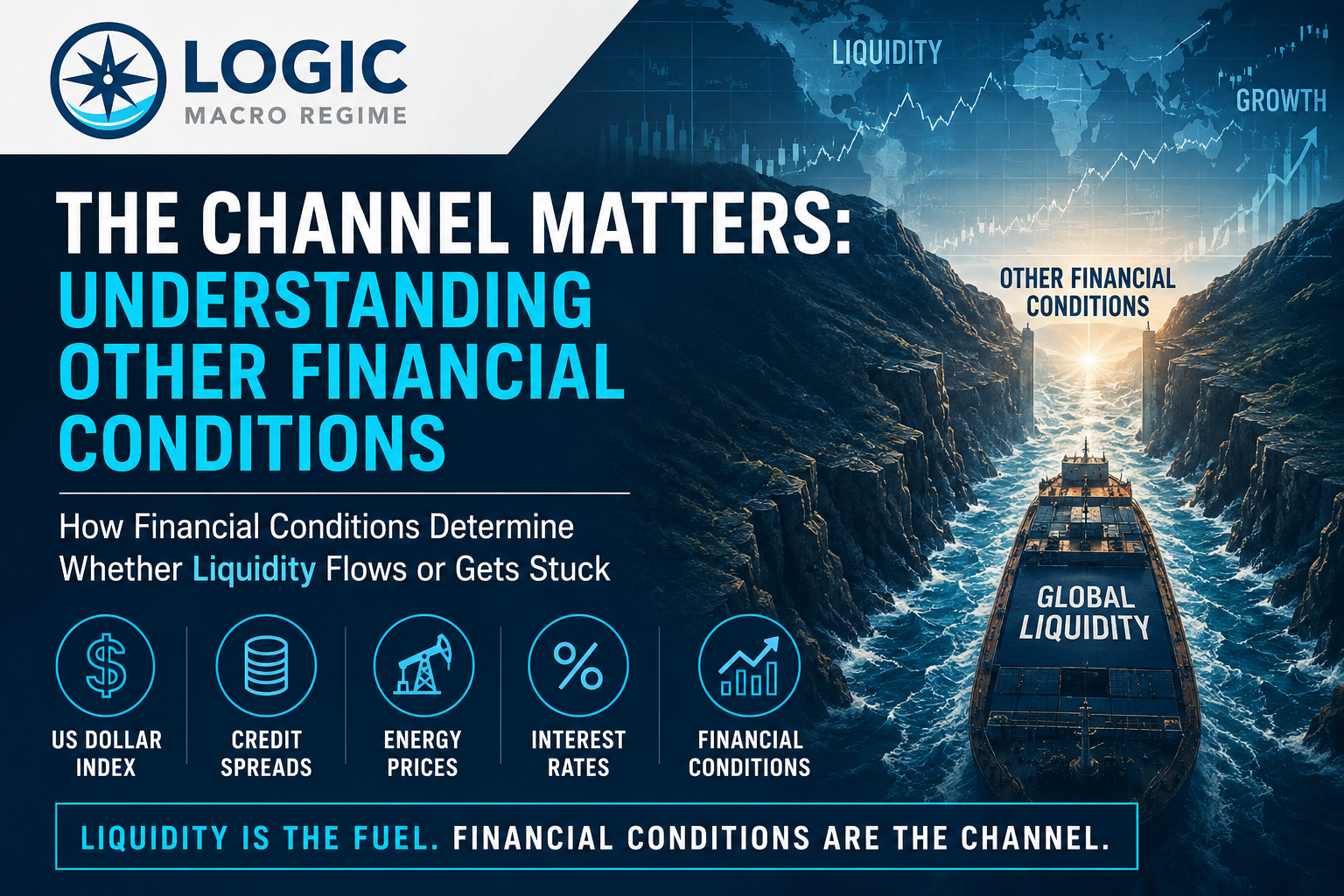
Understanding the macro regime requires a mechanical view of how liquidity moves. As we wrote in The Global Liquidity Cycle Explained, think of liquidity as water flowing through multiple distinct channels: some leads to real goods and services, others to financial assets like stocks and bonds.
As the inflation cycle accelerates and the cost of real-world goods begins to climb, a "battle for liquidity" ensues. When the "goods and services" channel starts pulling harder, the "financial asset" channel is progressively drained.
This is the mechanical reason why equity markets often struggle during high-inflation periods; even if the economy appears to be growing, the liquidity required to bid up stock prices is being diverted to cover the rising costs of fuel, materials, and labor. The "ghost" isn't just raising prices; it is actively starving your portfolio of the capital flow it needs to appreciate.
The Four Faces of the Regime (Reflation, Inflation, Goldilocks, and Deflation)
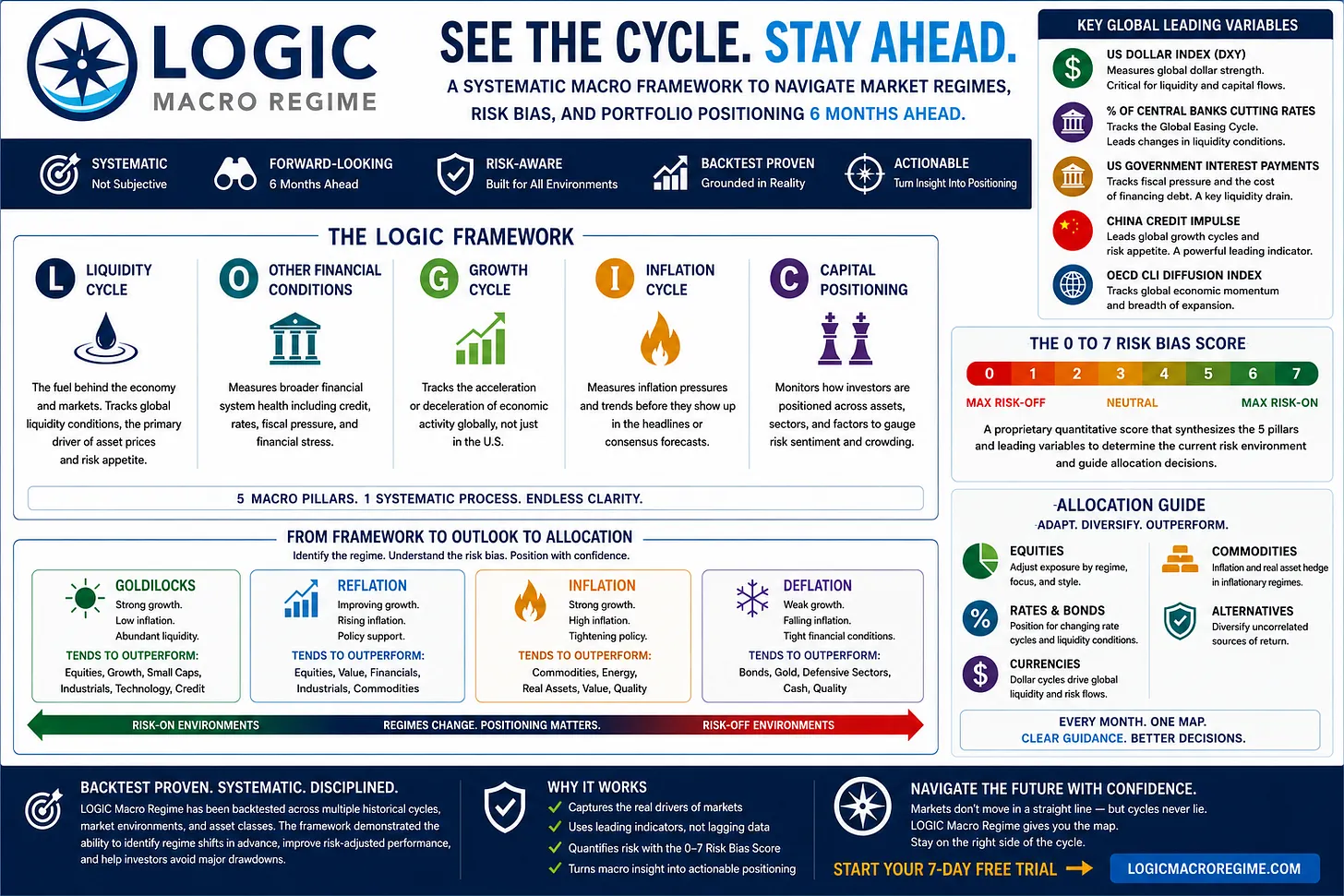
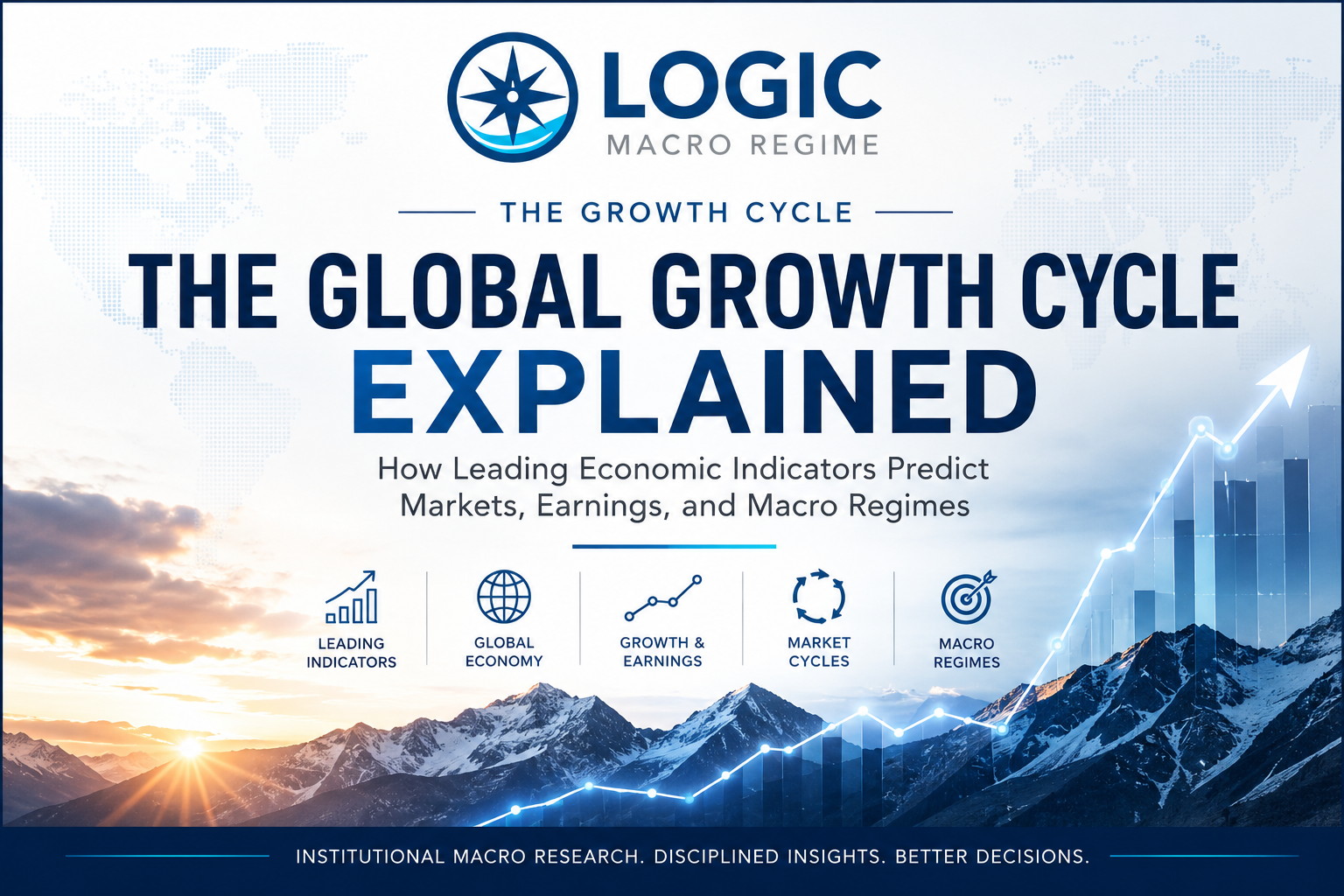
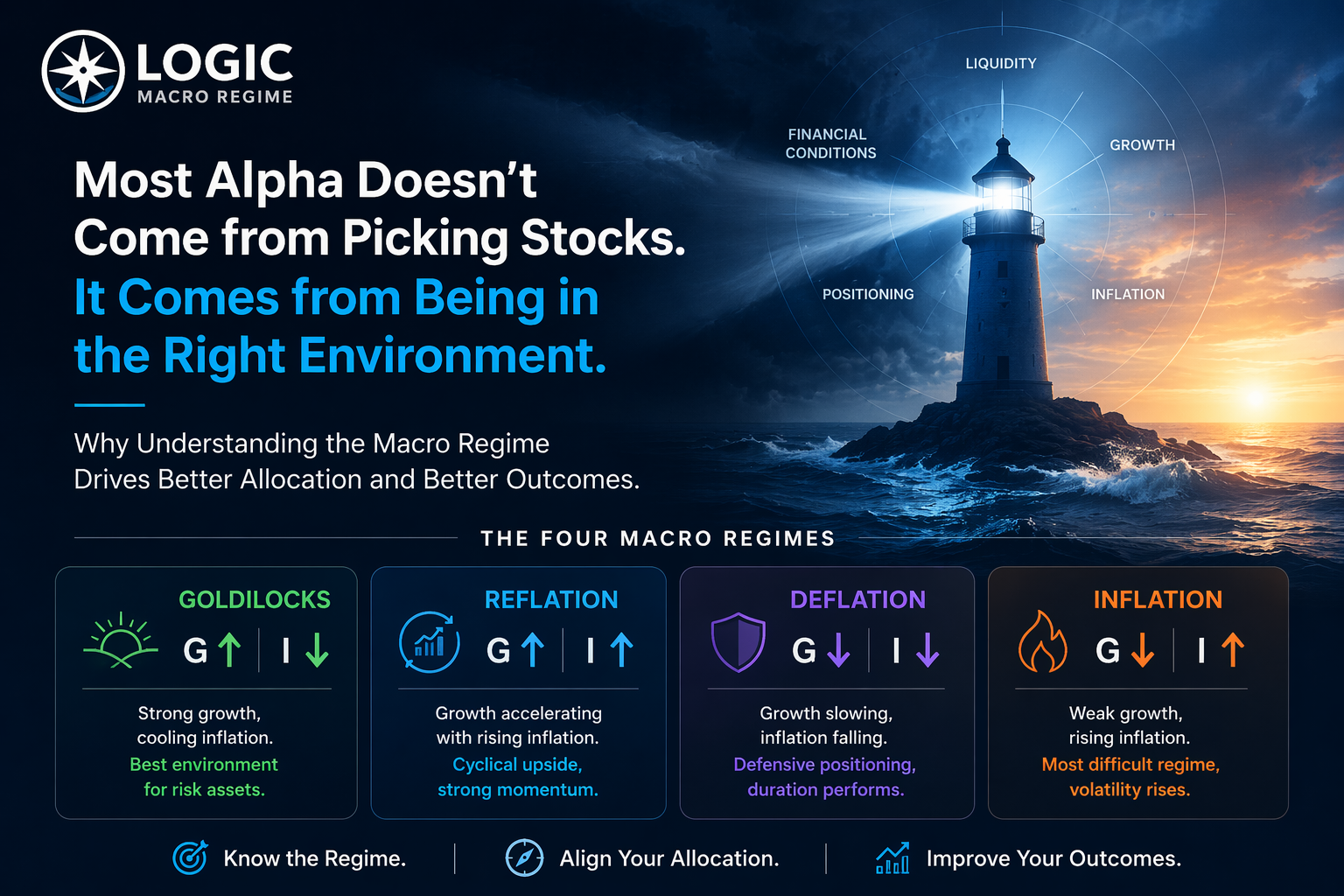
A rise in prices is not a monolithic event. Its impact on your portfolio positioning depends entirely on the interplay between the Growth Cycle and the Inflation Cycle. Within the LOGIC framework, we identify four primary regimes:
- Reflation (Growth Accelerating + Inflation Accelerating): This is generally a constructive environment for equities. Earnings growth is robust enough to allow companies to pass on costs, maintaining margins and supporting asset prices.
- Inflation (Growth Slowing + Inflation Accelerating): This is the "danger zone." As growth slows, companies lose their pricing power. Margins compress because businesses cannot pass on rising input costs to a weakening consumer. Central banks typically become restrictive here, tightening financial conditions and creating a hostile environment for risk assets.
- Goldilocks (Growth Accelerating + Inflation Decelerating): The "sweet spot" for investors. This Goldilocks economy features high growth without the threat of tightening, allowing for maximum valuation expansion.
- Deflation (Growth Slowing + Inflation Decelerating): A regime of contraction where safety, specifically long-duration government bonds, become the only viable harbor as the economy cools and price pressures evaporate.
TIPS and PPI - The Market's Truth Serums
While the public waits for the CPI, the "smart money" watches the bond market and the factory floor. These act as truth serums, stripping away the lag of official reports.
- TIPS (Treasury Inflation Protected Securities): These provide a real-time window into inflation expectations. Unlike economists' forecasts, TIPS reflect where investors are actually putting their money. They capture shifts in real yields and inflation regimes instantaneously.
- PPI (Producer Price Index): This is the leading edge of the spear. Businesses almost always feel the sting of cost increases before they reach the consumer. When PPI begins to climb while growth remains stagnant, it is a clear warning of the "Inflation" regime mentioned above, signaling a coming squeeze on corporate profitability.
Investor Checklist: The Leading Indicator Watchlist
To identify where the inflation cycle is moving before it hits the news, monitor this categorized composite of indicators:
- Industrial Signals (Real-World Demand): Are industrial inputs (copper, steel, energy) trending higher relative to monetary anchors?
- Monetary Signals (Debasement & Yields): Is gold lagging behind industrial commodities? How are real yields behaving in the face of rising costs?
- Expectation Signals (Forward-Looking): Are TIPS prices indicating a rise in market-based inflation expectations?
- Cost Pressures (The Pipeline): Is the Producer Price Index (PPI) accelerating faster than the Consumer Price Index (CPI)?
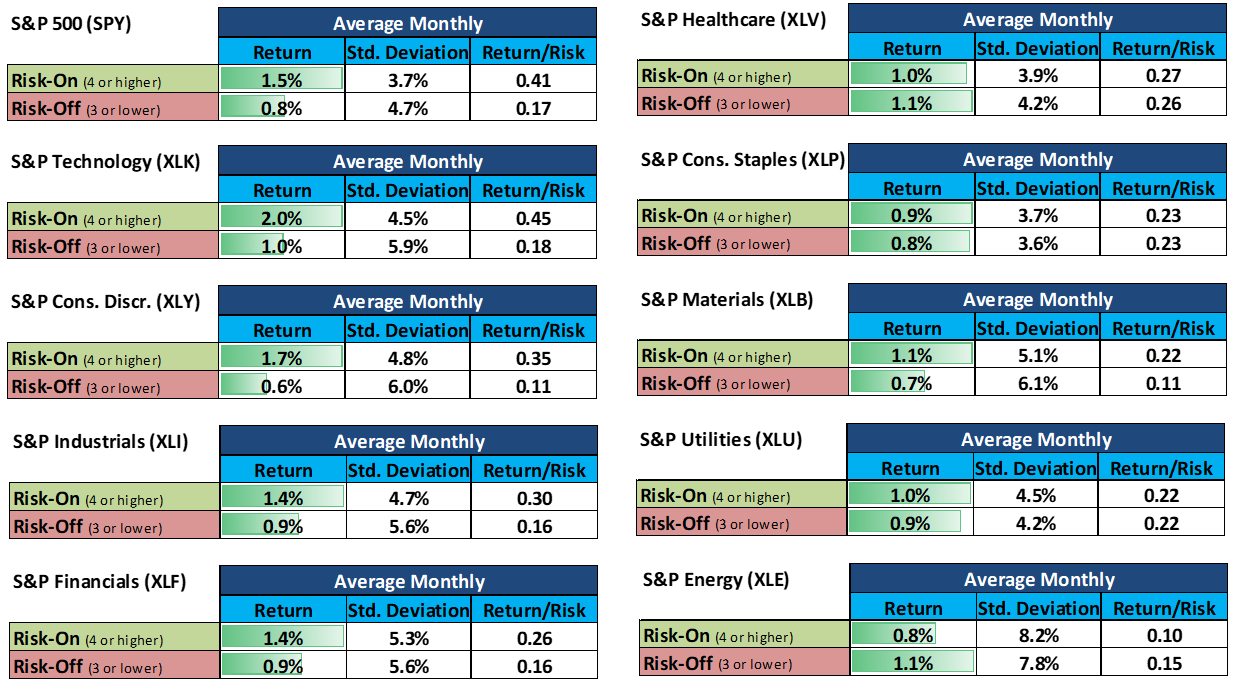
- Market Behavior (Regime Shifts): Is there a shift in sector leadership - for example, Energy and Materials outperforming Technology and Growth?
Conclusion: Beyond the Headline Noise
The objective of sophisticated macro investing is not to react to the news, but to anticipate the shift. Inflation does not move in a straight line; it moves in recurring cycles. Identifying which stage we are in requires looking past the "physical" data and tracking the "spectral" indicators.
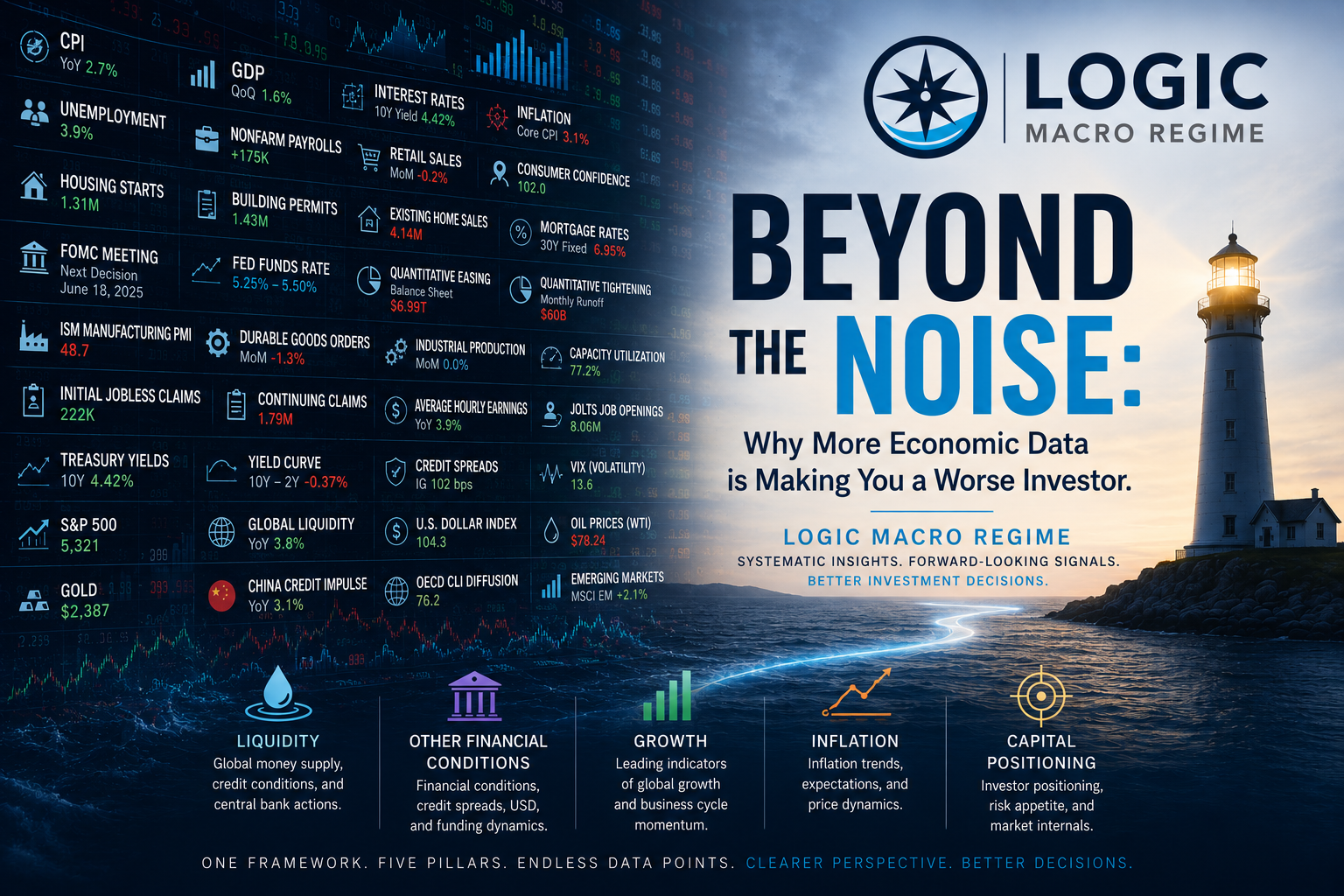
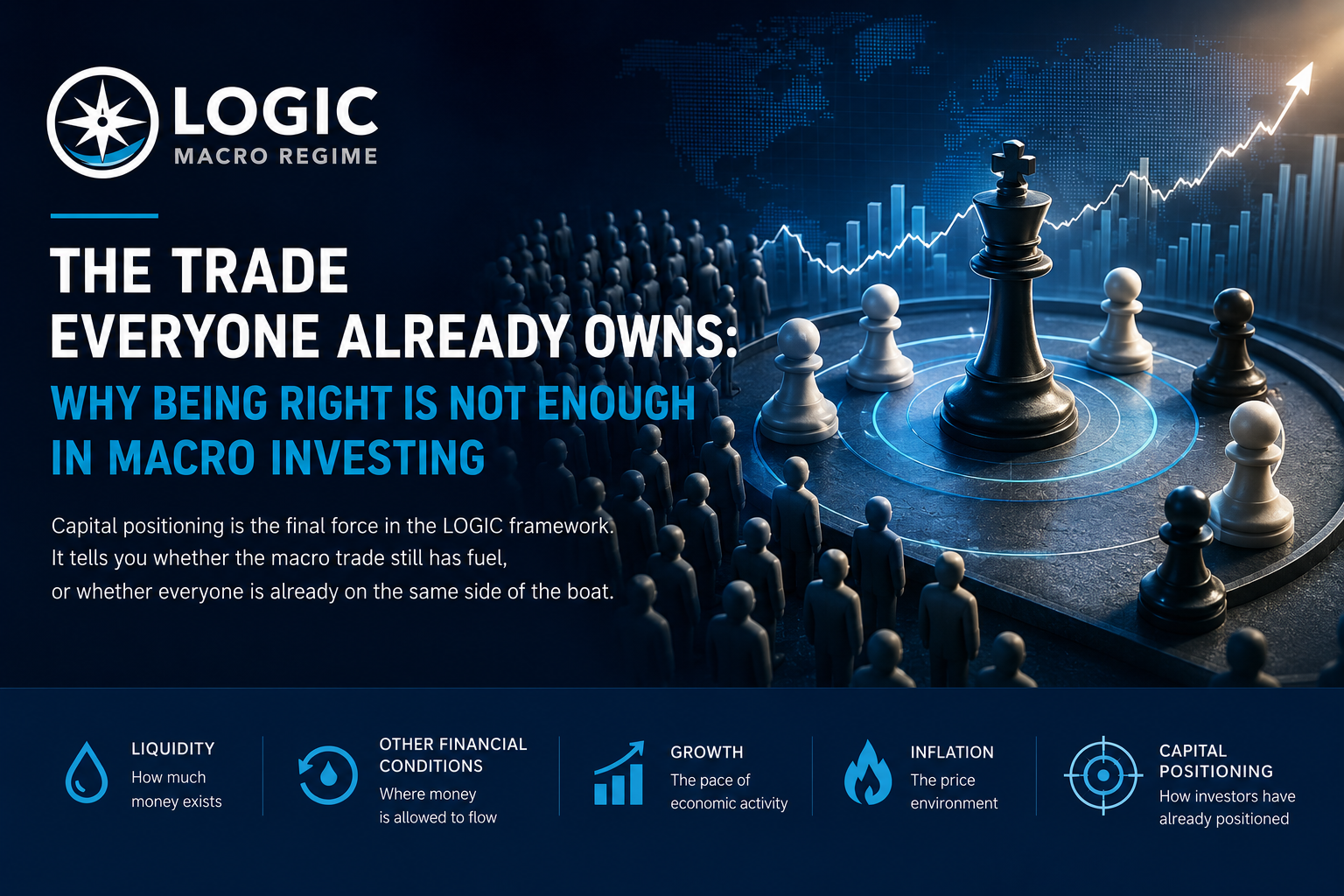
By utilizing the LOGIC Macro Regime framework - analyzing Liquidity, Other Financial Conditions, Growth, Inflation, and Capital Positioning - we move beyond guesswork. We build a predictive macro framework that identifies where the current is flowing before the tide turns.
Most investors are trading based on the last regime's headlines. The question you must ask yourself is: Is your portfolio positioned for the ghost of the past, or the reality of the future?
Stay Systematic.