
The most dangerous place in global finance is a room where everyone agrees with you. We have all seen it. A fundamental thesis looks airtight. Economic growth forecasts are accelerating. Earnings revisions are positive. You wait for the market to reward your brilliance, but the price refuses to budge. Or worse, the asset begins a slow and painful decline.
Most investors fail because they stop at the what and ignore the who. They master the macro environment but forget to look at how the crowd has already reacted to it. They find the right trade but enter at a time when the last buyer has already committed their final dollar.
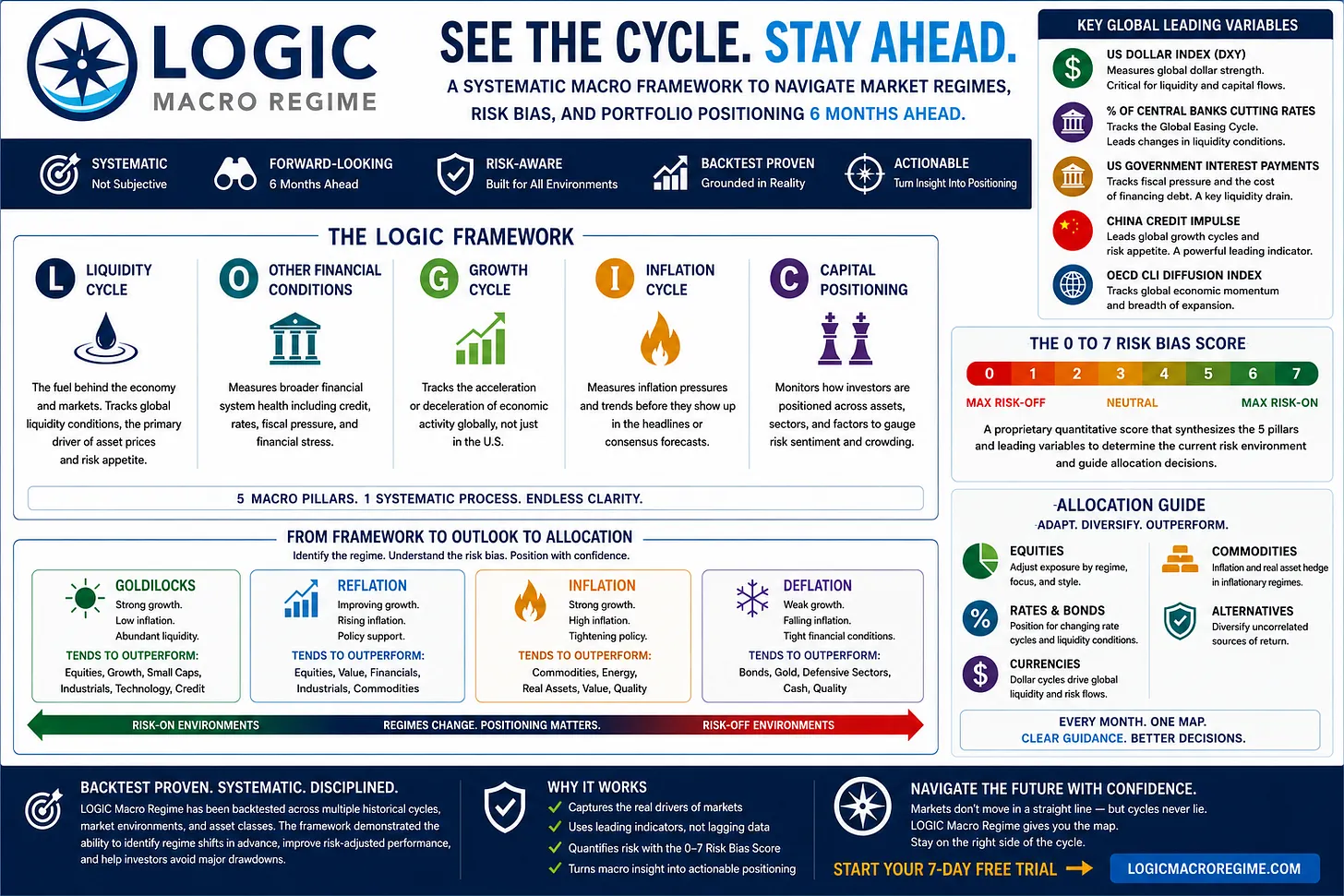
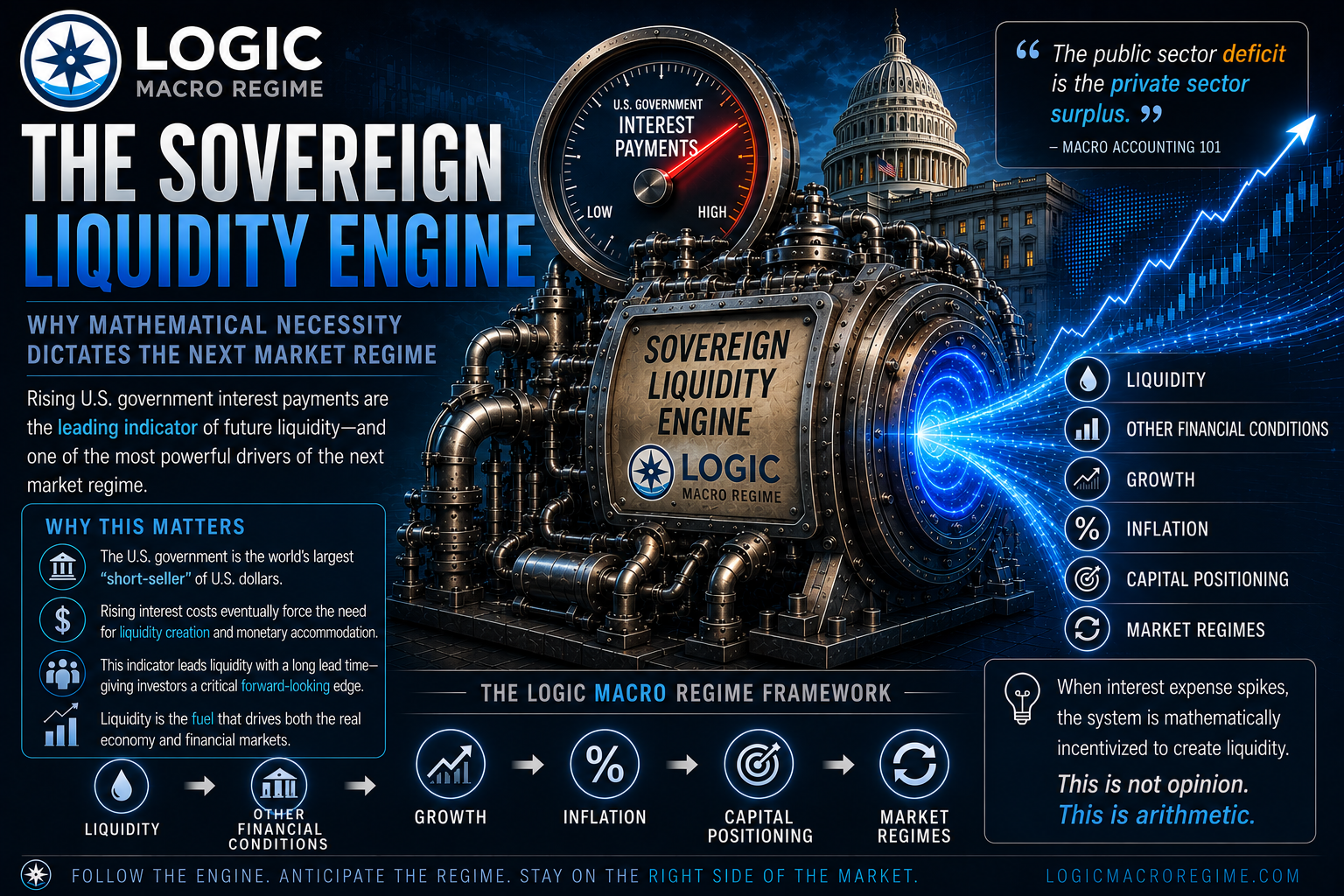
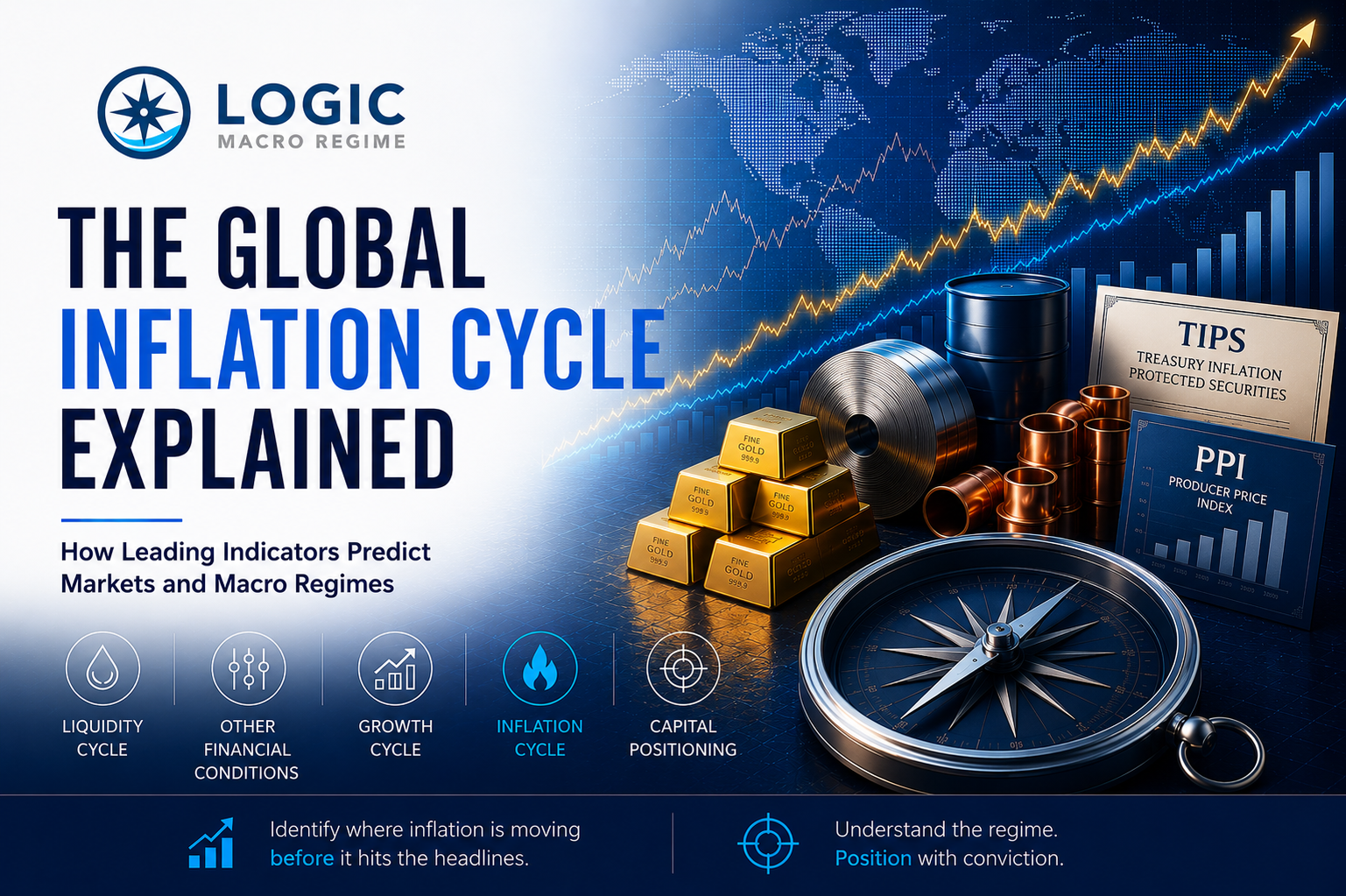
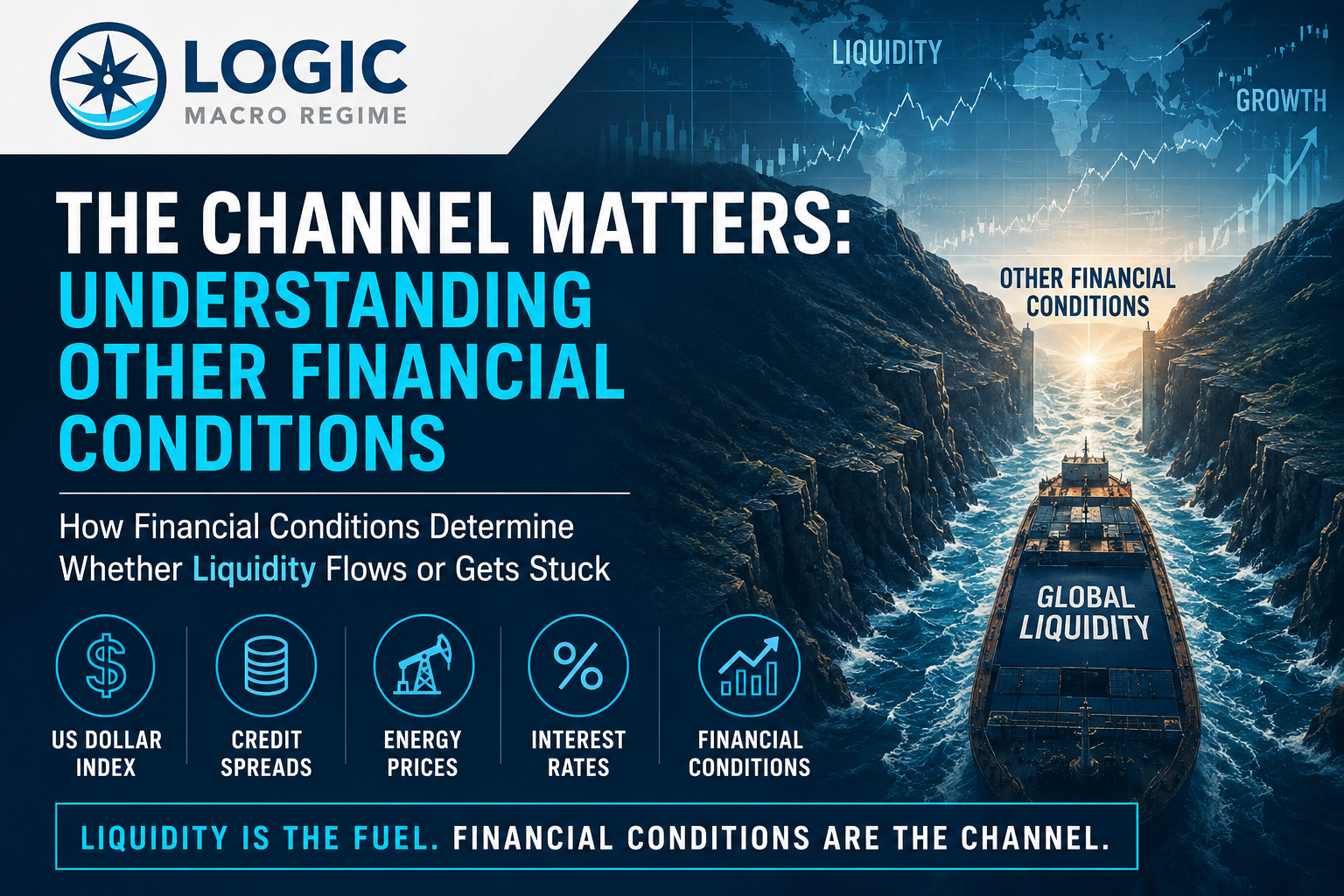
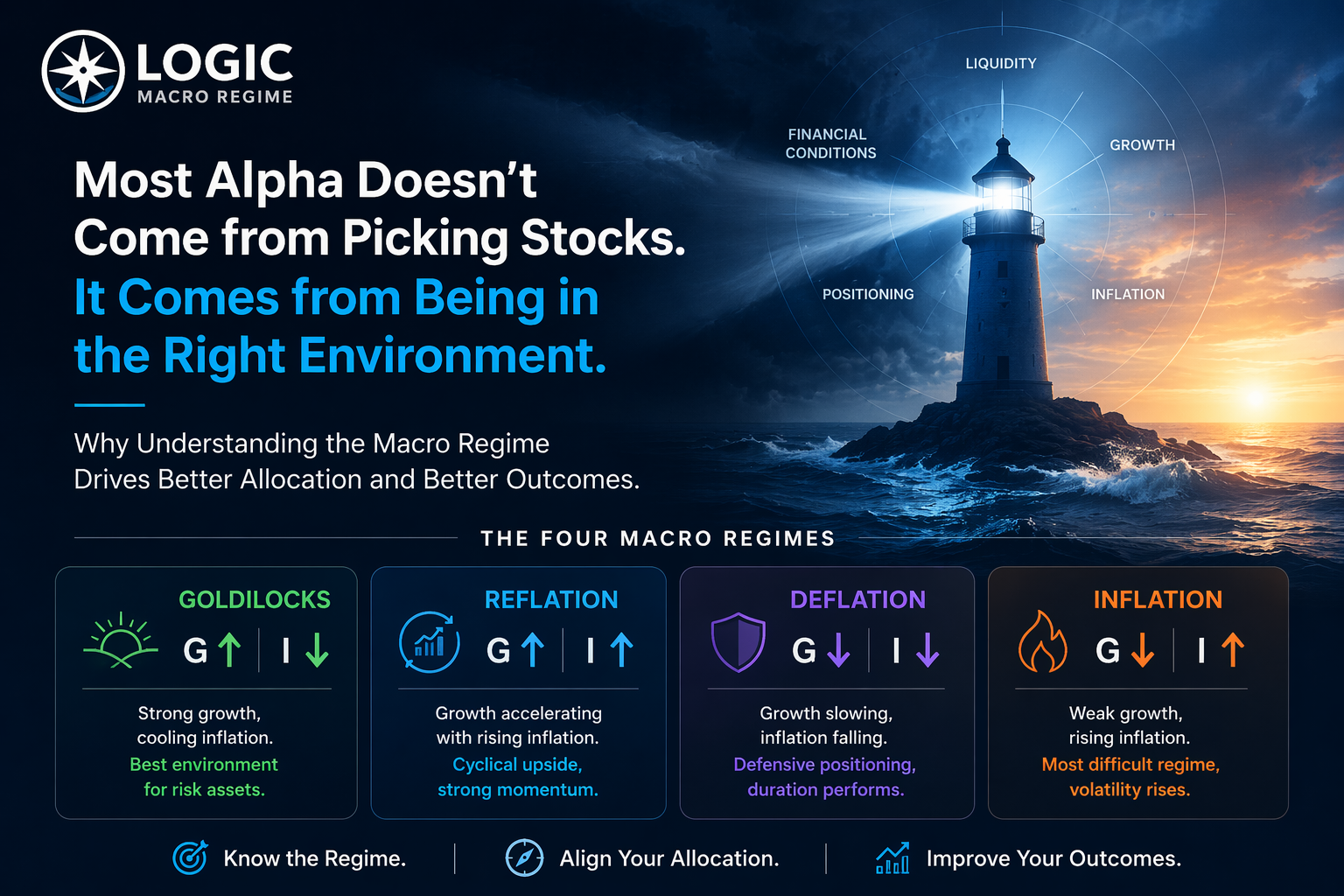
In our LOGIC framework, we analyze five distinct forces: Liquidity, Other Financial Conditions, Growth, Inflation, and Capital Positioning. While the first four define the regime, Capital Positioning (C) is the final force that determines whether a trade is actually investable.
Understanding the environment is only half the battle. The other half is realizing that if a trade is already consensus, being right about the fundamentals will not pay the bills.
Positioning is the Reaction to the Macro Environment
The LOGIC framework operates as a hierarchy of market drivers. Liquidity (L) determines how much money exists in the global system. Other Financial Conditions (O) determine where that money is permitted to flow. Growth (G) and Inflation (I) combine to define the current macro regime. These four variables establish the stage.
Capital Positioning is the final layer. It answers the critical question:
How have investors already deployed their capital in response to these conditions?
Markets do not move on static fundamentals. They move on the delta between reality and expectations.
If the macro environment is pristine but every institutional manager is already max long, there is no marginal buyer left to push prices higher.
"Markets do not simply move because conditions change. Markets move because positioning changes."
The Sports Betting Paradox and the Limits of Being Right
Sports betting offers one of the cleanest analogies for why positioning matters.
Imagine a dominant home team with a superstar roster. They are widely expected to win. Because the outcome appears obvious, the betting public piles into the same side of the wager.
To balance their books, the oddsmakers distort the lines. Even if the team ultimately wins, the payout becomes so negligible that it fails to compensate investors for the risk of an unexpected upset.
You were right about the outcome, but you lost on the trade because the positioning of the crowd distorted the risk versus reward.
Financial markets are no different.
Being right about a fundamental trend is insufficient for generating alpha.
If a trade becomes crowded, the positive news is frequently already embedded in prices. To profit, investors need both a correct thesis and an attractive entry point where the broader market has not yet fully positioned.
Following the Money Out the Risk Curve
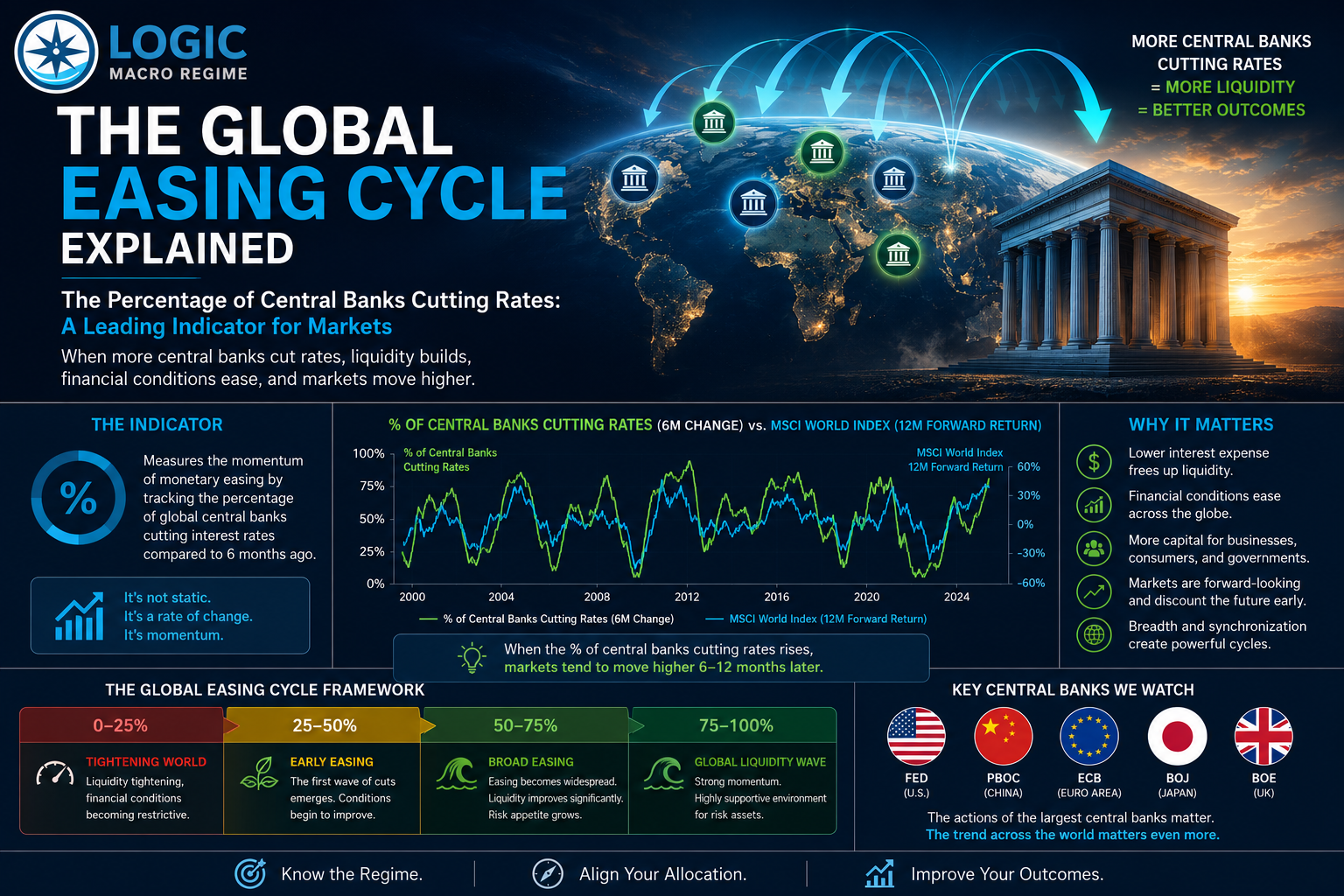
Liquidity is the primary engine that drives positioning. When the "L” in our framework expands, capital does not simply sit idle in bank accounts.
Excess liquidity creates a structural necessity for fund managers. Because many are benchmarked against indices, they cannot afford to remain heavily allocated to cash when the system is flush. They are forced to seek additional return to maintain performance.
This creates a mechanical movement known as moving out the risk curve.
Cash
?
Government Bonds
?
Investment Grade Credit
?
High Yield Credit
?
Large Cap Equities
?
High Beta Equities
?
Small Caps
?
Speculative Assets
During periods of abundant liquidity, investors increasingly favor growth stocks, technology, cyclicals, and speculative assets. This is not because investors suddenly discovered superior insights. It is because more money creates a greater willingness to chase return.
"More money creates more willingness to chase return. It is a structural force, not a choice."
The higher the liquidity, the further out the risk curve capital is pushed.
The Crowded Boat and the Last Buyer
Momentum is a powerful force. As capital flows into an asset, rising prices attract additional buyers. This creates a self-reinforcing loop where price action validates the thesis and generates further inflows.
Momentum tends to beget more momentum.
These trends often persist much longer than valuation models would suggest because the movement of money itself becomes a primary fundamental. However, every trend eventually reaches a point of exhaustion. This is the crowded boat phenomenon. When positioning becomes extreme, the market becomes inherently unstable. Euphoric sentiment and excessive leverage create a scenario where everyone who wants to own the asset already does. In these moments, the market has simply run out of marginal buyers. When the last buyer is gone, the market is left with only potential sellers.
This creates the asymmetry that contrarians seek.
Even minor shifts in growth or inflation expectations can trigger liquidation cascades. Because everyone is leaning on the same side of the boat, the rush toward the exit can become violent. Volatility rises and prices decline, not necessarily because fundamentals suddenly collapsed, but because positioning had become too fragile to sustain the weight of the crowd.
Reading the Crowd: Measuring Positioning
Professional positioning analysis requires looking beyond headlines and into the data. One of the most useful tools is the Commitment of Traders (COT) Report, which separates market participants into distinct groups:
1. Commercials
Often sophisticated hedgers with deep knowledge of underlying markets.
2. Large Speculators
Trend followers and institutional asset managers who generally move with prevailing market direction.
3. Small Speculators
Retail participants who frequently arrive later in the cycle.
The strongest signals frequently emerge at extremes. When Commercials become heavily long while Large Speculators become heavily short, market bottoms can begin forming. Conversely, when retail sentiment reaches euphoric levels and speculators become fully allocated, market tops may be approaching.
Beyond the COT report, we monitor several additional indicators:
- Put/Call ratios
- Equity allocations relative to history
- Fund flow data
- High beta versus low volatility leadership
- Credit spreads
- Market breadth
No single indicator provides the complete picture.
A strategist must evaluate the weight of the evidence across multiple indicators.
"The most significant opportunities for profit are often found at the point of maximum exhaustion, where the last buyer has nothing left to spend."
The Cherry on Top of LOGIC
Capital Positioning is intentionally the final force within the LOGIC framework. It is the cherry on top of the analytical process. You cannot truly assess positioning in isolation. You first need to understand Liquidity, Other Financial Conditions, Growth, and Inflation.
Those variables explain:
What environment exists today?
Positioning explains:
How has the crowd reacted to that environment?
The first four forces help identify high-probability macro outcomes. Positioning determines whether those outcomes still represent attractive opportunities. If the macro says buy, but positioning says everyone has already bought, the trade may be a trap. Understanding the macro environment tells you where the tide is moving. Understanding positioning tells you whether everyone else is already swimming in the same direction.
By mastering the "C” (Capital Positioning) in LOGIC, you move beyond simply being right and start identifying opportunities where the crowd has not already paid for the trade.
Stay Systematic.