Ahoy!
Please note this is a lagged sample report that all LOGIC Macro Regime subscribers received well before the referenced month began. Paid subscribers also have access to the interactive Monthly Macro Map dashboard that clearly summarizes the current and future macro conditions and how to position.
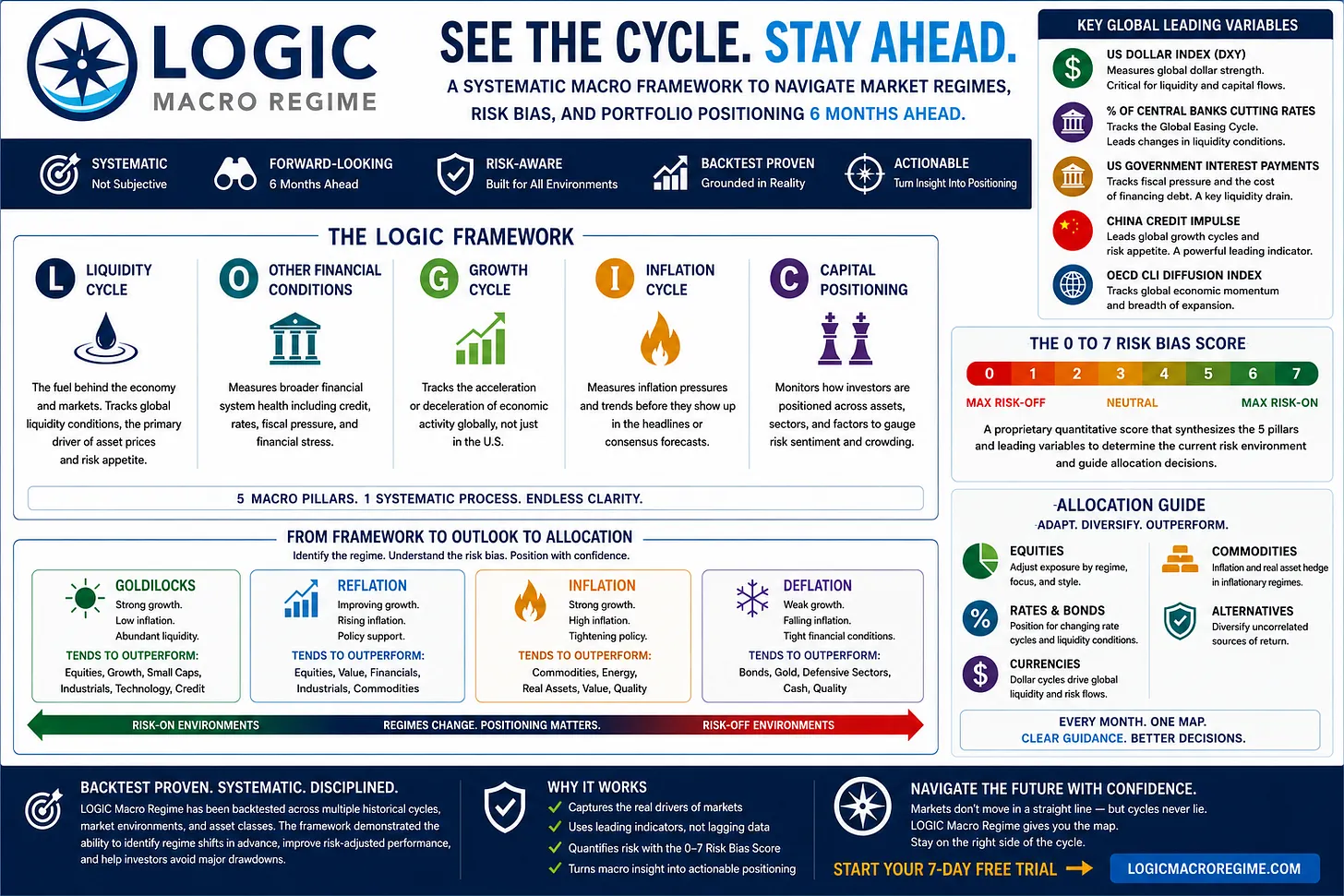
The conditions for the months ahead reflect the aggregate state of the Liquidity, Other Financial Conditions, Growth, Inflation, and Capital Positioning cycles, alongside key global leading indicators.
August 2026 Snapshot
Forward View (6 months) For nearly six months, we've been communicating the same message. Remain invested through the spring and summer, but prepare for conditions to become increasingly challenging as we move into the second half of the year.
That message first emerged back in March, when the LOGIC Framework first projected that September was likely to mark the beginning of a more defensive period. At the time, markets were recovering from a sharp correction, geopolitical headlines dominated investor sentiment, and many believed a prolonged bear market had already begun.
Our framework suggested otherwise.
Liquidity remained supportive, growth expectations stabilized, and the broader macro backdrop continued pointing toward a Risk-On environment. Rather than turning defensive, we viewed that weakness as a buying opportunity and continued favoring Technology and other cyclical sectors throughout the spring and summer.
That proved to be the correct call.
Today, we're beginning to see the next phase of that roadmap unfold.
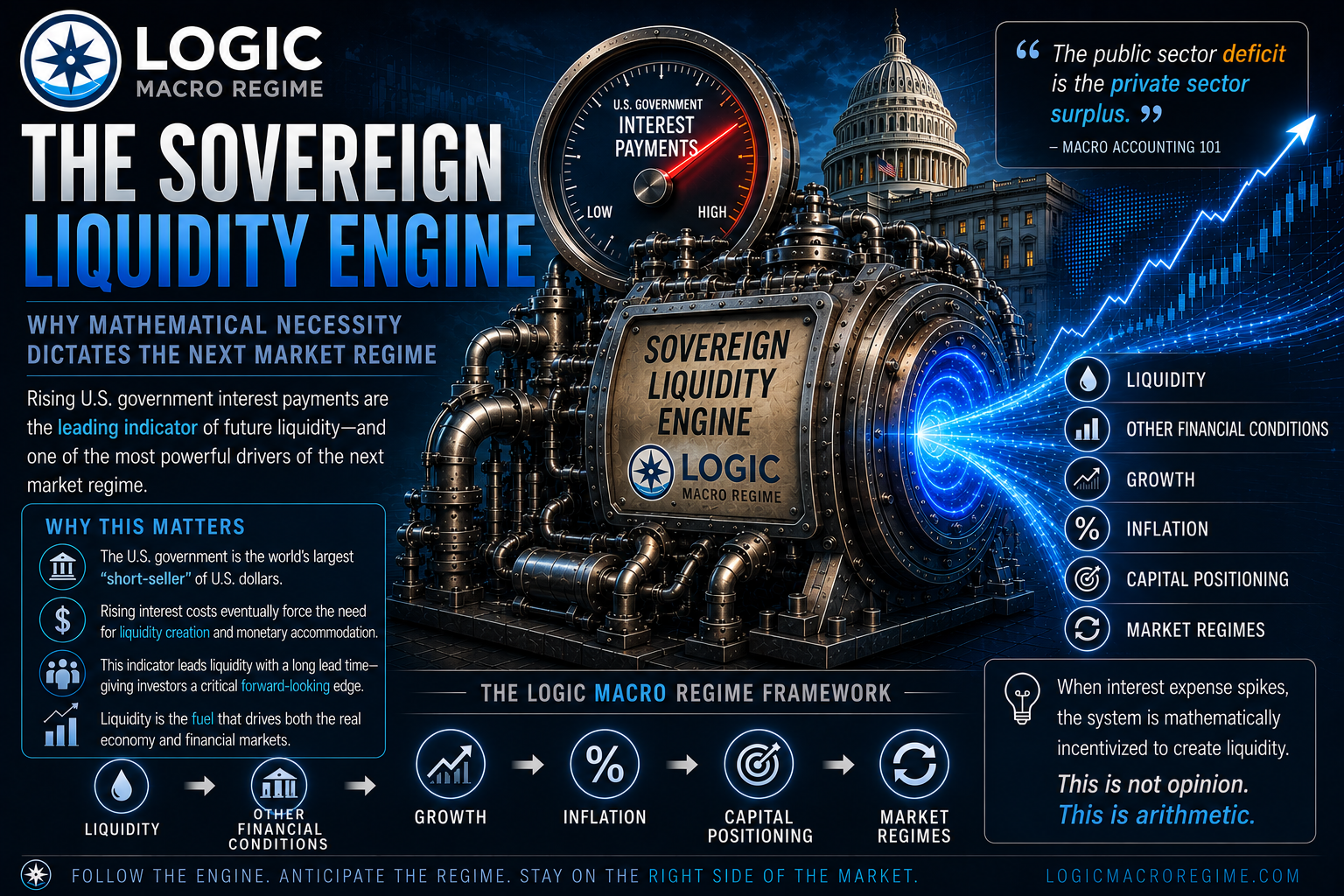
The LOGIC Risk Bias Score has now fallen from 7 to 4, its lowest reading in several months, leaving us just one point above a formal Risk-Off signal. More importantly, several of our key leading indicators continue to lose momentum, suggesting that a transition into Risk-Off is becoming increasingly likely if current trends persist when we update the model next month.
This is exactly what the framework was built to do. Rather than reacting to headlines after markets have already moved, our objective is to identify changes in the macro environment before they become obvious to the broader investment community.
No framework can forecast markets with certainty. However, when a systematic, rules-based process begins pointing toward a shift months in advance - and the data gradually unfold along that projected path - it provides confidence that we're following the signals that matter.
Markets rarely move in straight lines, and we're not calling for an immediate market collapse. Liquidity remains supportive, which argues against that outcome. However, the balance of evidence has clearly shifted. The probability of increased volatility, narrower market leadership and a more defensive market environment has risen meaningfully compared with earlier this year. As always, we'll continue letting the data guide the message rather than allowing headlines to dictate our outlook.
(L) Liquidity Cycle ✅
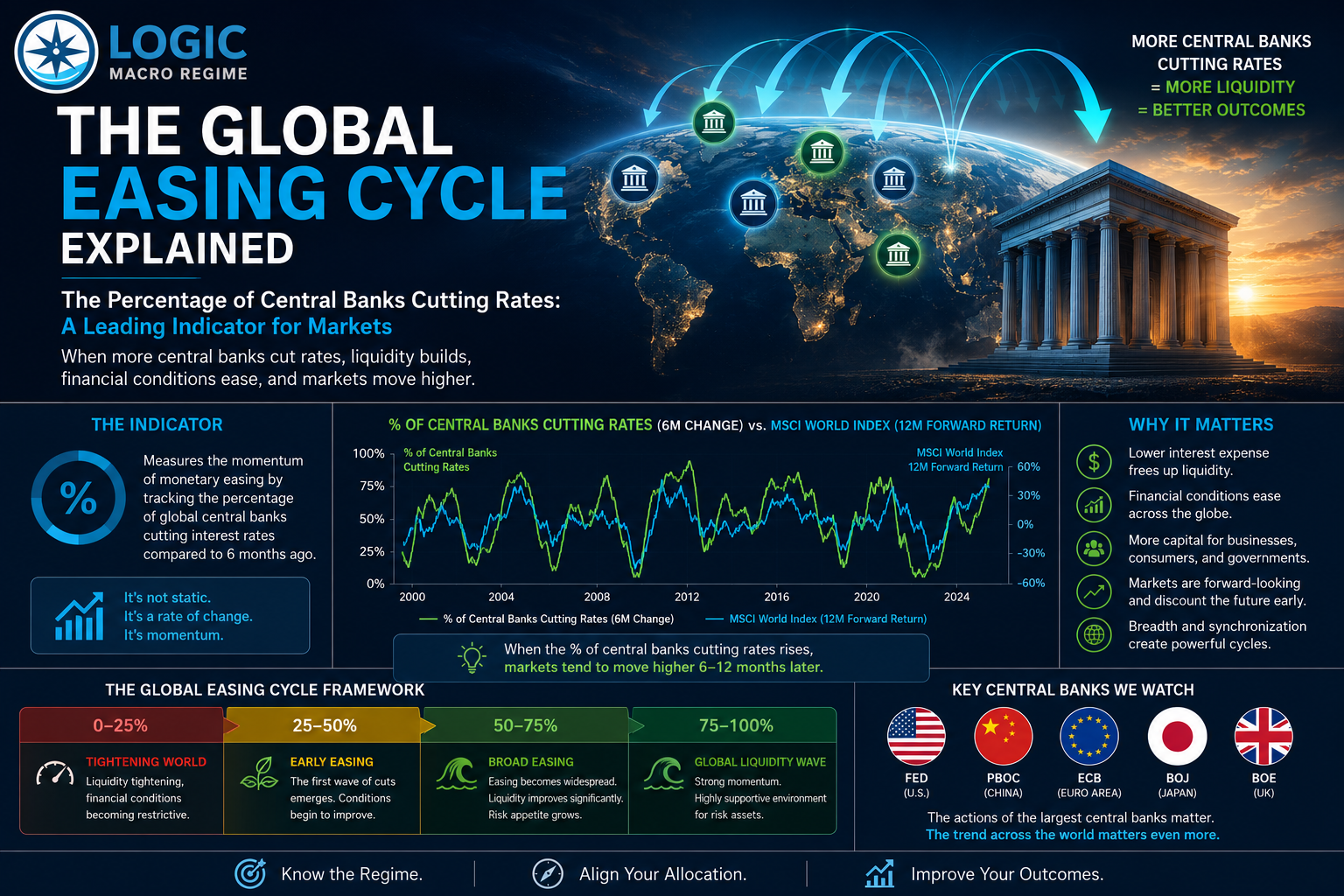
Liquidity remains the pillar supporting the broader macro backdrop. Global money supply growth continues to slowly improve, reserve balances remain healthy and fiscal spending continues injecting liquidity into the financial system. Although central banks have become more cautious, the underlying quantity of money available to support economic activity remains constructive. Most importantly, liquidity continues to argue against an imminent recession. Historically, sustained bear markets require liquidity to first become restrictive, and we're simply not seeing that today. This remains the primary reason we expect a gradual transition rather than an abrupt collapse.
(O) Other Financial Conditions ✅
Other Financial Conditions remain OK, but deteriorated again this month and are now one of the primary reasons behind the lower Risk Bias Score, as they hang on by a thread. A stronger US dollar, elevated long-term interest rates and tighter financial conditions have reduced the tailwind investors enjoyed earlier this year. Credit markets continue functioning normally, but the margin for error has narrowed. This doesn't necessarily signal recession, but it does suggest markets are becoming increasingly vulnerable to bouts of volatility.
(G) Growth Cycle ⬇️
Growth has lost momentum. While employment and consumer spending remain reasonably resilient, several forward-looking indicators - including the OECD Composite Leading Indicator Diffusion Index, continue to soften. The global economy isn't rolling over, but it is no longer broadly accelerating. That's consistent with our expectation that market leadership gradually narrows before broader economic weakness eventually emerges.
(I) Inflation Cycle ⬆️
Inflation remains the primary macro headwind. Sticky services inflation, resilient wage growth and persistent demand continue limiting central banks' flexibility, keeping the framework firmly within the Inflation regime. The encouraging news is that our longer-term outlook still suggests inflation should gradually moderate over the coming months, allowing the macro backdrop to eventually transition back toward Goldilocks before Deflation becomes the dominant regime later in the forecast horizon.
(C) Capital Positioning ✅
Capital Positioning remains modestly supportive, but has clearly weakened. Earlier this year, investors consistently viewed every market pullback as a buying opportunity. More recently, market leadership has narrowed, defensive sectors will likely begin outperforming and institutional positioning has become noticeably more cautious. This is exactly the type of gradual rotation that typically develops before broader Risk-Off environments emerge.
Positioning Implications
The message from the framework is becoming increasingly clear.
For much of 2026, we favored maintaining exposure to Technology, Financials, Industrials, Small Caps and other Cyclical assets because the underlying macro data continued supporting a Risk-On environment despite numerous headline-driven scares.
That positioning served investors well. Today, however, the balance of evidence has shifted.
While we have not yet entered a formal Risk-Off regime, the decline in the Risk Bias Score from 7 to 4 suggests we're approaching that transition. Accordingly, we're beginning to favor a gradual rotation toward higher-quality, more defensive areas of the market.
Within the Positioning Matrix available in your LOGIC Dashboard, you'll notice greater emphasis on Utilities, Health Care, Consumer Staples and Real Estate, alongside Low Volatility, Quality and Dividend strategies. Fixed-income allocations also begin shifting toward longer-duration government bonds, 5-10yr TIPS and corporate bonds with Investment Grade Credit, as the probability of slower growth increases over the coming months.
Perhaps the most important takeaway is that this isn't a reaction to today's headlines. It's the continuation of a roadmap we've been communicating since March.
Back then, the framework suggested remaining invested while preparing for a more defensive autumn. Today, the data continue to validate that outlook. Whether next month's model officially moves into Risk-Off or not, the underlying momentum across our leading indicators continues pointing in that direction, reinforcing the value of taking a forward-looking, systematic approach rather than reacting emotionally after the market has already adjusted.
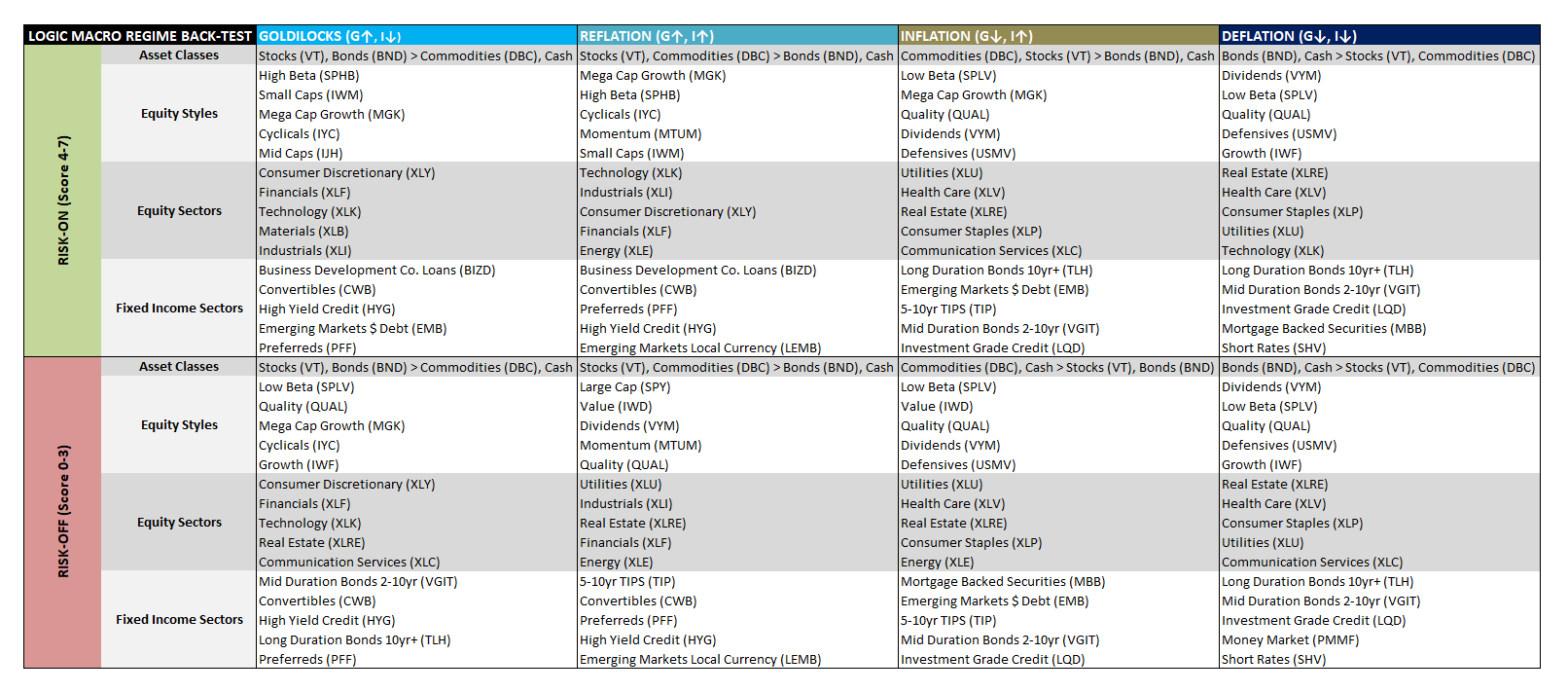
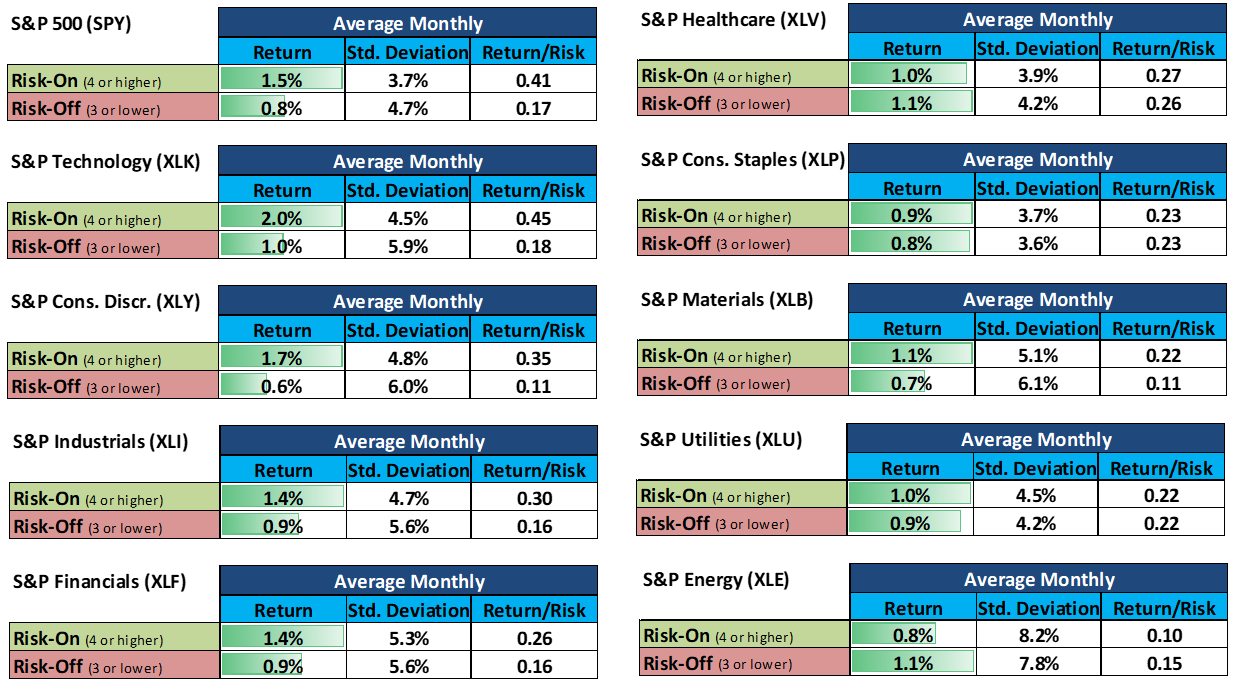
For even more insight on how to position (and to see the table in a larger format), you can click on Back-Test for asset, style, and sector factors that historically have out/under-performed in this kind of Macro Regime.
Stay Systematic.