Ahoy!
Please note this is a lagged sample report that all LOGIC Macro Regime subscribers received well before the referenced month began. Paid subscribers also have access to the interactive Monthly Macro Map dashboard that clearly summarizes the current and future macro conditions and how to position.
September 2026 Snapshot
Forward View (6 months)
The Risk-Off period we’ve been preparing for since March has arrived. When we first looked six months ahead back in March, the framework was already pointing toward September as the point where conditions were likely to become materially more defensive. That was important because the message back then was almost the opposite of what it is today. Markets were correcting sharply amid geopolitical uncertainty, energy disruption and recession fears. Investors were becoming increasingly defensive. Yet our indicators remained constructive. Liquidity was supportive, growth was holding up and positioning had become overly cautious. We stayed Risk-On and viewed the weakness as an opportunity. That proved to be the right call through the spring and summer.
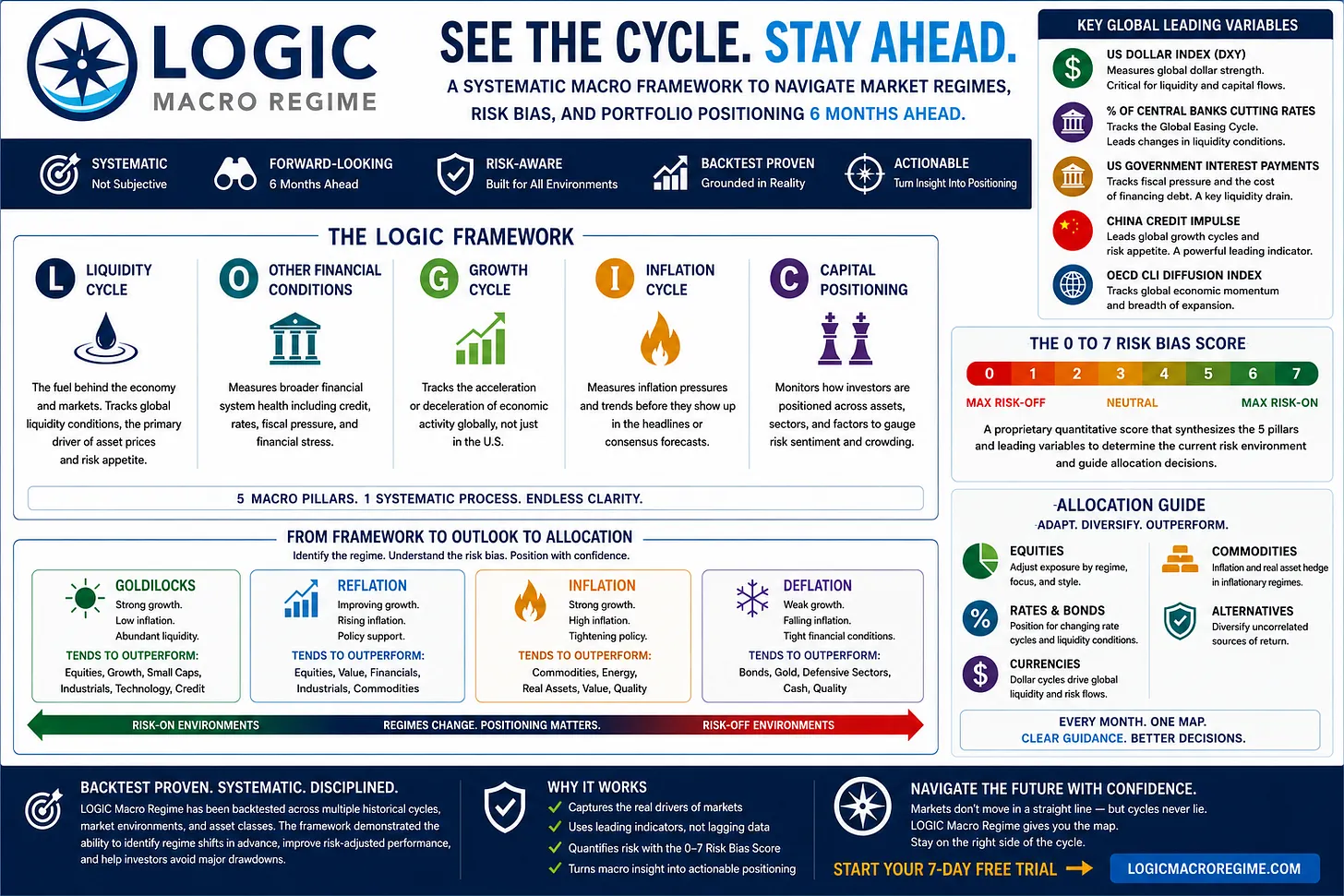
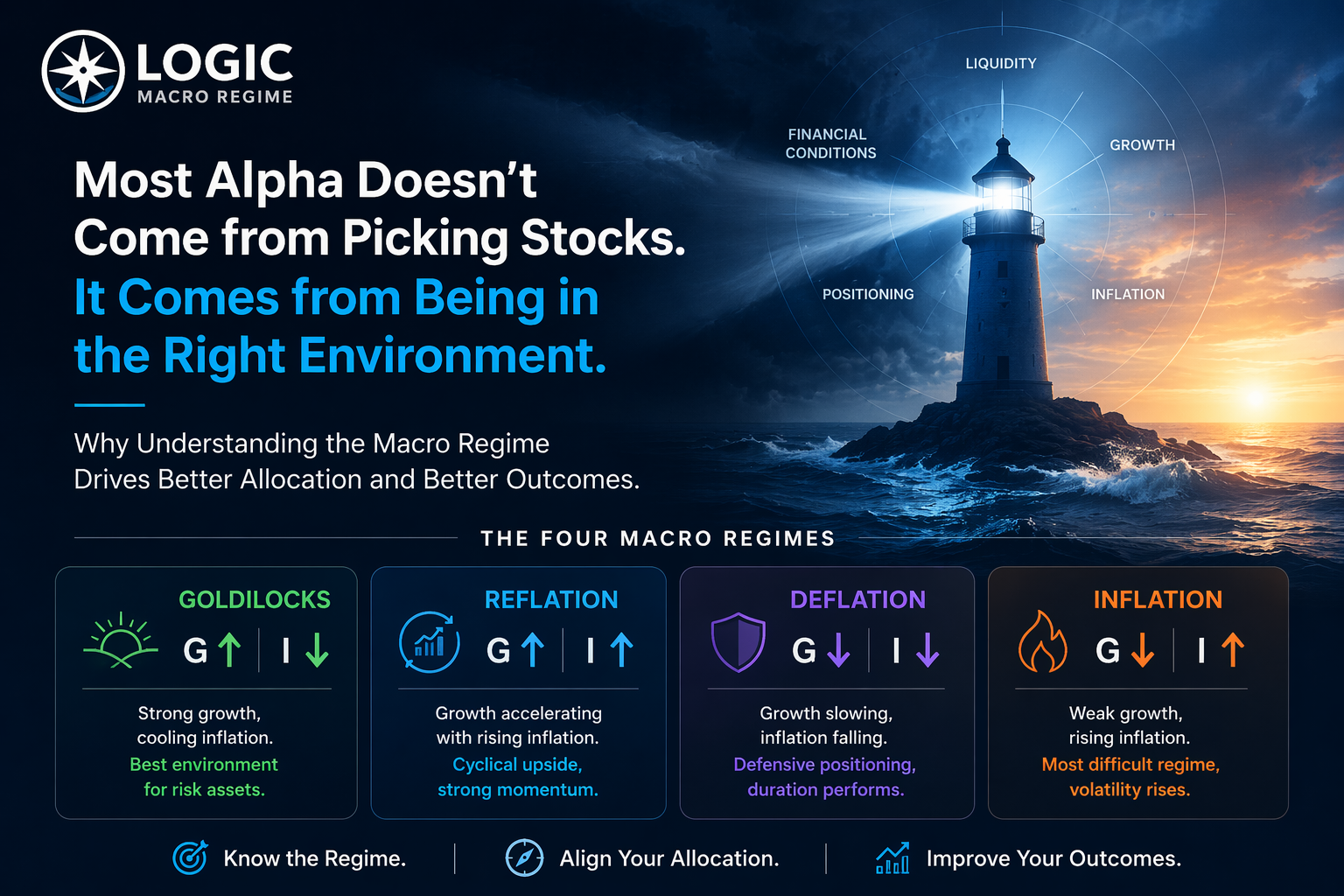
Fast-forward six months and the setup has changed considerably. Our Risk Bias Score fell from 7 earlier this summer, to 4 in August, and now to just 2 for September - comfortably below the 4-point threshold separating Risk-On from Risk-Off. The framework remains in Reflation today, but both Growth and Inflation are losing momentum. Our base case remains a transition from Risk-Off Reflation → Risk-Off Goldilocks → eventually Risk-Off Deflation as we move deeper into the forecast horizon.
There may be some relief along the way, including a potential temporary improvement in November, but the broader six-month picture has become considerably more defensive. By February and March, Deflation is beginning to appear in the forward outlook. That’s not a particularly friendly combination for risk assets.
We’re not forecasting a market crash. We’re saying something much simpler: The macro tides that helped make the last six months relatively easy are beginning to turn. Six months ago, that meant staying invested when fear was elevated. Today, it means becoming more defensive.
(L) Liquidity Cycle ✅
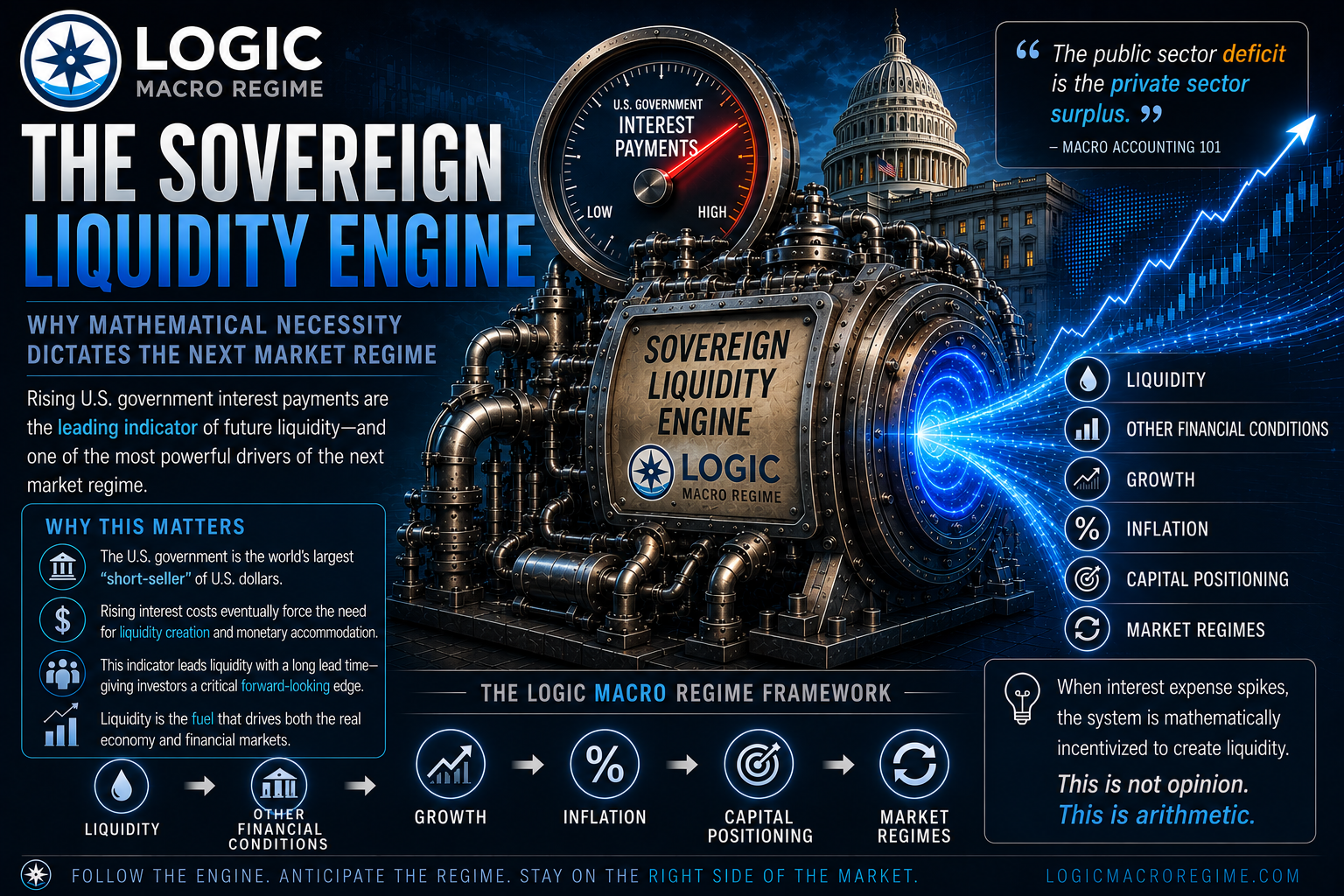
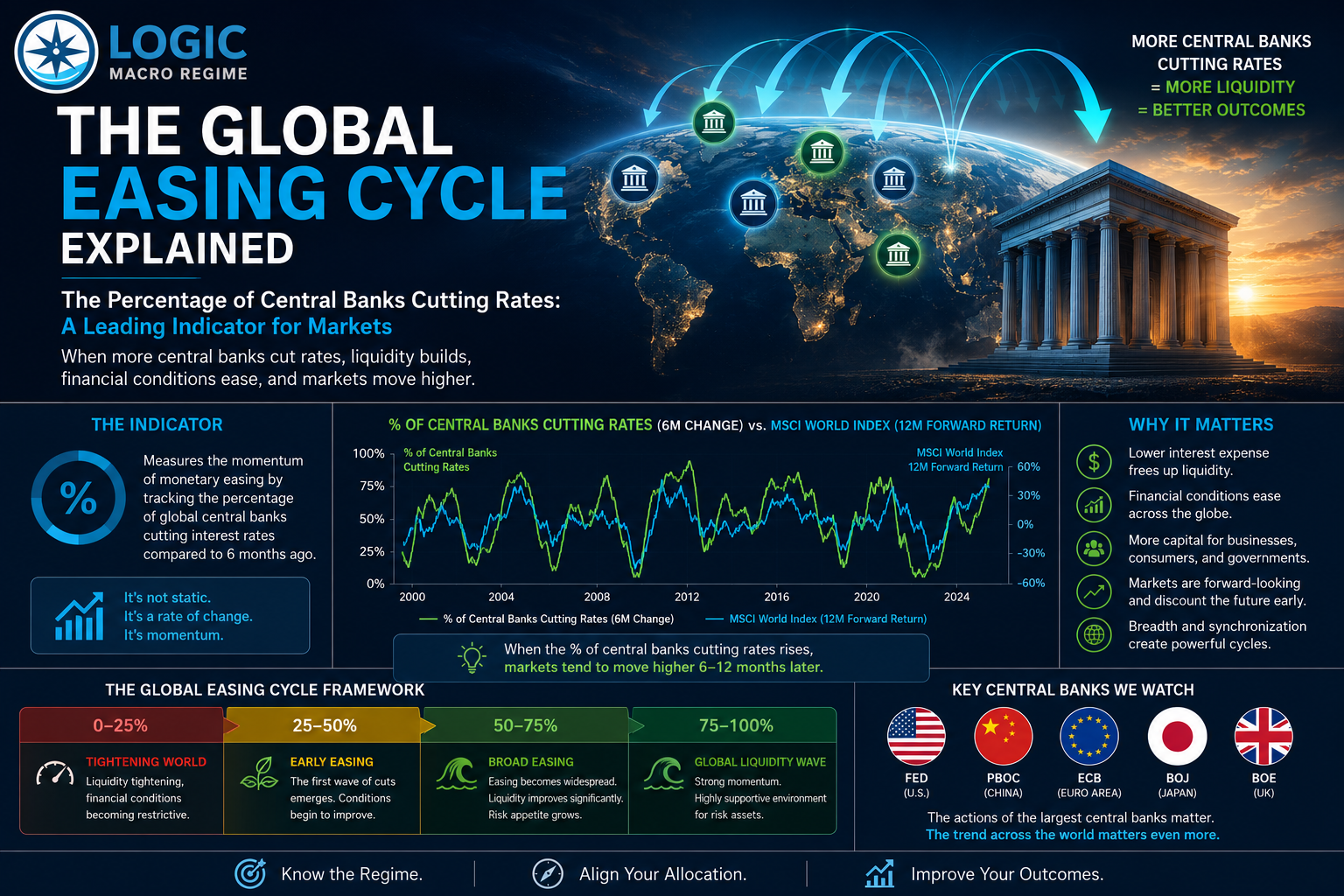
Liquidity remains positive, but the tailwind is clearly beginning to fade. Global liquidity and money growth continue to provide enough support to argue against an abrupt economic collapse, but the momentum is no longer as strong as it was earlier in the year. That’s an important distinction. Liquidity is still one of the reasons we aren’t forecasting an immediate recession or disorderly bear market. But as that support gradually wanes, markets have less of a cushion against deterioration elsewhere in the framework. Still supportive, but increasingly something we’re watching closely.
(O) Other Financial Conditions ✅
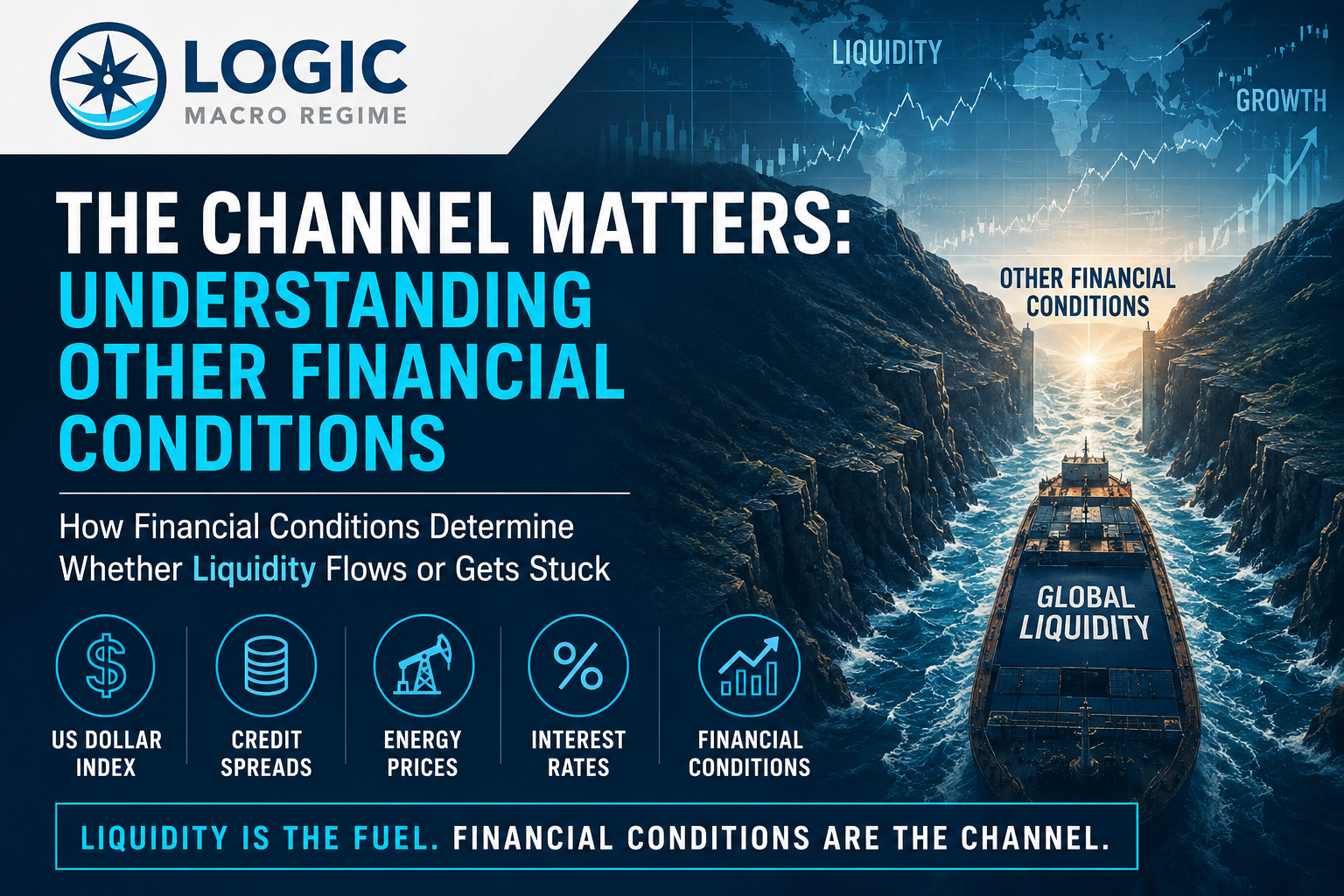
Other Financial Conditions are becoming one of our biggest concerns. Long-term government bond yields have moved sharply higher across several developed markets, energy prices remain an important risk, and the cost of capital is becoming increasingly difficult for a highly leveraged global economy to ignore. Credit spreads remain relatively contained for now, which is encouraging. But that’s also where we’ll be watching closely for confirmation. Higher long-term rates don’t simply affect bond investors. They raise borrowing costs throughout the economy, increase interest expense, pressure valuations and gradually remove some of the financial grease that keeps a credit-based system moving. Financial conditions are still hanging on, but by a thread. A meaningful widening in credit spreads from here would be an important additional warning.
(G) Growth Cycle ⬆️
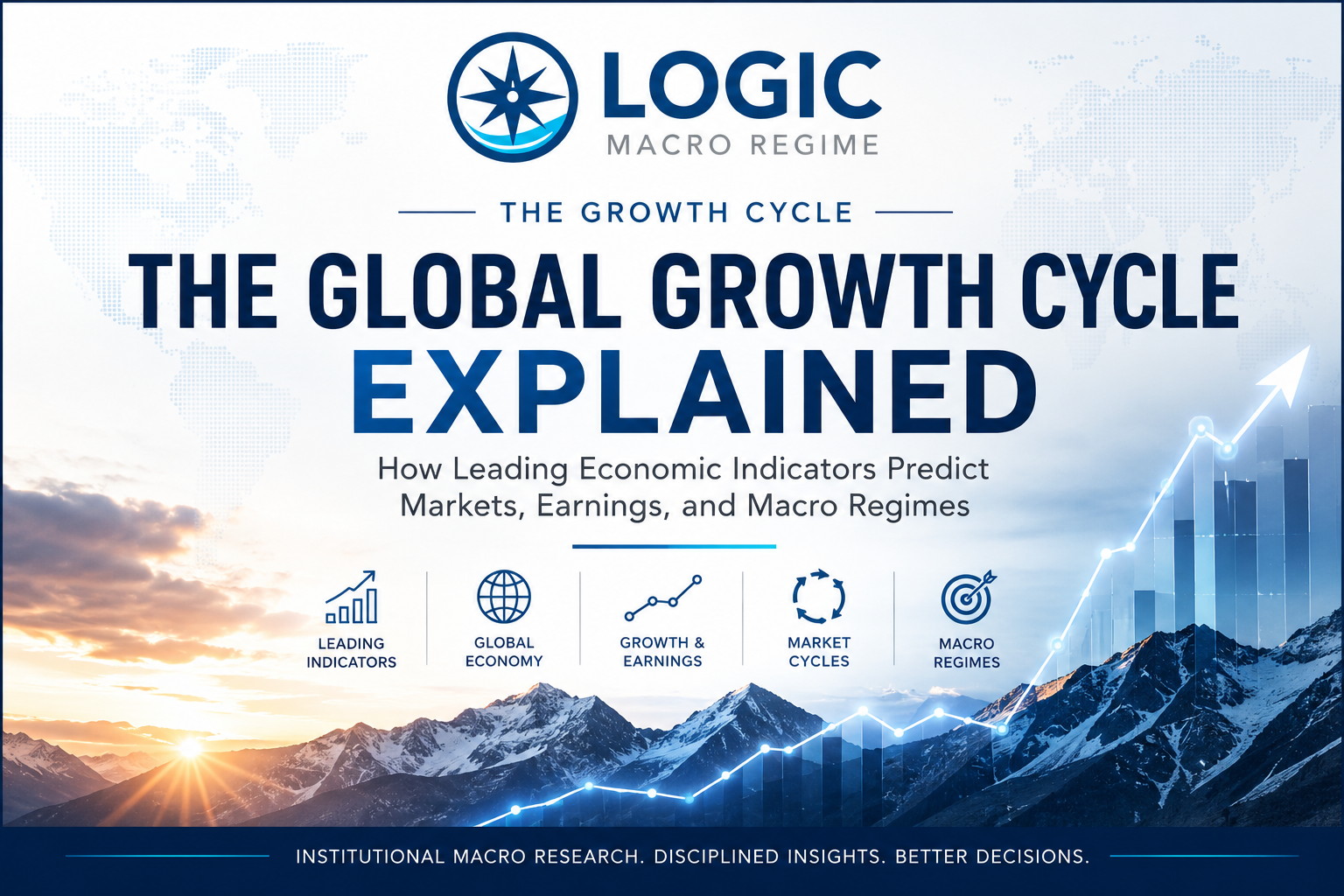
Growth is where the deterioration is becoming increasingly apparent. Only roughly 35% of the G20 economies in our OECD CLI Diffusion measure are now accelerating, a meaningful deterioration in the breadth of global growth. That’s important because markets don’t require an outright recession for the environment to become more difficult. They simply need growth momentum to decelerate. The global economy is still expanding, but fewer economies are participating in that acceleration. That loss of breadth is consistent with the path our forward indicators have been signaling for months and helps explain why Deflation is beginning to appear later in our six-month outlook.
(I) Inflation Cycle ⬆️
Inflation remains elevated enough to keep us in Reflation today, but we believe the direction from here is increasingly lower. Earlier energy-related inflation proved more persistent as geopolitical disruptions pushed commodity prices higher. As global growth slows, however, demand for energy and other cyclical commodities should begin to soften as well. That should gradually remove an important source of inflation pressure. This is why the framework currently sees the macro regime moving first toward Goldilocks as inflation decelerates, and ultimately toward Deflation as weaker growth becomes the more dominant force. The important point is that falling inflation isn’t automatically bullish. Falling inflation alongside deteriorating growth and a Risk-Off signal is a very different environment from falling inflation while growth is accelerating.
(C) Capital Positioning ❌
Capital Positioning is also beginning to flash warning signs. This is another important difference between today and March. Back then, investors had already become defensive. Fear was elevated and positioning provided fuel for markets to rebound once the macro backdrop proved more resilient than expected. Today, investors are considerably more offensively positioned. We’re beginning to see sharp drawdowns appear quickly in some of the market’s most crowded Technology and AI-related trades, including areas tied to the enormous capital expenditures required to finance the AI and power-infrastructure buildout. That doesn’t mean the long-term AI story is over. But it does tell us that investors are becoming less willing to pay any price for growth, precisely as liquidity and economic momentum are beginning to soften. That is the kind of change in market behavior we pay attention to.
Positioning Implications
The message from the framework has changed. For much of the past six months, we encouraged investors to remain invested, favor Technology and cyclical exposure, and avoid allowing geopolitical headlines to push them prematurely into defensive positioning. Today, we’re doing the opposite. That doesn’t mean selling everything or trying to call the exact market top. It means recognizing that the probability distribution has changed and adjusting portfolios accordingly.
Our roadmap currently points toward Risk-Off Reflation, followed by Risk-Off Goldilocks and ultimately the possibility of Risk-Off Deflation deeper into the forecast horizon. There will be rallies along the way. There will be days when the headlines suddenly sound great again. And there will almost certainly be moments when markets make this outlook uncomfortable. That’s normal. We’re not trying to trade every headline. We’re trying to stay on the right side of the macro cycle.
For the first time in several months, our Risk Bias Score is firmly Risk-Off. It’s time to respect that signal. Buckle up, batten down the hatches, and we’ll navigate what comes next together.