Ahoy!
This is a live sample of the November 2026 report, sent to paid subscribers at least a week before the reference month began.
November 2026 Snapshot
Forward View (6 months)
The more challenging macro environment we've been preparing for since March continues to unfold. November remains marginally Risk-On, but the underlying conditions are becoming increasingly fragile. Liquidity is losing momentum, global growth has turned negative in our framework, and inflation continues to prove more persistent than anticipated.
The S&P 500 reached a new all-time high on October 6, but the subsequent pullback and increased volatility suggest investors are becoming more cautious. A counter-trend rally remains possible, particularly if bond yields continue retreating, but we remain skeptical of its sustainability.
Our outlook now calls for Risk-Off Goldilocks in December and January, followed by Risk-Off Deflation from February through April as growth and inflation decelerate together. May offers the potential for a return to Goldilocks, although risk appetite is expected to remain subdued. The broader six-month outlook continues to favor a more defensive posture.
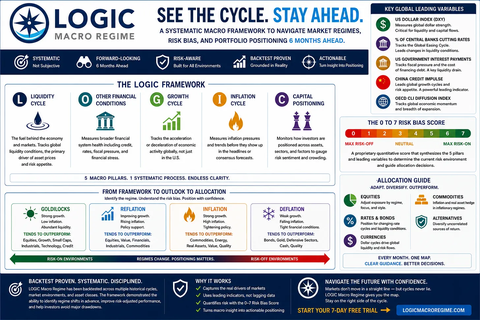
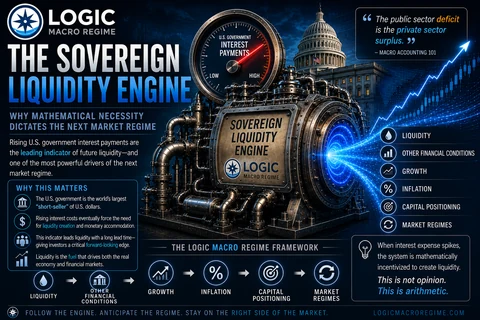
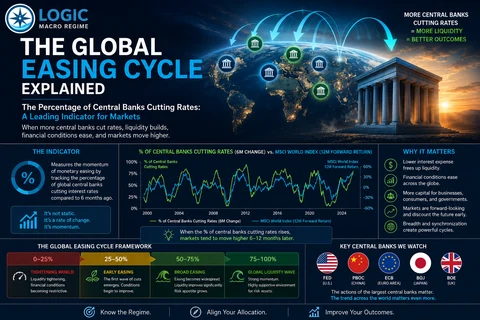
(L) Liquidity Cycle ✅
The Liquidity tide is still rising, but its momentum continues to fade. US broad money supply remains in expansion, although the recent buildup in the Treasury General Account has temporarily drained reserves from the banking system, creating additional short-term liquidity pressure. These developments do not necessarily signal a broader monetary contraction, but they highlight an increasingly uneven backdrop. Our leading indicators remain positive, supporting the view that liquidity continues to provide a cushion against an abrupt downturn. However, that cushion is becoming thinner, leaving markets increasingly vulnerable to deterioration elsewhere in the framework.
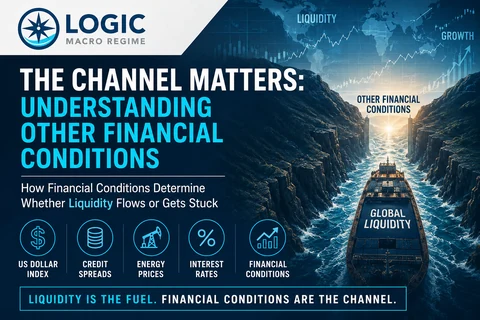
(O) Other Financial Conditions ❌
Other Financial Conditions remain unfavorable. Long-term US Treasury yields recently surged despite ongoing Treasury buybacks before reversing some of those increases. Whether this represents a sustainable turning point remains uncertain, but further easing would provide welcome relief to financial conditions. Meanwhile, the US dollar remains relatively firm, while elevated crude oil prices and ongoing disruptions surrounding the Strait of Hormuz continue to pressure inflation, household purchasing power, and business margins. Together, these forces continue to constrain global financial conditions, despite the recent improvement in bond yields.
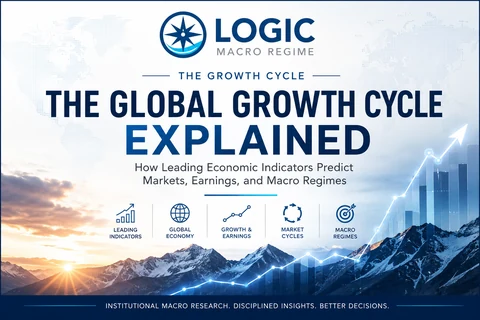
(G) Growth Cycle ⬇️
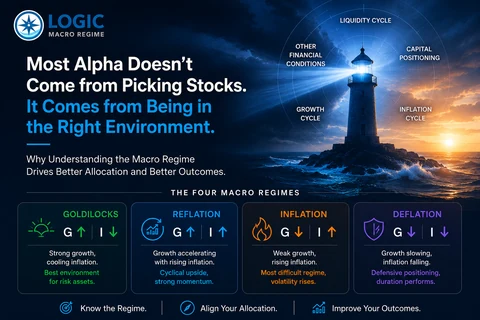
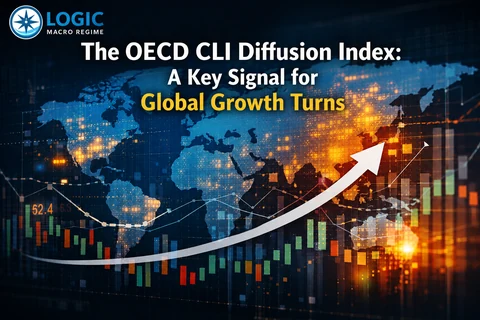
The Growth Cycle has now turned negative, confirming the deterioration in global economic momentum we’ve been anticipating. The concern is not necessarily outright economic contraction, but the declining breadth of countries experiencing accelerating growth. Recent US and Chinese GDP releases have demonstrated resilience, but our leading indicators continue pointing toward a broader slowdown. Fewer economies are participating in the expansion, increasing the vulnerability of global growth to additional shocks. With growth now decelerating and inflation remaining elevated, the framework has shifted into the less favorable Inflation regime. Our forward indicators suggest this weakness becomes more pronounced from February through April as Deflation emerges.
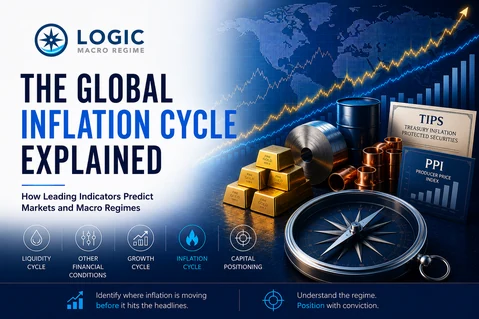
(I) Inflation Cycle ⬆️
Inflation remains stubbornly elevated, extending beyond the persistence our models previously anticipated. Continued energy disruptions surrounding the Strait of Hormuz have delayed the expected disinflationary impulse, while elevated producer prices suggest underlying pressures remain considerable. We continue to anticipate inflation moderation as global growth weakens, but the timing remains uncertain. Persistent crude oil prices remain the primary risk to this forecast. For now, inflation continues to accelerate in our framework, maintaining November’s Inflation regime. December and January are expected to bring renewed disinflation, followed by a more pronounced slowdown alongside weakening growth from February through April.
(C) Capital Positioning ✅
Capital Positioning remains marginally positive, keeping November within Risk-On territory. However, the margin is thin, and the recent deterioration in market behavior is becoming increasingly apparent. The S&P 500’s October all-time high demonstrated continued investor appetite for risk, but the subsequent pullback and renewed volatility suggest that confidence is becoming more fragile. With liquidity momentum fading and growth deteriorating, the capital available to sustain elevated valuations may become increasingly constrained. A temporary rally remains possible, but our broader assessment continues to favor predominantly Risk-Off conditions over the coming six months. Positive positioning alone cannot offset deteriorating macro fundamentals indefinitely.
Positioning Implications
The period we've been warning about is drawing closer. There have been false starts and brief flickers of Risk-On conditions, and further counter-trend rallies remain possible. But a rally alone should not be mistaken for a lasting improvement in the macro outlook.
Our next six months remain consistently and firmly Risk-Off, with Deflation emerging from February through April. Across November and the following six months, the combined positioning signal remains Risk-Off Deflation, reinforcing our defensive stance:
- Asset Classes: Overweight Bonds (BND) and Cash (PMMF); underweight Equities (VT) and Commodities (DBC).
- Currencies: US Dollar (UUP) and Swiss Franc (FXF).
- Fixed Income: High-Yield Credit (HYG), Senior Loans (BKLN), Long-Term Treasuries (TLT), Investment-Grade Credit (LQD), and Convertible Bonds (CWB).
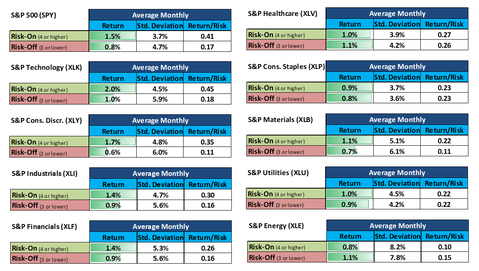
- Equities: Industrials (XLI), Energy (XLE), High Dividend Yield (VYM), Financials (XLF), Utilities (XLU), Technology (XLK), and Value (IWD).
- Commodities: Silver (SLV), Uranium (URA), and Bitcoin (IBIT).
These are the areas that have historically offered a stronger balance of return for the risk within each asset class in this type of environment. The bigger picture is still defensive: keep equities and commodities lighter, with more weight in bonds and cash. The selections above help guide where to invest within those allocations, rather than suggesting everything on the list will rise.
Stay disciplined, keep risk in check, and be prepared for a more challenging stretch.
Stay Systematic.